
The bowline: is it losing its grip?

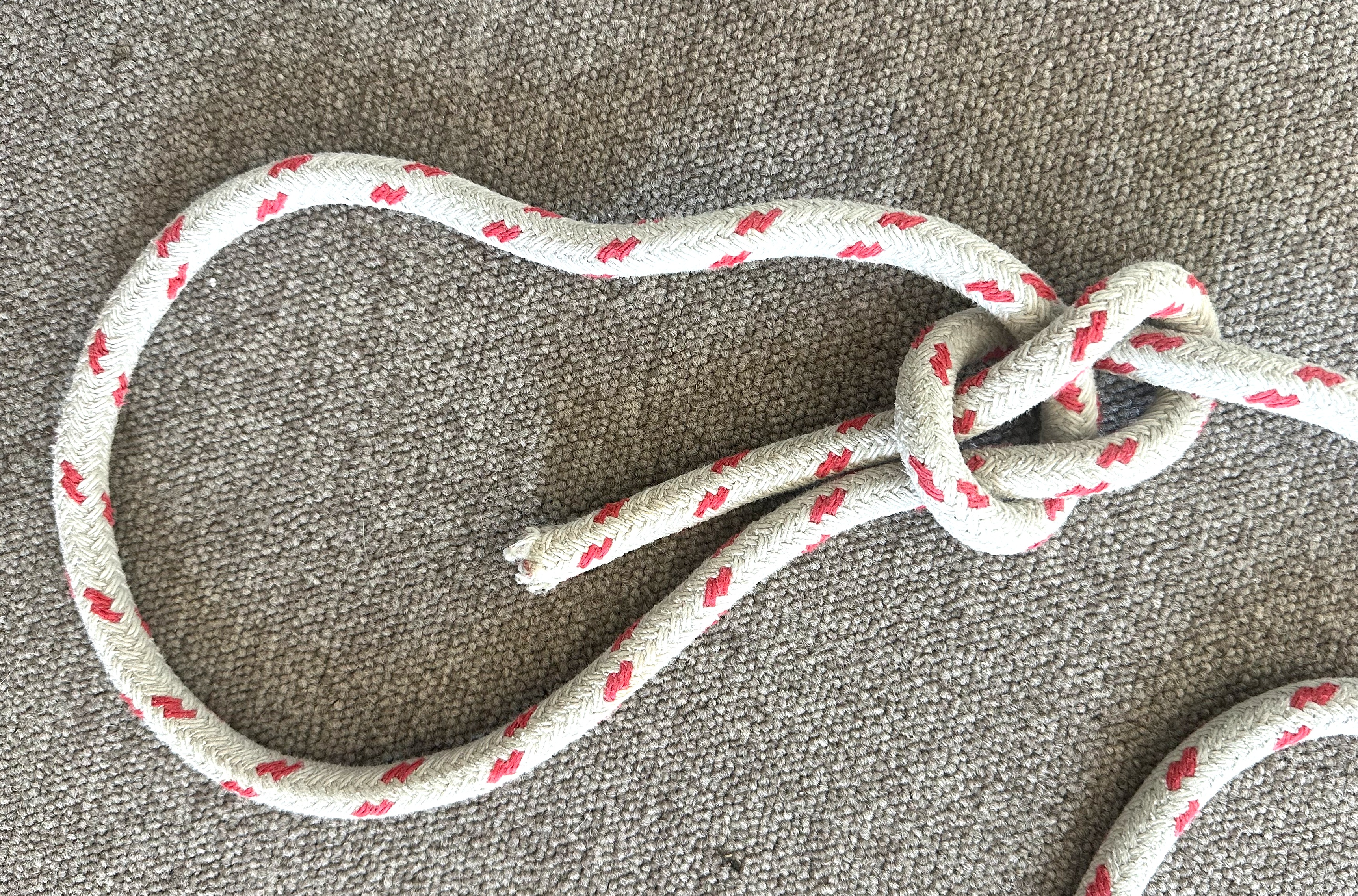
I learned the bowline before I learned the reef knot. Most of us did. It is the first knot a sailing instructor puts in your hands because it does the one thing a rope user needs more than any other, which is to make a fixed loop that holds under load and shakes free the moment you want it too. Forty-seven years later I still tie it a hundred times a season without thinking, and that unthinking familiarity is worth interrogating, because the rope running through my hands today is not the rope the knot was designed for. The question I want to put down here is simple and slightly uncomfortable. Is the king of knots still the right answer, or have we kept a medieval solution alive out of habit while the material underneath it changed completely?
Start with the name, because the name tells you where the knot comes from and what it was for.
A ROPE BEFORE IT WAS A KNOT
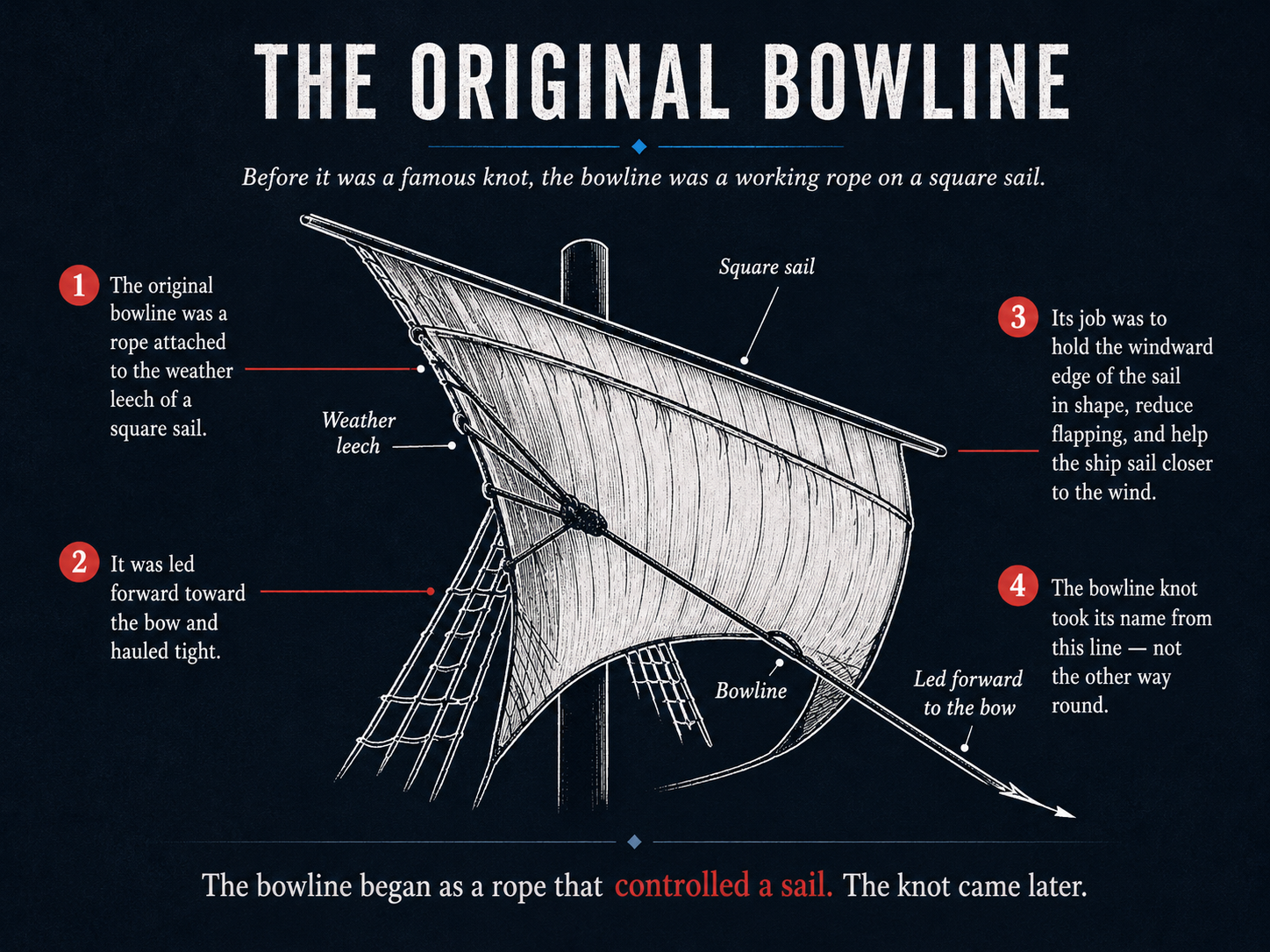
The word bowline is older than the knot we now attach to it. On a square-rigged ship a bowline, sometimes written as two words, was a line that held the weather leech of a square sail forward towards the bow and into the wind, stopping the sail being taken aback when the vessel was pointing high. A ship sailing as close to the wind as she could manage was said to be on a taut bowline. The line ran from the middle of the windward edge of the sail, attached by short subdivisions called bridles, forward to the bow. The knot took its name from the tackle, not the other way around, and by the time the usage settled the two meanings had fused. The Oxford dictionary sources spellings back through the fifteenth century, bowelyne around 1450, boulene in 1590, bowling in 1594 and later. This is a knot whose vocabulary predates most written English.
The knot itself is older still, and here the record turns archaeological rather than textual. When Pharaoh Khufu’s solar ship was excavated from the Giza complex in 1954, a vessel dated to the twenty-sixth century BC, the rigging was found to contain bowline type structures. That is roughly four and a half thousand years of continuous use for a single configuration of rope, which is a claim almost no other piece of human technology can make. The first written description we have comes much later, in John Smith’s 1627 work A Sea Grammar, where he records it as the Boling knot and offers a verdict that has aged well. He said the sails would break, or split, before the knot would slip. Smith was not a man given to understatement, but on this he was close to right.
So the bowline arrives in the historical record already ancient, already trusted, already doing the job it still does. The interesting question is why it won, and won so completely that it crossed from the sea to every other trade that handles rope.
WHY IT CONQUERED
A knot is, fundamentally, an exercise in applied friction. Geometry sets the shape and friction holds the shape in place, and every knot is a compromise between the two. You want security, which is resistance to slipping. You want strength, which is how much of the rope’s breaking load survives the knot. You want ease of tying, ease of untying, and often you want the whole thing compact rather than bulky. These pull against each other. A knot that never slips often jams so hard you need a spike to open it. A knot that unties in a heartbeat often works loose when you least want it to. The bowline’s grip on the imagination comes from the unusually good bargain it strikes across all of these at once.
Consider what it delivers. It gives away a meaningful part of the rope’s rated strength, as every knot does, since the sharp bends inside it load the outer fibres hardest, but in natural fibre, nylon and polyester it retains enough for ordinary working use and it does so predictably. Where it truly distances the field is everything around raw strength. It does not bind. However long and however hard you load a bowline, in natural fibre or in nylon and polyester, you can break it open afterwards by rolling the collar with your thumb, a sailors describes it as the knot that never jams. It can be tied one-handed, which is not a party trick but a survival feature. A man on a ledge holding the rope with one hand can pass the loop round his own chest with the other, and that single capability has pulled more people off cliffs and out of holes than any purpose-built rescue device. It is fast. And when tied correctly it is unmistakable, its finished form so distinctive that a wrong bowline usually looks wrong at a glance, unlike knots that hide their errors.
Clifford Ashley, whose 1944 Book of Knots remains the field’s central reference with its 3,857 numbered entries compiled over eleven years, catalogued the bowline as number 1010 and placed it among the small group of knots on which, as he put it, a man’s life is daily balanced. That is the company the bowline keeps. It became one of the four knots that every maritime apprentice was expected to know cold, alongside the reef knot, the clove hitch and the figure eight, and from the sea it spread outward by the simple logic that a good tool travels. Arborists use a running bowline that constricts round a limb as the load comes on. Firefighters are examined on it in the United Kingdom’s Qualified Firefighter assessment. The American Federal Aviation Administration recommends it for tying down light aircraft, because the loop holds through wind and weather yet releases without a fight when the aircraft has to move. Cavers, riggers, rescue crews, every trade that trusts its weight to a rope arrived independently at the same loop. That convergence is the real measure of the knot. Different worlds with different problems reached for the same answer.
TYING IT, AND THE RABBIT THAT HAS TAUGHT THE WORLD
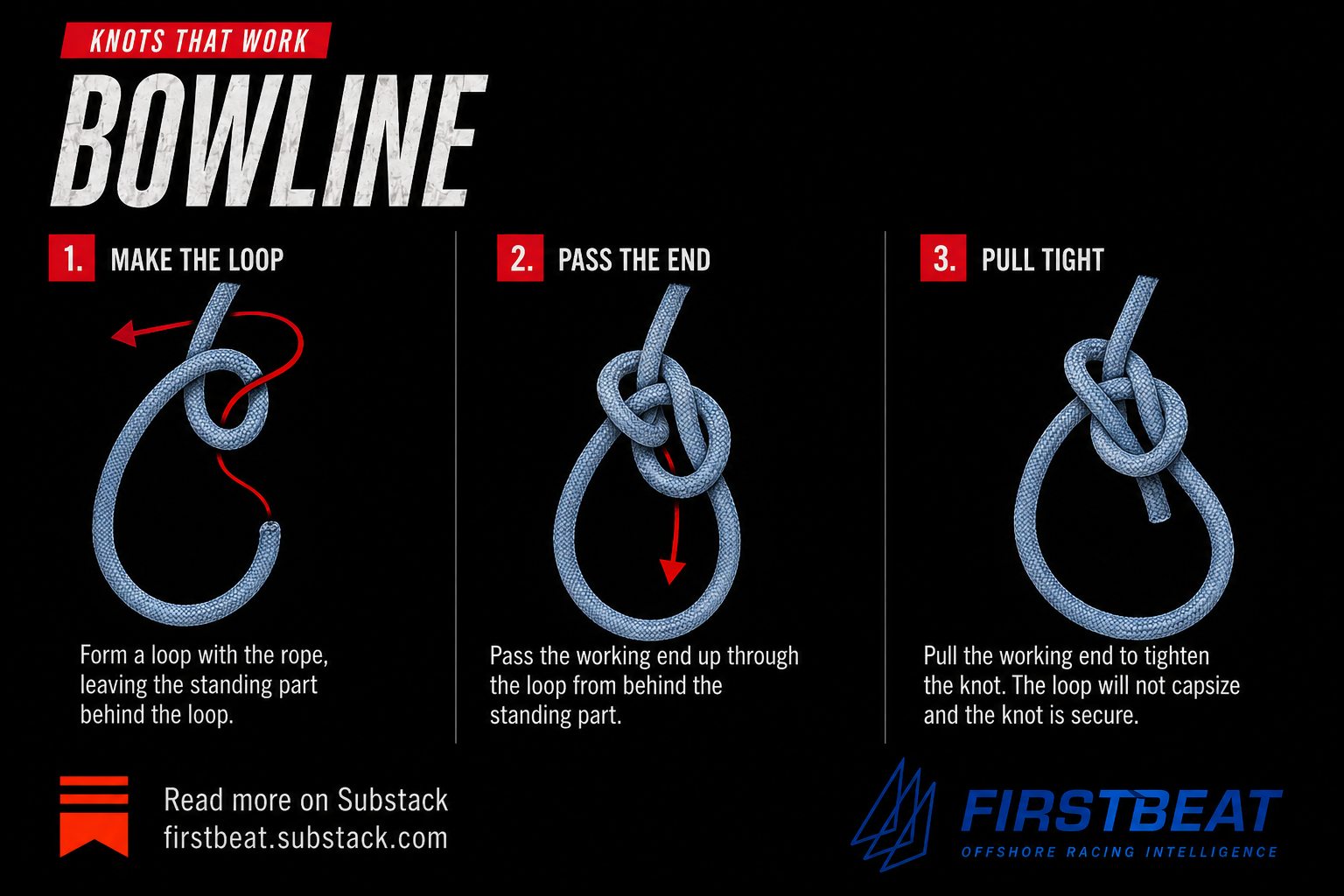
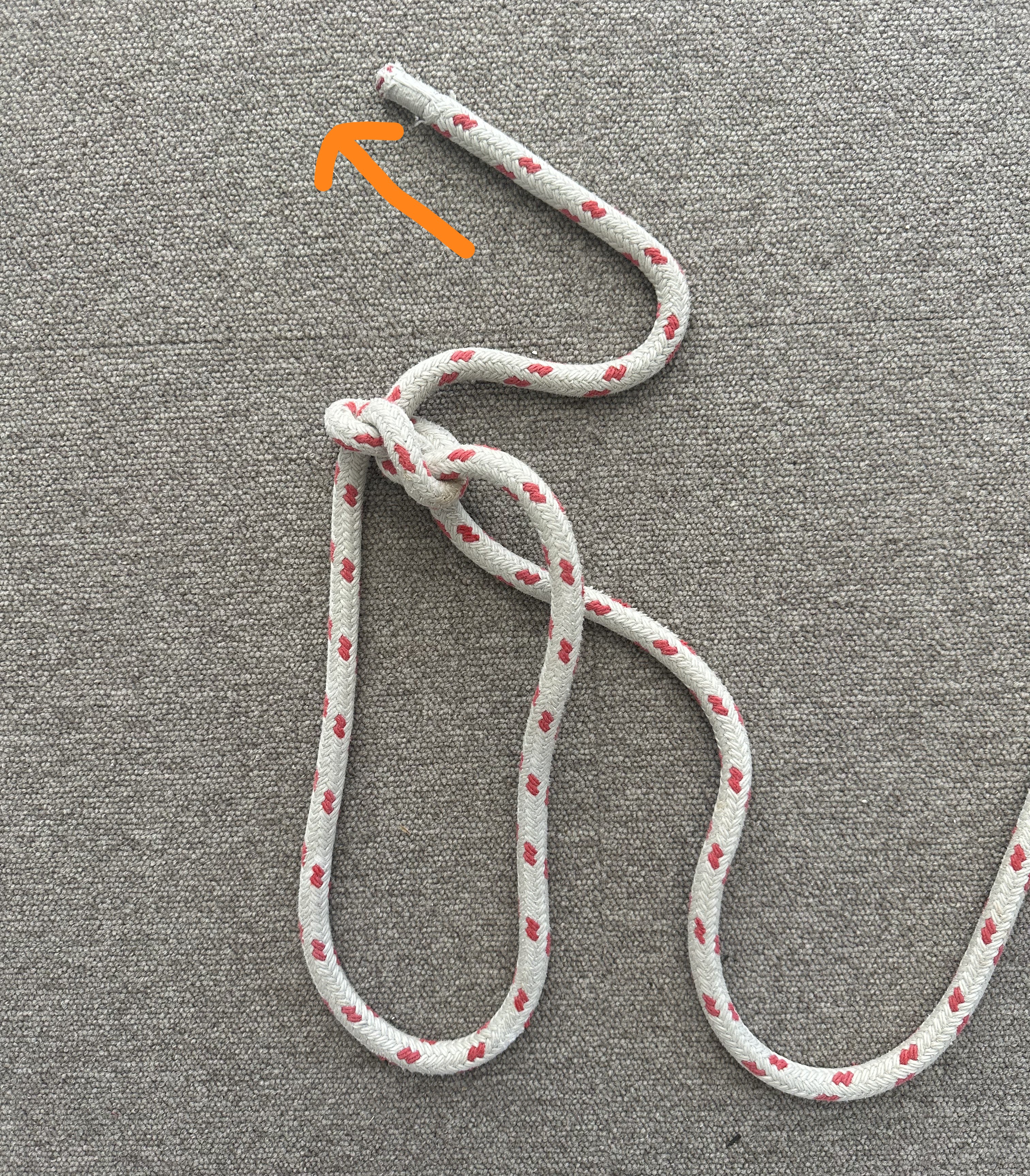
Almost everyone who can tie a bowline learned it through the same piece of doggerel, and the fact that a single mnemonic has carried a knot across every language and trade is itself part of the story. The rabbit comes up out of the hole, runs round the tree, and goes back down the hole. The hole is a small overhand loop made in the standing part, the rabbit is the working end, the tree is the standing part above the loop. Form the loop so the standing part passes underneath, bring the tail up through it, round behind the standing part, and back down through the loop it came from. The one step that matters is the first, because a loop formed the wrong way up is what produces the cowboy bowline.
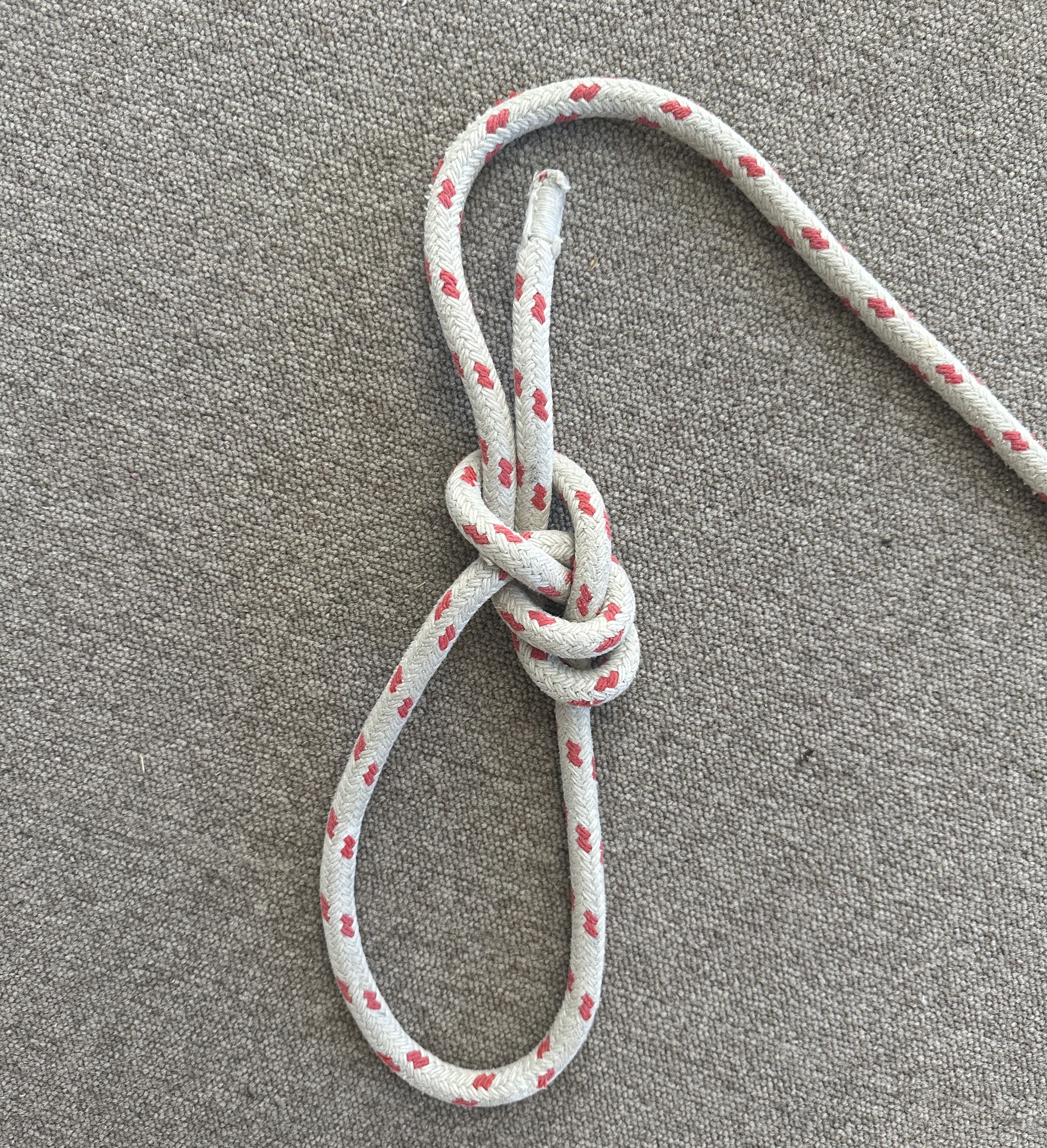
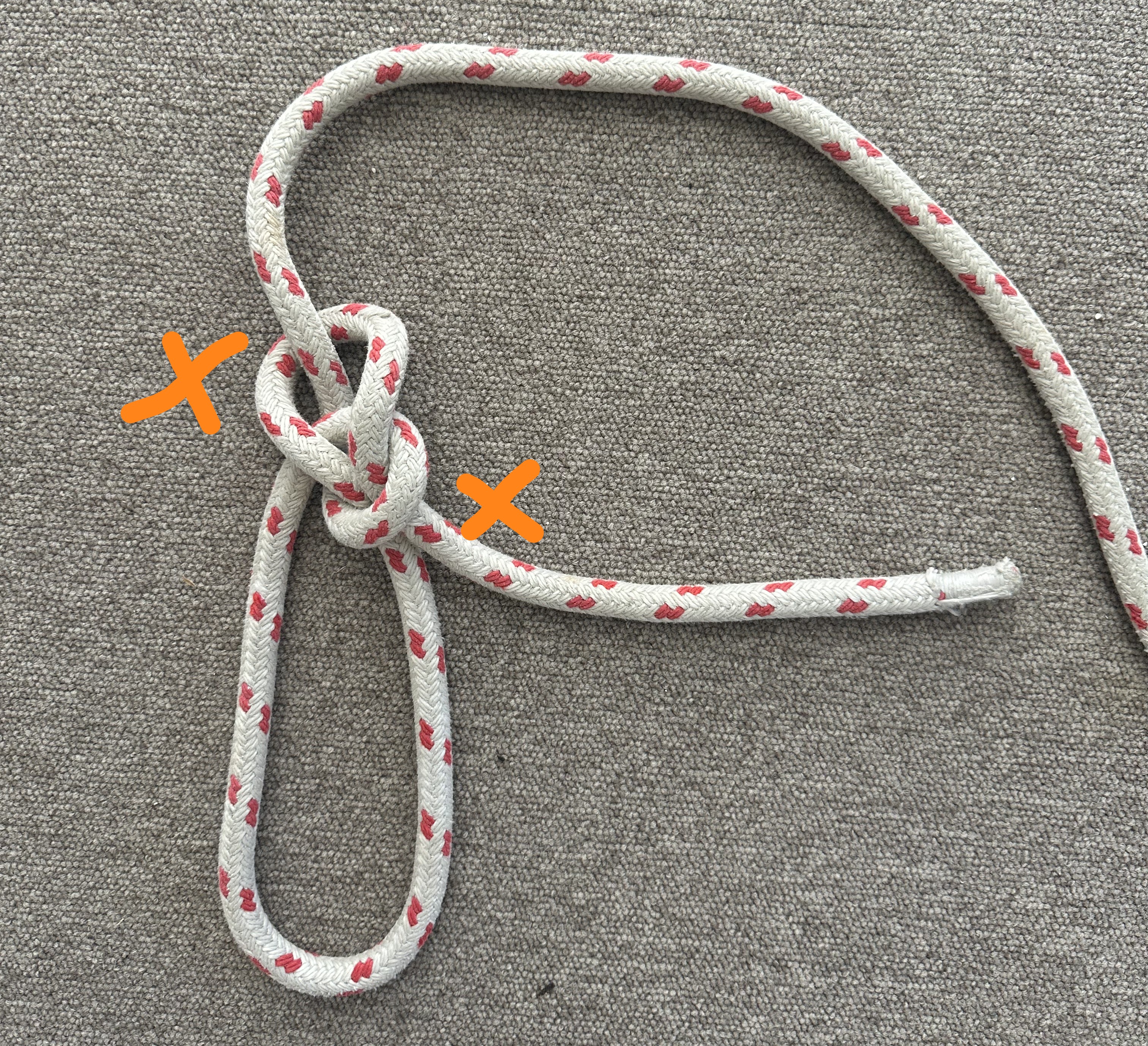
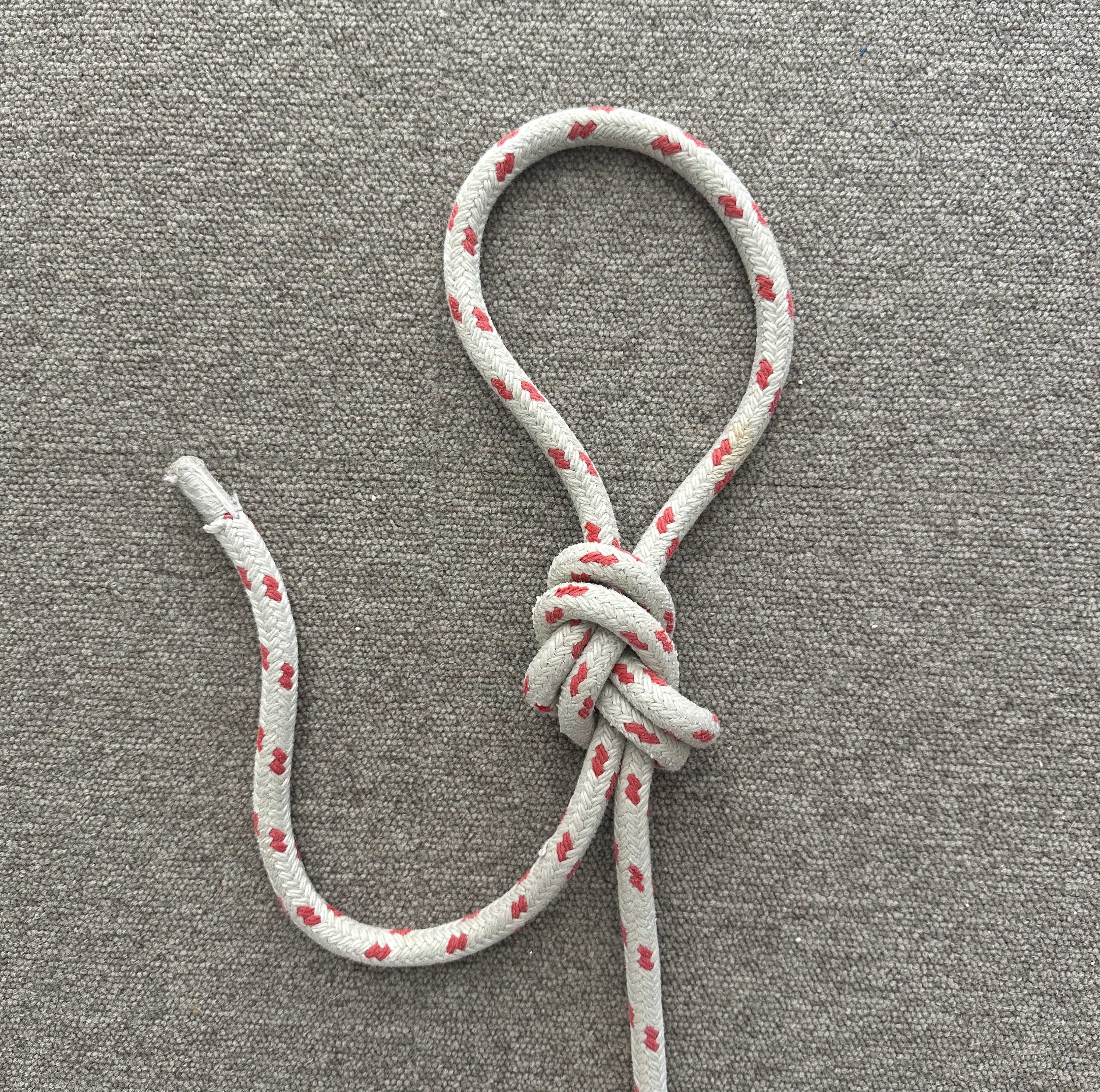
The diagram carries the mechanics. What the words should carry is the inspection, because that is the part that keeps you alive. In a correctly tied bowline the tail finishes inside the loop, lying against the standing part, and the interior forms a clean U. If the tail finishes outside the loop you have tied a cowboy or Dutch bowline, often stable but not the knot you meant. Ashley’s warning is worth keeping in the ear, that a knot is never nearly right, it is either exactly right or hopelessly wrong.
Two reinforcements turn the everyday bowline into something you can trust with consequence. The simplest is a stopper, a double overhand or strangle knot tied in the tail and snugged hard against the collar, which stops the knot working loose under cyclic load.
The more elegant is the Yosemite finish, in which the tail, instead of being left inside the loop, is led back out and traced around the outside of the loop and back under the collar, locking the knot against the weight-and-unweight cycling that opens a plain bowline. Tighten the bowline first, then dress the Yosemite tuck, then set the whole thing hard. A round turn bowline, which simply takes an extra turn in the initial hole before the tuck, is rated by experienced climbers as secure as the alpine butterfly or the rethreaded figure eight.
THE FLAWS
None of this makes the bowline flawless, and the honest literature has never pretended otherwise. It has three well-documented weaknesses, and they matter more now than they used to.
The first is that it works loose when it is not under load. A bowline that is cyclically loaded and unloaded, shaken, flogged, left to flap, can walk itself undone. Every experienced sailor has a version of the story. That’s why when life is at stake insist that a bowline carries a stopper, a double overhand or a strangle knot snugged against the collar, or is tied in a locked variant.
The second is that it can capsize. Loaded the wrong way, particularly when the loop is pulled sideways or ring-loaded against a fixed point, the knot can roll into a different and far weaker configuration and spill. The third, related, is that it is easy to mis-tie. The commonest error produces the cowboy or Dutch bowline, with the tail emerging outside the loop rather than inside, and while that variant is often surprisingly stable it is not the knot you meant to tie, and it forecloses the option of adding a Yosemite finish.
The climbing world learned these lessons in the hardest possible way and has been arguing about them ever since. In 1989 Lynn Hill, one of the finest climbers alive, fell around seventy feet to the ground when a tie-in knot pulled free of her harness. The knot was implicated, though the deeper cause was an incomplete tie obscured mid-sequence. The episode, and later fatalities at climbing walls attributed to bowline failure, produced a durable school of opinion that the knot should be retired from life-critical use in favour of the rethreaded figure eight, which is slower to tie, harder to untie after a fall, but crucially safer to botch. A partly tied figure eight tends to hold together and even bear weight, giving a visible warning, whereas a partly tied bowline tends to fall apart in the hand. The counter-argument, made just as forcefully by knot analysts and old hands, is that in every documented failure the knot was either tied wrong or left unsecured, and that the fault lies with the user and the missing backup rather than the knot. Both sides are right, which is the uncomfortable truth of it. The bowline is less forgiving of human error than its rivals, and human error is the thing that actually kills people.
For centuries none of this was enough to dethrone it, because in hemp, in manila, in cotton, and later in nylon and polyester, the bowline’s virtues so outran its vices that the sensible response was not to abandon the knot but to back it up. Tie it well and it holds a high proportion of the rope’s strength, exact figures depending on the rope and the test, and it stays put. That was the settled position for a very long time. Then the rope changed.
THE MATERIAL THE KNOT WAS NEVER BUILT FOR
The modern offshore boat is rigged increasingly in HMPE, high-modulus polyethylene, sold as Dyneema, Spectra, Amsteel and others. The fibre is extraordinary. Weight for weight it outperforms steel, it barely stretches, it does not absorb water, and it has transformed everything from halyards and sheets to standing rigging and lifelines. It is also, from a knot’s point of view, close to a nightmare, and it breaks the bargain the bowline has relied on for four thousand years.
Three properties conspire against the knot. The fibre is extremely slippery, so the surface bite that a knot depends on to seat and hold is largely absent, and turns glide instead of gripping. The fibre has very low stretch, so it does not cushion a shock load the way nylon does, and a jerky or oscillating pull can skate the coils before they seat rather than tightening them. And the fibre hates a sharp radius. HMPE loaded round a tight bend concentrates the entire load on the few outermost fibres, which break and then let the failure zipper inward, which is why a knot can reduce some high-modulus lines to as little as thirty percent of their rated strength. There is a thermal trap on top of all this. HMPE has a low melt point, and under high load the friction inside a knot can warm the contact surface enough to make an already slick fibre slicker still, which is the mechanism behind several documented spinnaker and halyard failures where a bowline let go in a gust.
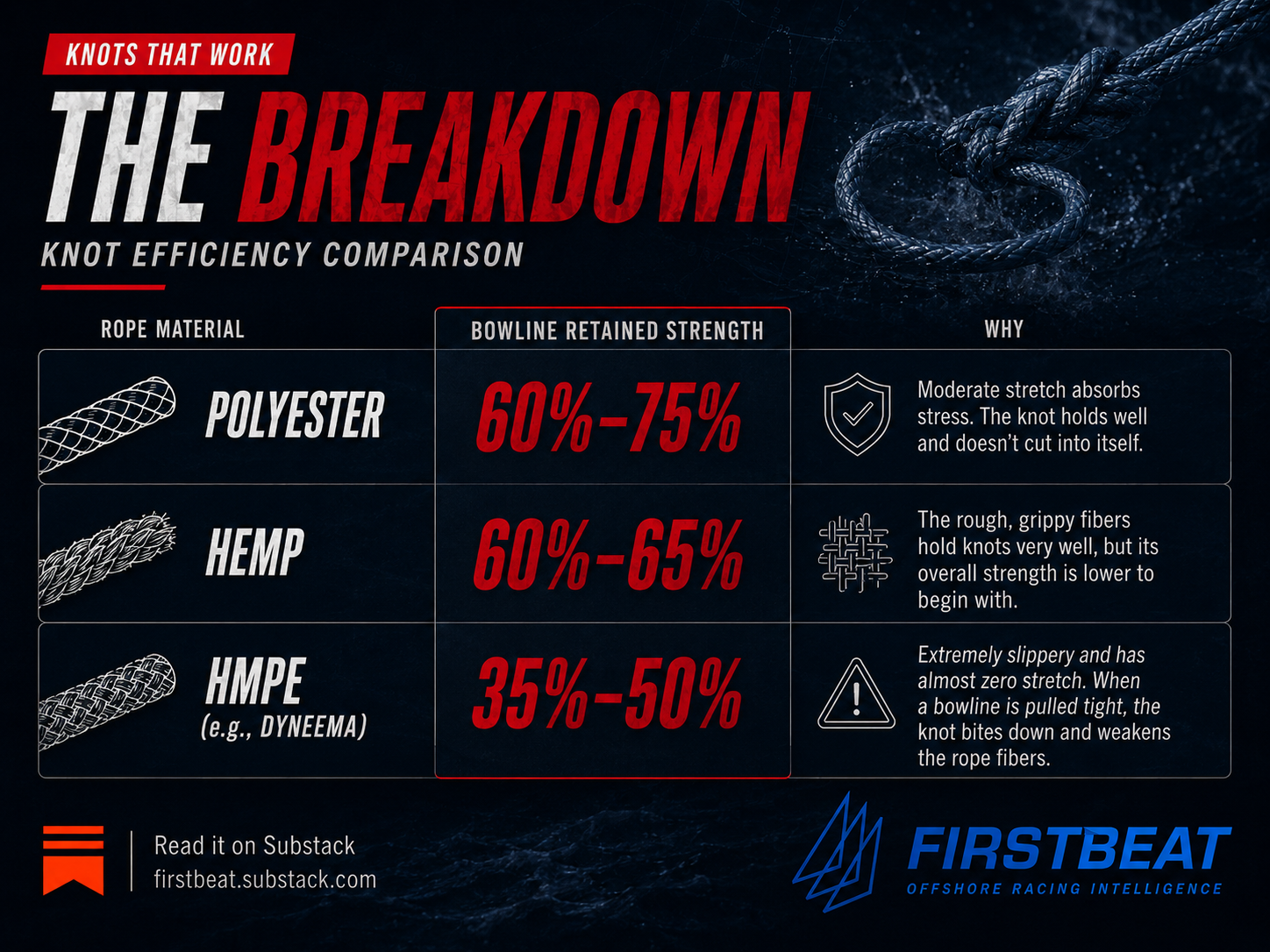
The numbers are sobering and they are not folklore. The most cited body of testing, Evan Starzinger’s calibrated work widely referenced across the sailing world, found that a bowline in HMPE could start to slip at roughly twenty-two percent of the line’s breaking strength. A round turn and two half hitches went at around fifteen percent. Put plainly, a knot you would trust without a second thought in polyester can crawl out of Dyneema at a quarter to a third of the load the rope itself could carry, and it can do so quietly, migrating rather than failing outright, so the first sign of trouble is the knot arriving somewhere it should not be. The sailing writer who put it most cleanly noted that the same bowline holding ninety percent in nylon or Dacron will slip at about twenty-five percent in the new fibres, and concluded that in Dyneema you either splice it or you keep the loads very low. Treat any single figure as directional rather than gospel, because Dyneema, Spectra and Amsteel are not one material. Construction, coating, diameter and cover all move the numbers, and a coated single-braid behaves differently from a bare one. The direction of travel, however, is not in dispute.
That is the heart of the matter, and it is worth saying again plainly. The knot did not get worse. The rope technology changed.
WHAT THE TRADES ACTUALLY DO NOW
The response of the people who work this material for a living is instructive, because it is neither panic nor denial. It is a quiet migration away from the knot towards two alternatives.
Where the load is real and the connection is more or less permanent, the professional answer is not a knot at all. It is a splice. A locked Brummel or a long bury splice in hollow-braid HMPE retains ninety to a hundred percent of the rope’s strength, because it imposes almost no kinking on the fibres and because the buried tail is gripped harder the harder you pull, a Chinese-finger-trap effect that turns load into security rather than into slippage. The received wisdom for the bury length is seventy-two times the rope diameter for Spectra and Dyneema, three and a half fid lengths, with a long gradual taper so the load transfers progressively rather than hitting a square end that acts as a stress riser. The splice is more work and it demands both ends of the rope and some skill, but it is categorically stronger and more reliable than any knot the same rope will hold, and for standing rigging, lifelines and anything mission-critical it is now the standard rather than the exception.
Note: A properly executed Locked Brummel splice creates a 0% to 10% strength reduction (retaining 90% to 100% of the line’s breaking strength), but only if it is paired with a correct long bury and taper
The lock itself does not hold the load; it merely prevents the splice from slipping when untensioned. If you omit the long bury, a “Brummel-only” lock will cause a massive ~55% strength reduction, holding only about 45% of the rope’s breaking strain.
Where you need something quick and re-tieable, the fixed-loop solution has passed from the bowline to the figure eight and the water bowline, both of which the testing shows resisting slip in HMPE where the plain bowline fails. The water bowline, a bowline with a clove hitch worked into the standing part before the tuck, buys its security from the extra friction of that additional turn, and it is the knot US Sailing’s lifeline guidance names as acceptable in high-modulus line where a plain bowline is not.
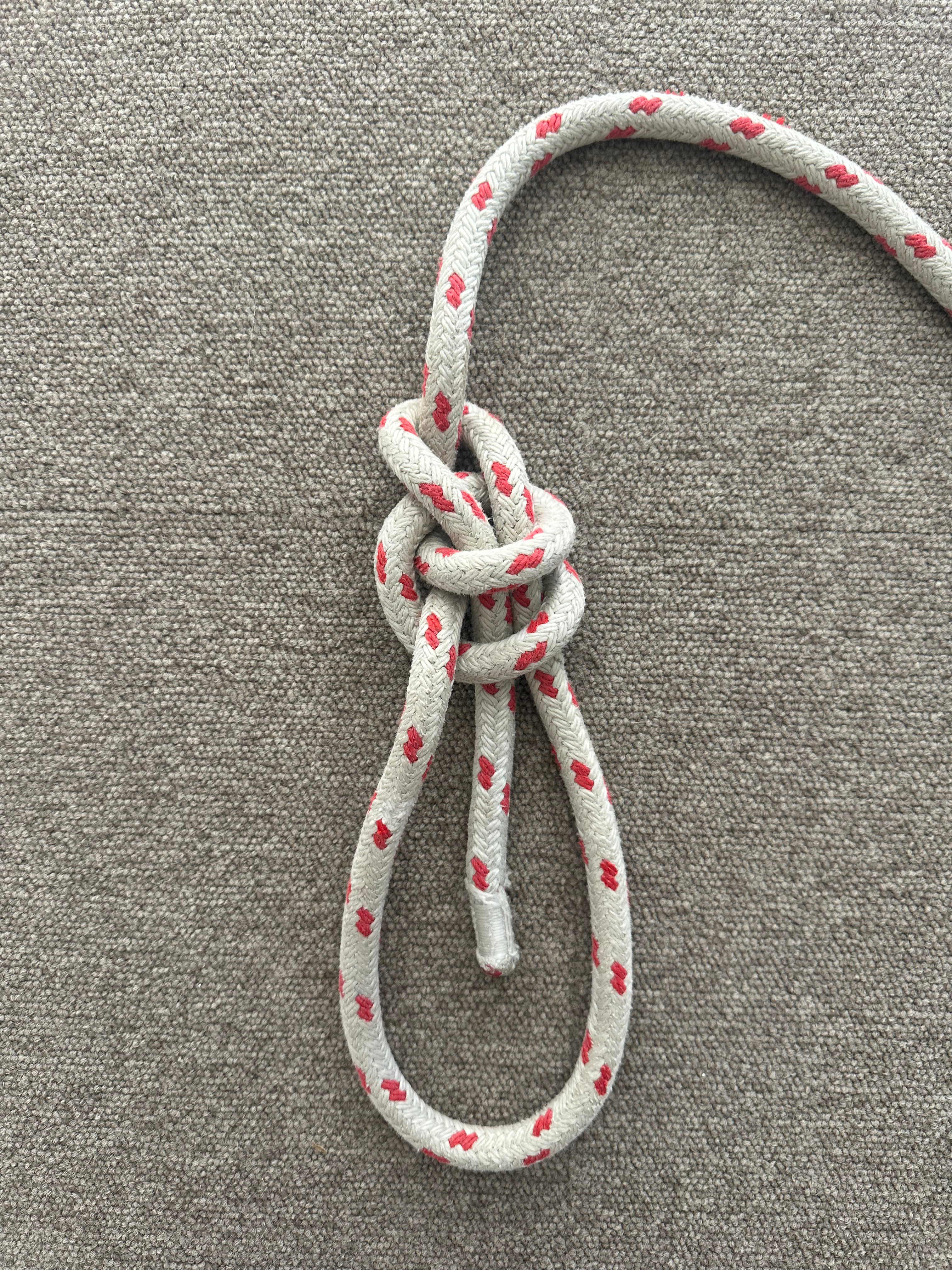
For a compact sliding loop the purpose-built EStar knot has emerged specifically because conventional stoppers and hitches pull through single-braid Dyneema. And on racing boats the connection that used to be a bowline in a sheet is now very often a soft shackle, a button knot and spliced eye in HMPE that any crew member can learn to open and close in ninety seconds, holds far better than a knotted loop, and removes the knot from the equation entirely. Sometimes, though, you are on the water with a length of Dyneema, no fid, no time to splice, and a job that needs a loop now. The honest position is that a bowline is the weaker choice in this fibre and you should know it, but if it is the choice in front of you there are ways to make it hold far better than a plain bowline will.
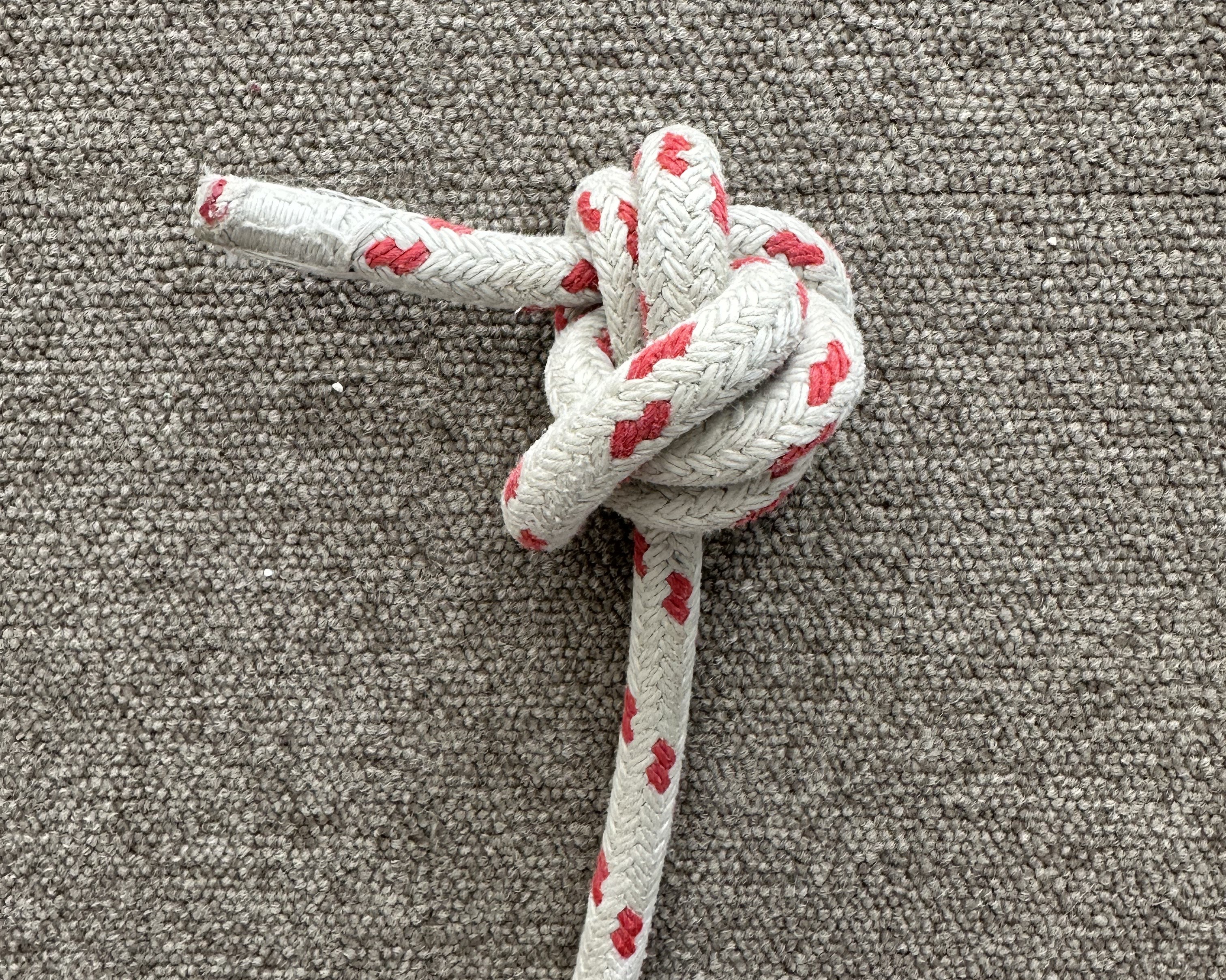
None of which means I have stopped tying bowlines. On the polyester dock lines, on the older cordage, on anything where the fibre still has the friction the knot was born to grip, the bowline remains exactly what it always was, the fastest good loop a human hand can make and the easiest to break open at the end of a cold night watch. The knot has not been beaten completely but you must be aware of the new reality of modern high tech fibres.
SO, IS IT STILL THE CORRECT SOLUTION?
Here is where I have arrived, and I have tried to let the evidence rather than sentiment carry me there.
For natural fibre, for nylon, for polyester, for the ropes that made up the entire working world until a generation ago and still make up most of it, the bowline remains the correct answer for a fast, strong, non-jamming loop, on the one condition that was always true and is simply more visible now. It has to be tied well and, where failure carries a cost, backed up. That is not a concession forced by modern materials. Smith knew it, Ashley knew it, and every instructor who ever made you add a stopper knew it. The bowline was never a knot you tied and forgot.
For high-modulus fibre, the honest answer is that the plain bowline is no longer the correct solution and pretending otherwise is how spinnakers end up in the water. The rope is too slippery, too unforgiving of a sharp bend, and too quick to skate a coil for a knot that relies on surface friction and gentle radii. The correct solution in Dyneema is a splice where the connection is permanent, a water bowline or figure eight where a knot is genuinely needed, and a soft shackle where you would once have tied a loop in a sheet. The four-thousand-year-old configuration has not been proven wrong. It has been overtaken by a fibre that punishes exactly the compromises the bowline was built on.
Which is, when you stand back from it, a very ordinary story about tools. The bowline conquered because it was the best compromise available in the materials of its age, and it held its throne for as long as those materials defined the trade. It has not fallen so much as been asked to share the kingdom with knots and splices better suited to a fibre nobody could have imagined even 75years ago. The king of knots is not dead. But for the first time in its very long reign, it is no longer the automatic answer, and the mark of a serious rope user now is knowing precisely where its authority ends.
I still teach the bowline first. I always will. It is too useful, too fast and too deeply embedded in seamanship to discard. But on a modern boat I now teach the splice second, and increasingly the second lesson is the one that matters. The old knot still deserves respect. It no longer deserves blind trust.


Comments