
FirstBeat Essential: Why Your Sails Are Probably Costing You Places

— First published April 2026, read by over 1.5k offshore crews and skippers —
Why everything you thought you knew about sail trim has changed, and how it used to be
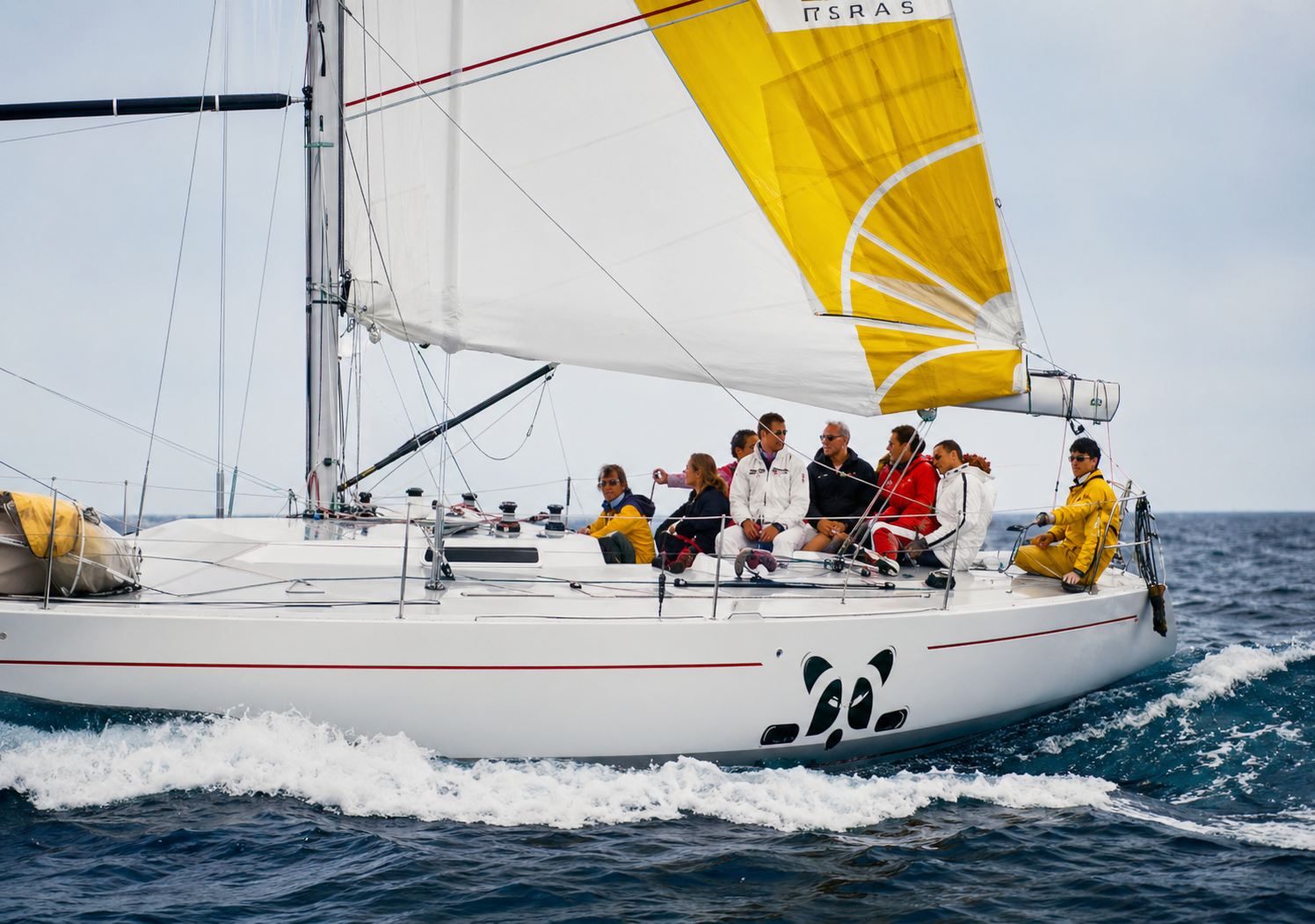
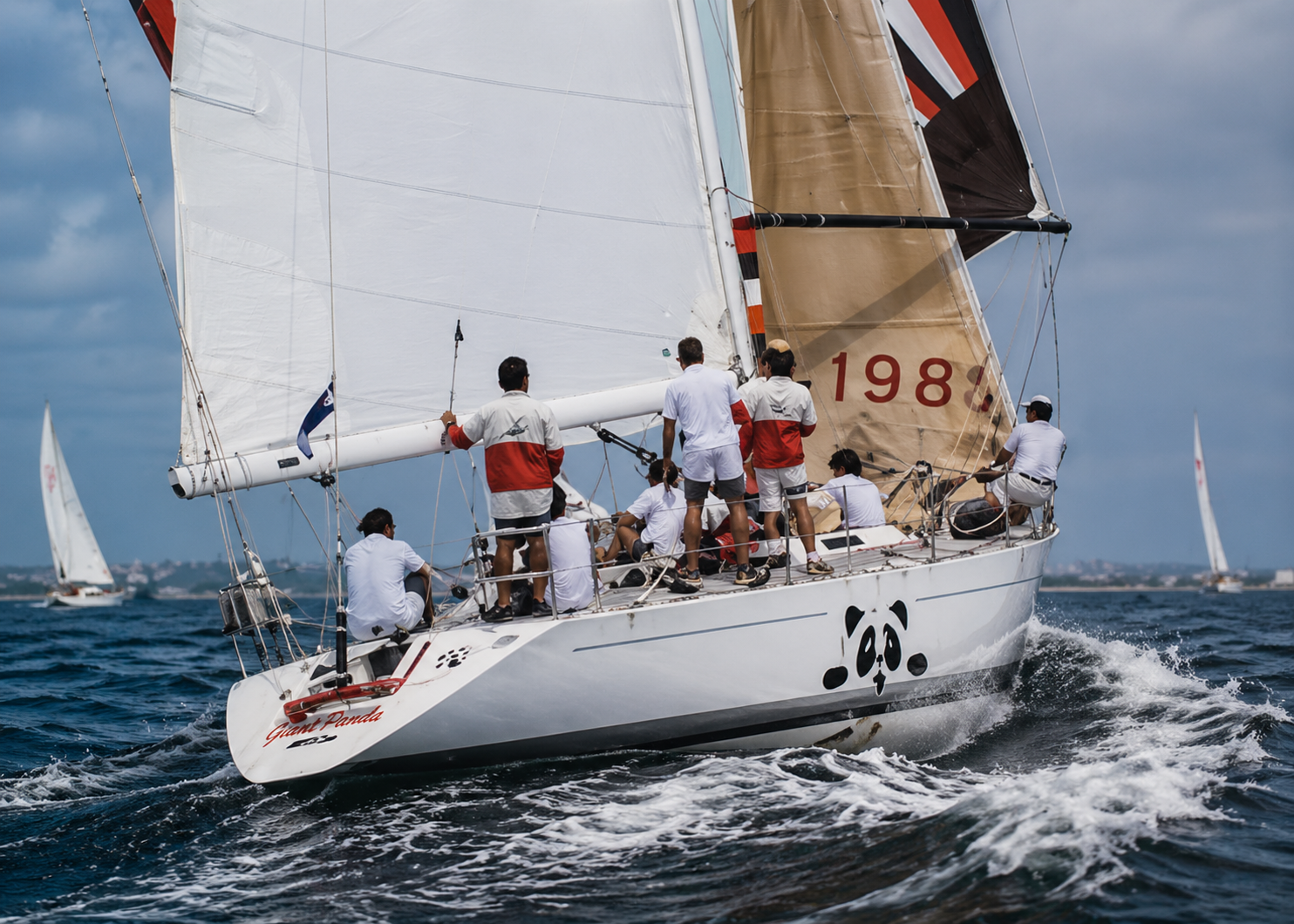
It was the summer of 1987. I was the tactician on Giant Panda, a Two Ton Admiral’s Cup boat designed by Hugh Welbourn.
This was the start of the RORC Fastnet Race.
We had a midday start off the Squadron Line in the Solent, just off Cowes. The wind was a light south-westerly, around 8 knots. We started with our No.1 genoa, a large 150% overlapping sail, very much the fashion at the time, alongside a full mainsail. With the hydraulic backstay fully wound on, we were set up for a tight beat towards Cowes Green, staying in the shallower water where the last of the flood tide was weakest so gave a slight advantage over those in deeper water or starting at the North end of the line.
This was typical Fastnet start geometry in those days, boats pushing into the inshore shallows just before the tide turned favourable.
As we approached the Green on starboard tack, the depth dropped away quickly. We called for water and prepared to tack out into slightly deeper water. With 30 or 40 other Class 2 boats doing exactly the same thing, it was hectic.
We had 12 people onboard, with five fully engaged in every tack. By the time we reached Gurnard Ledge, we’d already completed over 20 tacks, rotating grinders, trimmers, and tailers just to keep the manoeuvres clean. The team looked strong, but already working hard. Those big overlapping genoas demanded real physical effort.
But as tactician, I had to call something far more demanding.
In the 20 minutes since the start, the wind had built to over 16 knots. With the tide now turning and increasing apparent wind and load on the rig, Giant Panda was seriously over-canvassed, heeling too much, loading the helm, and no longer pointing effectively.
We needed an immediate headsail change.
We were still in the deeper water heading down towards Hurst Narrows, where the tide and wind both funnel and increase. With a twin-groove Harken headstay (a Tuff Luff system), we could pre-load the No.2 genoa, already rigged with sheets and ready to hoist. This sail had a shorter foot and heavier cloth, better suited to the building conditions.
The plan was precise: hoist the new sail in the second groove while on port tack, tack onto starboard, and immediately drop the old genoa inside the new one, never losing drive, never leaving the boat underpowered.
This wasn’t a small job but the ‘tack set’ was a well practise routine on all race boats of the time.
It took the bowman, the mastman, and at least three others to set up, manage, and execute, all while sailing at over 8 knots through the water, with 3 knots of tide underneath us, surrounded by 30 other boats doing exactly the same thing.
You don’t get that wrong.
We had practised it extensively. But after the relentless tacking duel from the start, and an earlier sail change in a Solent sea state already putting water on deck, the crew were beginning to fatigue a little.
This is exactly why I talk about the Seven Stages of Offshore Racing.
The start is only Stage 2, after preparation, and I always emphasise: conserve energy early, start conservatively, preserve the team.
Back then, it wasn’t always that simple.
But the final part of the story is worth telling.
On board Giant Panda, we carried four genoas, three jibs, and storm sails. As we pushed west towards Hurst Castle spit, now beating into a building ebb tide with a strengthening south-westerly sea breeze, solid Force 4, building 5, it became clear we needed to go again.
The call was for the No.3, a blade jib.
This was a full-height, non-overlapping sail, cut higher on the foot to allow water to pass underneath rather than crashing directly into it. It gave control, and at that point, control mattered more than power.
Looking ahead, the beat down the Shingles Bank towards the Needles was going to be brutal: steep seas, breaking waves, multiple tacks, and very little margin for error.
Despite the groans from the crew, I made the call.
We set up for the change.
As we executed the manoeuvre, one of the crew, positioned near the leeward shrouds to gather the leech of the old genoa, was struck on the side of the head by the J-lock fitting on the clew as the sail unloaded.
With no load on it, the clew whipped violently across the deck.
He went down immediately, out cold for a few seconds.
Looking back, we were lucky, it could easily have been far worse.
When he came round, he grabbed the leeward shroud. The grinder and trimmer were already moving forward to secure him. There was some blood and a very sore head, but he was conscious and coherent.
We got him below, gave him a couple of aspirin, and carried on racing.
It was one of those moments where performance and risk sat uncomfortably close together.
Why tell this story?
Because it shows just how far things have come.
Yacht design, sail handling systems, and sail technology have evolved massively over the last 40 years. What was once physically brutal, high-risk, and manpower-heavy is now faster, safer, and far more efficient.
And that’s exactly what this article explores — how modern sail technology has transformed offshore racing performance.
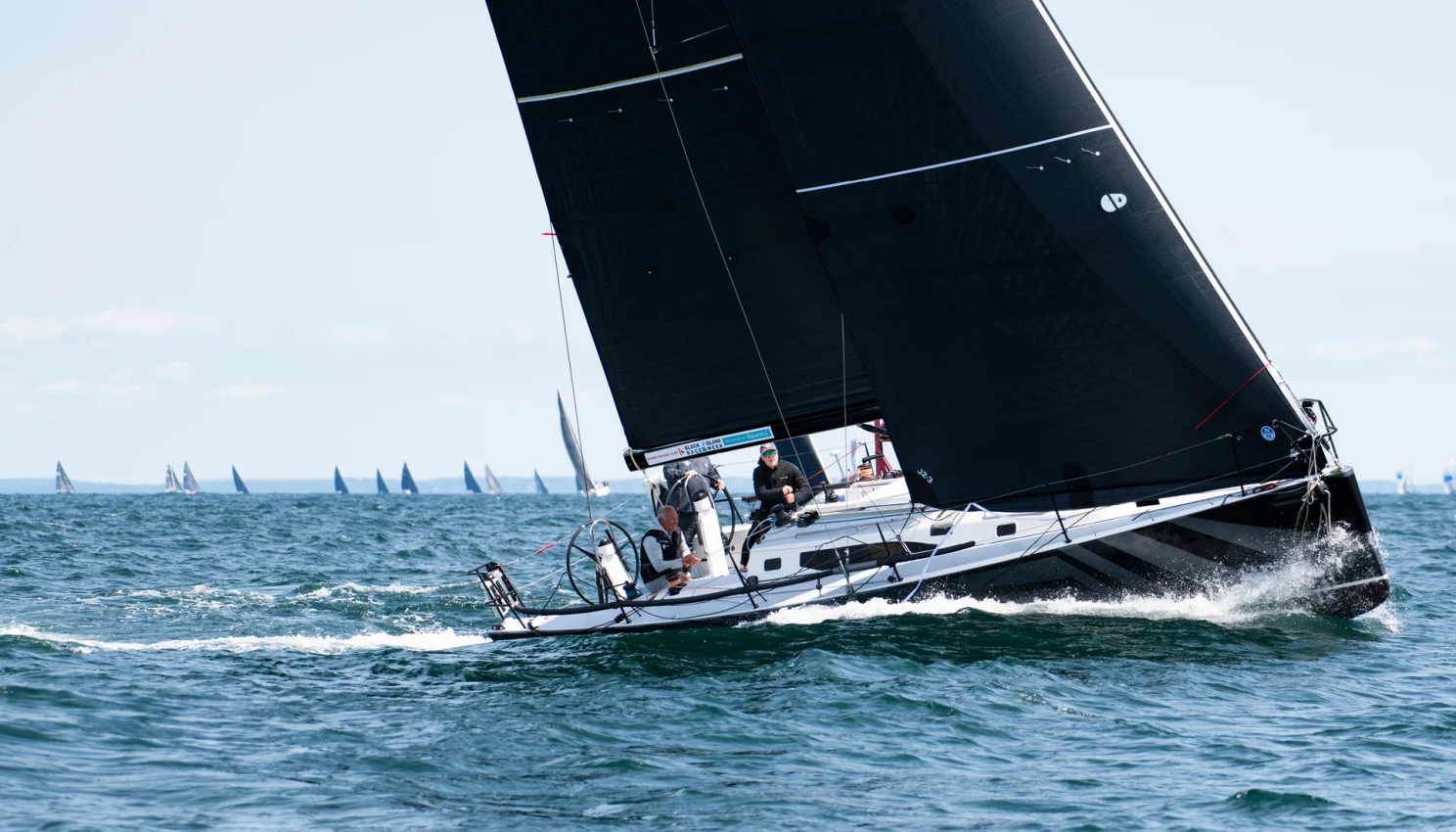
So the last 20 years, if not 30, have seen sailmaking evolve from a skilled craft into a data-driven, materials-engineering discipline. What was once about “shape and feel” is now about load paths, fibre alignment, laminate chemistry, and computational fluid dynamics (CFD) — with the best sailmakers operating closer to aerospace engineers than traditional lofts.
This matters profoundly for IRC racing. Under IRC, you are not simply chasing outright speed—you are chasing efficient, repeatable performance across a wide range of conditions, often with a sail inventory that must work harder than a fully optimised grand prix programme.

1. The Modern Sail: From Cloth to Engineered Structure
A modern race sail is no longer “cloth”—it is a composite structure.
Key Concept:
A sail today is designed around primary load paths:
Head → clew (leech load)
Head → tack (luff load)
Clew → tack (foot load)
Instead of woven fibres distributing load inefficiently, modern sails align fibres exactly along these load vectors.
Core Technologies:
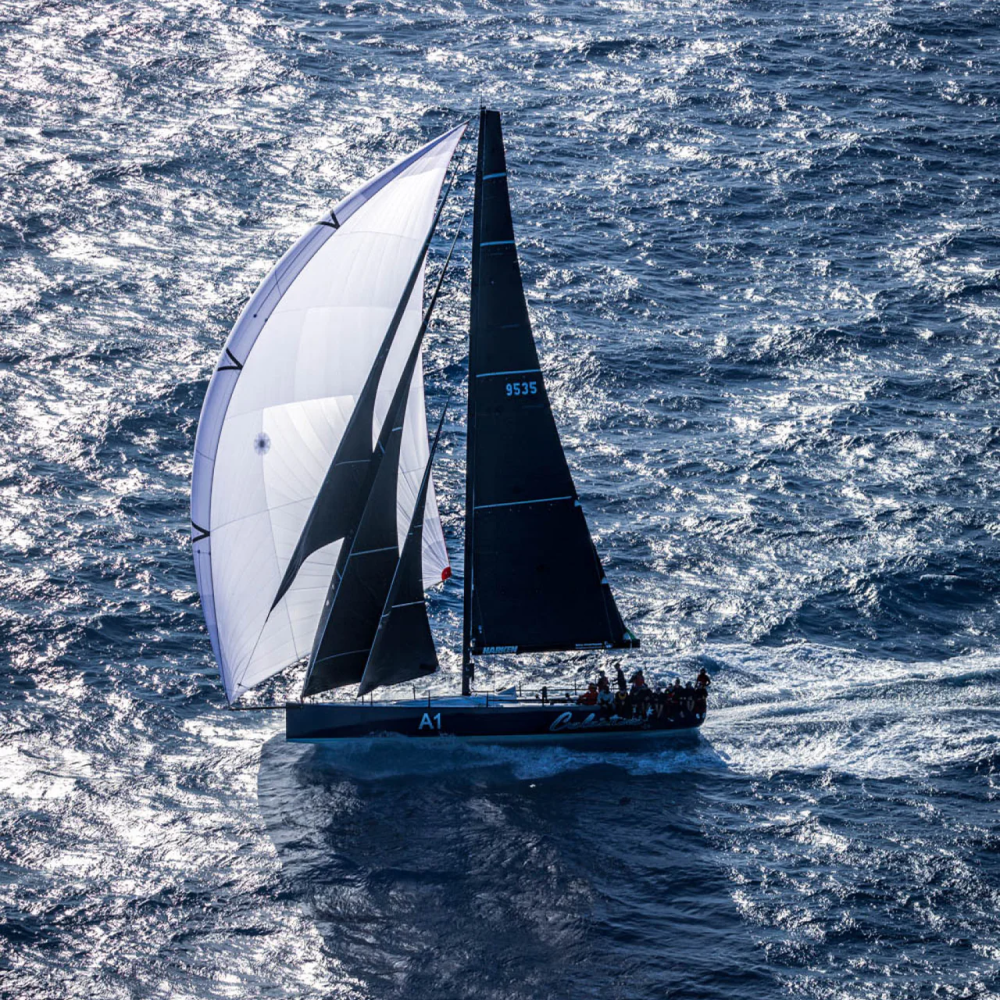
Membrane sails (e.g. North Sails 3Di, Doyle Sails Stratis, Quantum Sails Fusion)
Tape-driven structures (load path tapes laid on film or mould)
3D moulded composites (heat + pressure forming)
Result:
Lower stretch
Higher shape retention
Greater aerodynamic efficiency over time
2. Fore & Aft Sails (Upwind): Precision Structures
Upwind sails—mains and jibs—are where modern sail tech delivers the biggest gains.
2.1 Aerodynamic Theory
Upwind sails operate as high-lift foils:
Maximise lift-to-drag ratio
Control attached flow
Maintain laminar sections as long as possible
Key variables:
Camber depth & position
Entry angle (luff round)
Twist profile
Leech stability
2.2 Materials in Use
Carbon Fibre
Extremely low stretch (high modulus)
Excellent for primary load paths
Weakness: brittle, UV sensitivity
Dyneema (UHMWPE)
High strength, excellent fatigue resistance
Slight creep under sustained load
Superb durability → ideal for IRC longevity
Aramid (Kevlar / Twaron)
High modulus, lighter than carbon
Poor UV resistance → ageing issue
Hybrid Laminates
Most modern sails combine:
Carbon (structure)
Dyneema (durability)
Polyester films (shape stability)
2.3 Manufacturing Evolution
Then (2000s):
Cross-cut or tri-radial panels
Broadseaming to create shape
Now:
Full 3D modelling (CFD + FEA)
Fibre placement via robotic or guided systems
Moulded shapes with minimal distortion
Broadseaming is now:
“A secondary shaping tool, not the primary driver.”
3. Downwind Sails: Power, Stability, and Control
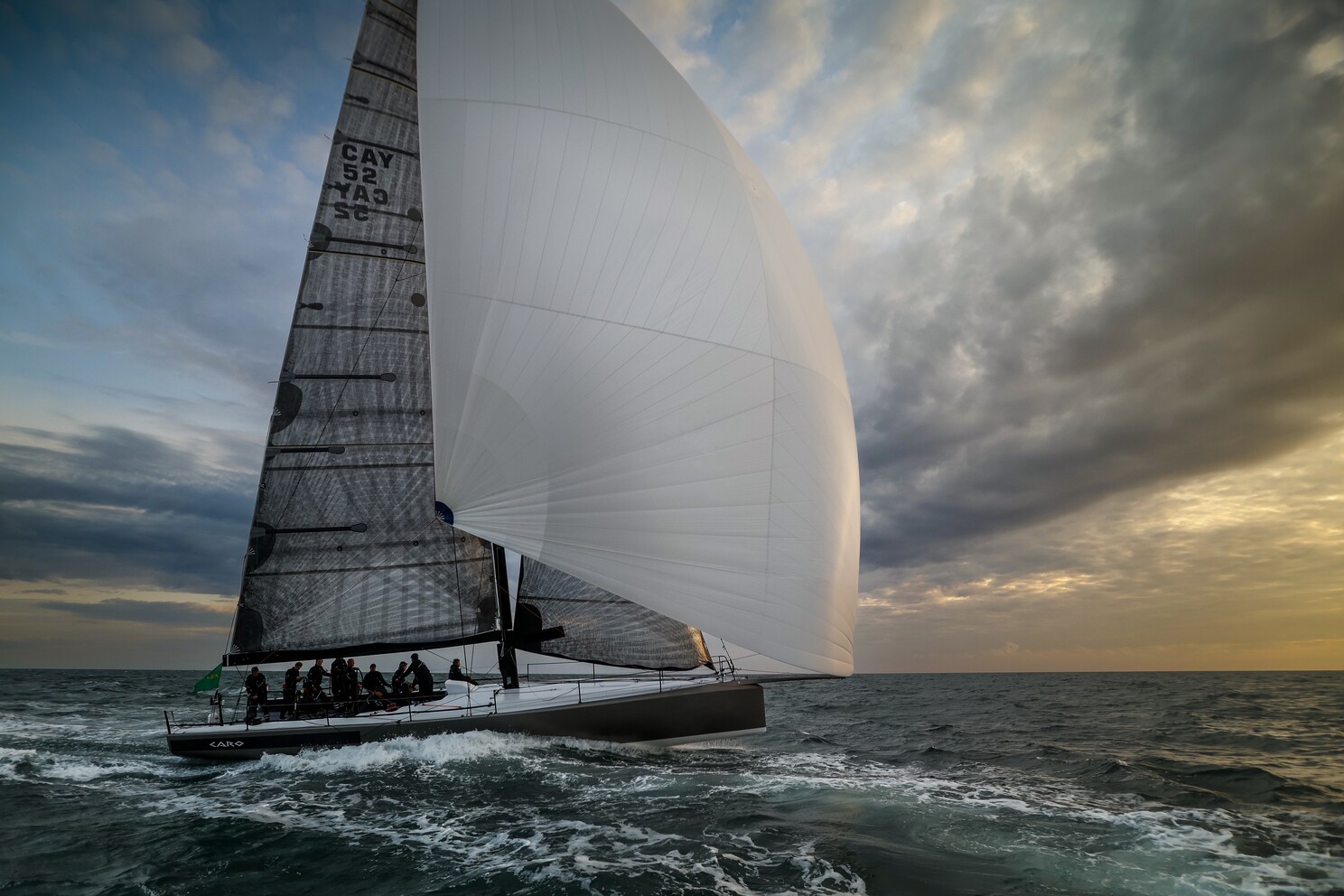
Downwind sails operate in a very different regime:
Higher drag coefficients (by design)
Flow often partially separated
Stability > absolute efficiency
3.1 Asymmetric Revolution
The shift from symmetric to asymmetric sails is one of the biggest changes in modern racing.
Why asymmetrics dominate:
Easier handling (critical offshore)
Higher average speeds (apparent wind sailing)
Better integration with autopilot and short-handed sailing
3.2 Types:
A1 / A2 / A3 – running to reaching kites
Code 0 / Code sails – tight reaching, near-upwind angles
3.3 Structural Design
Unlike upwind sails:
Load is more distributed
Shape is more dynamic
Fabric choice prioritises elastic recovery + tear resistance
Materials:
Nylon (still dominant for kites)
Polyester blends
Emerging structured membranes for Code sails
4. The Death (and Rebirth) of Broadseaming
Traditional sailmaking relied on broadseaming:
Panels cut with curvature
Sewn together to induce 3D shape
Limitations:
Shape changes under load
Inconsistent replication
Labour intensive
Modern Approach:
Shape defined digitally
Structure carries load
Seams become structural joints—not shaping tools
However:
In IRC sails, controlled broadseaming still plays a role in durability and cost control.
5. The Big Players and Material Supply Chain
Major Sailmakers:
North Sails – 3Di composite technology leader
Doyle Sails – Stratis (structured fibre mapping)
Quantum Sails – Fusion M (membrane + moulded)
UK Sailmakers – X-Drive technology
Material Suppliers:
DSM Dyneema – UHMWPE fibres
Teijin – aramid fibres
Toray Industries – carbon fibres
Insight: The real innovation often comes from materials science, not sail lofts.
6. Why IRC Boats Still Need Custom Sails
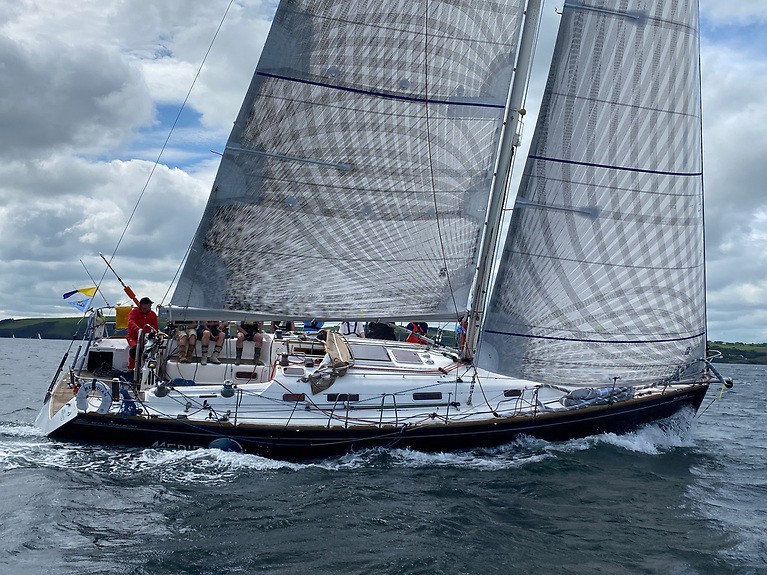
Unlike one-design classes:
Hull shapes vary widely
Stability curves differ
Rig geometries are inconsistent
IRC rewards:
All-round efficiency
Not peak condition optimisation
Therefore:
Customisation is critical:
Luff curves tuned to rig bend
Sail area vs rating trade-offs
Inventory designed for overlap between conditions
“The fastest sail is not the one with the best shape—it’s the one that works most often.”
7. Performance Across Wind Ranges
High-Tech Sails Excel:
Medium wind (8–18 knots)
Stable apparent wind angles
Flat water
Weaknesses:
Very light air → too stiff
Heavy air → load spikes, durability issues
Practical Reality:
A slightly “softer” sail can outperform a perfect membrane in real offshore conditions.
8. The Future of Sail Technology
Likely Directions:
AI-driven design loops (real-time optimisation)
Embedded sensors (load + shape monitoring)
Adaptive sails (variable camber structures)
Increased use of recyclable composites
Key Shift:
From:
“Design → Build → Use”
To:
“Design → Measure → Adapt → Iterate”
9. Owner’s Guide: Maximum Performance on a Real Budget
Prioritise Your Inventory
J2 / J3 crossover is critical
One excellent mainsail beats two average ones
Choose Material Wisely
Carbon/Dyneema hybrid = best balance
Avoid full carbon unless campaigning hard
Design for Your Sailing Style
Offshore → durability bias
Inshore → performance bias
Work with the Loft
Provide real data: Polars (even estimated) Rig tune numbers Crew style
Accept Compromise
IRC rewards versatility, not perfection
Maintain Relentlessly
UV protection
Proper flaking / storage
Regular shape checks
Replace Strategically
Headsails first (most critical)
Then main
Then downwind inventory
What Top Sailors Understand (That Others Don’t)
Top helmsmen and trimmers know:
Sail shape is dynamic, not fixed
Material behaviour changes with: Load Temperature Age
Poor sailors:
Blame sails too early
Ignore trim range
Fail to adapt to sail characteristics
11. Industry Reflection: 20 Years of Change
20 years ago:
Sailmaker = craftsman
Design = experience
Today:
Sailmaker = engineer + data scientist
Design = simulation + iteration
Yet one truth remains:
“The best sails in the world still need a crew that understands them.”
Final Thought
Modern sail technology offers extraordinary performance—but only if:
The sail is correctly specified
The boat is correctly set up
The crew understands how to use it
In IRC racing, the winners are not those with the most expensive sails—but those with the best integrated system of design, material, and execution and thank goodness for dyneema, and soft shackles they make life so much safer!


Comments