
Surfing: The Hidden Engine of Offshore Speed

The Moment Everything Changes
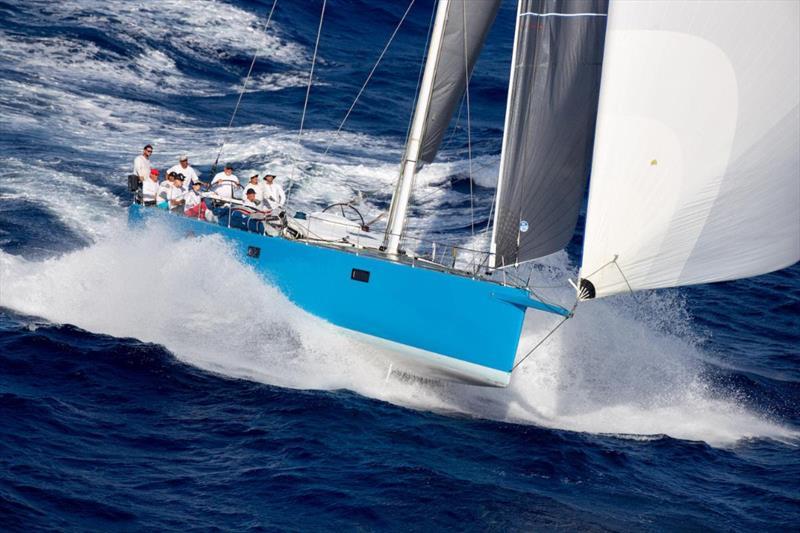
You’re running in 20 knots TWS Boat speed is good. Everything feels under control.
Then the stern lifts.
The boat hesitates for a fraction of a second—then accelerates.
Spray builds. The helm lightens. The apparent wind swings forward.
And suddenly, you’re no longer sailing through the water.
You’re riding it.
That moment—when the hull releases and the boat starts to surf—is where offshore races are won.
This Is Not Downwind Sailing as It Used to Be
There was a time when offshore downwind performance was about minimising loss.
Boats like Sparkman & Stephens yachts were elegant, balanced, and efficient—but fundamentally limited by displacement hull speed.
Modern offshore boats are different animals entirely.
Designs such as the Sun Fast 3600 and JPK 1180 are built for something else:
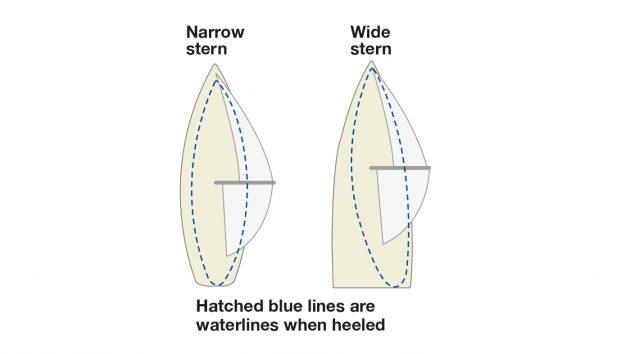
Wide, powerful sterns
Flat aft sections
High form stability
Reduced drag when accelerating
They are not trying to cope with waves.
They are designed to use them.
The Real Game: Connecting Energy, Not Angles
A wave is a moving energy system.
Your job is not simply to sail the correct angle to the wind.
Your job is to position the boat so gravity does the work.
The cycle is always the same:
Climb → Release → Surf → Decay → Repeat
The stern lifts
The bow tips forward
The boat accelerates down the face
Speed builds rapidly
Then it fades
The crews who win offshore races are not just sailing.
They are linking these cycles together, over and over again.
Apparent Wind: The Trap Most Crews Fall Into
As the boat accelerates:
Apparent wind moves forward
Apparent wind speed increases
This changes everything.
Most crews get this wrong.
They bear away… but leave the sails eased.
The result?
Flow detaches
Power disappears
Boat falls off the surf
The fast boats do the opposite.
They keep trimming in as they accelerate.
This is one of the biggest mindset shifts in modern offshore sailing:
The faster you go, the more you trim.
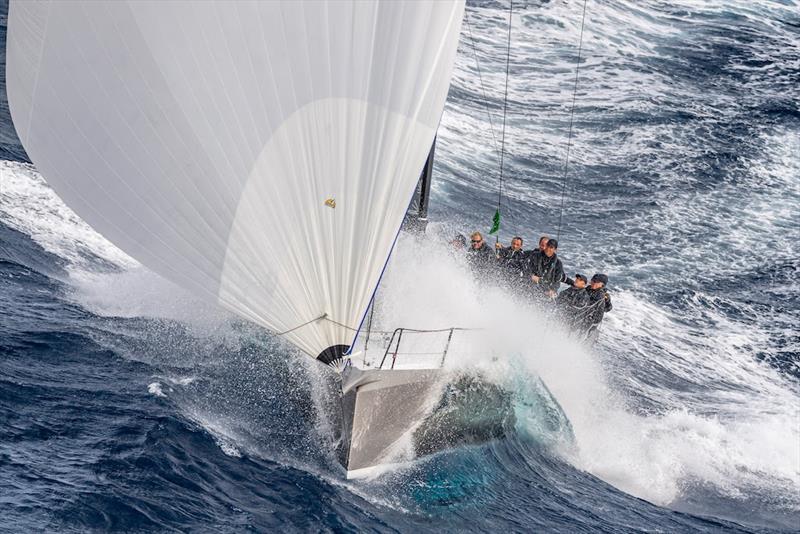
The Hull Unlocks the Speed
This is where design becomes decisive.
Modern hulls are designed to transition from displacement to semi-planing modes.
At low speed:
Waterline length dominates
Drag rises sharply with speed
At higher speed:
Dynamic lift increases
Wetted surface reduces
Effective resistance drops
This is why the acceleration feels so dramatic.
You are not just going faster.
You are entering a different hydrodynamic regime.
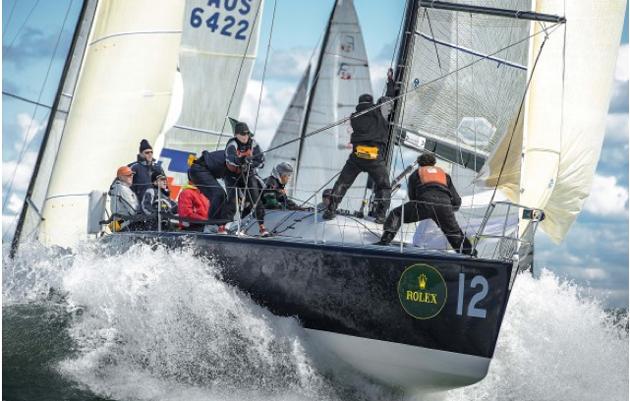
Helming: The Difference Between Average and Elite and why autohelms can’t do it
A good offshore helm:
Reads the wave before it arrives
Anticipates stern lift
Times the bear away with the energy release
Drives the acceleration phase aggressively—but in control
The technique is subtle but decisive:
Head up slightly to climb
Bear away to engage
Tighten as speed builds
Control the exit
Get it right—and the boat takes off.
Get it wrong—and you stall, or worse, broach.
Night Sailing: Where It Really Shows
At night, everything changes.
You cannot see the wave clearly. You cannot rely on visual cues.
So you switch systems.
You sail by:
Pressure on your face
Load on the helm
Movement under your feet
Sound of the wake
The best offshore sailors don’t lose performance at night.
They become more precise.
Because they stop reacting—and start feeling.
Double-Handed Reality
In double-handed racing, this becomes critical.
Yes, the autopilot is essential.
But it cannot:
Link wave sequences
Anticipate surf entry
Maximise acceleration
So the reality is simple:
If you want to go fast in waves, you have to drive the boat.
Manually. Actively. Continuously.
The Reality Over a 600-Mile Race
This is where it becomes decisive.
A crew that surfs properly will:
Spend more time above target speeds
Maintain higher averages
Stay in pressure bands longer
The gain?
Often just 0.5–1.5 knots.
But compounded over 300–600 miles…
It’s the difference between mid-fleet and the podium.
The Truth
You are not racing the wind alone.
You are racing:
The wave pattern
The timing
The transitions
And the teams who learn to connect wave to wave—
Don’t just go faster. They break away.


Comments