
Are we seeing the end of the fully crewed offshore race?


Two different challenges, forty years apart As Crew Boss on Giant Panda in the Admiral’s Cup in the 1980s, my job before the start was never just tactics. It was people. Ten of them, I had to work out who was genuinely up for it and dependable, who was playing at being a ‘rock star’ (as we called them then), who’d be seasick, and who was still hungover, living on cigs and coffee, and needed watching at 0300 when the breeze built and it was time to peel the kite. The boat was the easy part. The crew was always the challenge. In

Thirty years later I raced the Fastnet two-handed on Silver Shamrock , my Ron Holland classic half tonner. Different century, felt like a different sport. For long stretches I was effectively alone: co-skipper asleep below, autopilot steering (well sometimes working), me trimming, navigating, eating, and keeping the watch. No one to brief. No one to develop. No one to manage but myself. Bliss? So over the years I have been privileged to race both crews and short handed seriously, and I can tell you they are related, of course, but not exact versions of the same thing. They are almost two different sports, at the extreme, that happen to share a start line. That split, and what it means for how the sport trains its people and gets new recruits, is what this article is about. Regular readers will recognise pieces of this argument. In April I asked whether offshore racing was in crisis or just evolving, and concluded the pathway was broken. I have written about command at sea, about what the watch system teaches, and about why a Fastnet builds better leaders than a business school. Each of those was a piece of the picture. This is my full view of where I think we are, and where the sport is going next for the benefit, I hope, of all the new subscribers (thank you). But challenge me… as my son says ‘You’re just a barking mad boomer with attitude’ Let me say this early, because otherwise the argument will be too easy to misunderstand. Double-handed racing is not the enemy. It is one of offshore racing’s great modern success stories. It has kept owners racing, produced brilliant sailors, driven better boats, improved auto-pilot use, sharpened preparation and made serious offshore racing possible for people who no longer want to spend every Thursday night trying to assemble a crew from WhatsApp, old emails, text, and the odd telephone call. The problem is not that double-handed racing exists. The problem is that the sport has quietly started treating it as if it does the same job as fully crewed offshore racing. I don’t think it does but that doesn’t mean it doesn’t have its place… l’ll explain: The numbers: a sport dividing in two The data is no longer subtle. When the RORC introduced the IRC Two-Handed class in 2005, twenty boats entered. By the 50th Rolex Fastnet Race, more than a quarter of a record IRC fleet exceeding 400 entries was racing two-handed, and that excludes the IMOCAs, also sailed double-handed. The landmark came earlier: in 2013 Pascal and Alexis Loison won the Fastnet Challenge Cup outright on the JPK 10.10 Night and Day , the first double-handed crew ever to do it in the race’s history. Second overall was another JPK 10.10. Meanwhile the boats getting much of the design attention are still smaller and faster. The JPK 10.30, Pogo RC, the Sun Fast 3300 and 3600, the new scow-bowed generation. These are purpose-built to be raced hard by two people, stable enough to carry full sail in conditions that would have had an older fully crewed 40-footer reefing, and balanced enough to sail fast under auto-pilot whilst maintaining target speeds. Walk the RORC results and the same pattern repeats. The weight of the fleet has moved decisively into the smaller IRC classes, much of it double-handed, while many of the boats that need six, eight or ten trained crew have thinned. I wrote in April that offshore racing’s middle is disappearing. This is where it went. Why owners chose the smaller boat- not difficult to understand A smaller boat costs less, needs fewer sails, fewer hotel rooms, fewer flights, fewer berths, fewer meals, fewer crew shirts, fewer lifejackets, fewer diaries and fewer late cancellations. It gives the owner more racing for less organisational pain. It allows a serious sailor to put his capacity into the boat rather than into the weekly human puzzle of finding, training, briefing and retaining a crew. In that sense double-handed racing is a superb adaptation to all these consequences of modern living and recreation. But adaptations have consequences. When the fully crewed middle disappears, the sport does not merely lose some larger IRC entries. It loses the place where people were trained. By doing by doing the middle watch being the young bowman or the nervous first-time offshore trimmer, the navigator learning to brief a deck team in the dark. Nobody meant to remove those opportunities. But removed they are. The offshore racing world keeps talking about double-handed racing as if it were perhaps fully crewed racing with a smaller lunch order. It is not, and the difference matters. Here’s why The autopilot is almost part of the crew. On a modern two-handed boat, the pilot steers a majority of the miles. That changes everything downstream: the boat must be designed to sail fast under pilot, the humans become trimmers, navigators, systems managers and strategists as much as helms, and the racing becomes a contest of preparation, calibration, power management, stamina and judgement as much as boat handling. You are alone half the time. With your co-skipper asleep, every decision is yours: the sail change, the shipping, the squall, the reef, the routing call, the food, and the tired voice saying you might have got this wrong. It is closer to solo racing with relief than to team racing with a seasick crew. Far fewer sailors are being developed. Two capable sailors sail the boat. There is no full bow team learning the pole gybe, no young trimmer being coached through a night watch, no pit person moving forward over a season, no deputy watch leader being quietly tested with more responsibility. Some two-handed crews do develop each other, of course they do. But the arithmetic is brutal. The berths where offshore sailors used to be made simply do not exist on board. A friend of mine, formerly a senior executive at the RYA, put it in one sentence: he sails his boat faster double-handed than fully crewed. Think about what that actually conveys. It is not that crews are less able. It is that when a good sailor races fully crewed, a large part of his capacity goes into other people, briefing them, correcting them, bringing them up to the standard the boat needs. Two-handed, all of that capacity goes into the boat. Which is exactly why double-handed is so satisfying to sail, and exactly why it develops so few new sailors. Fully crewed is the harder game to lead, and that is the point The lazy view is that fully crewed racing is easier: more hands, more sleep, more redundancy. Anyone who has actually run a crewed offshore campaign knows better. With six, eight or ten people on board, the performance problem stops being pure sailing and becomes management as I mentioned at the beginning: Selection. Finding people with the skill, the fitness and the diary to commit to a season, not a weekend. Training. Getting a mixed-ability crew to a standard where the boat sails to its numbers at 0300, when the skipper is asleep. Communication. Ensuring decisions taken at the nav station are translated into correct action on a wet foredeck, in the dark, by tired people. Cohesion. Keeping ten personalities functioning as one system through fatigue, setbacks and the fifth sail change before dawn. I have written before about command at sea and the watch system, so I will not repeat the argument here. The short version is that a fully crewed offshore boat is the most honest management school there is, and it has been running since the RORC’s founding in 1925. For a hundred years the sport has quietly turned out people who know how to select, train, brief, delegate and lead under real consequence. It did this as a by-product. Nobody designed it. And nobody noticed it was valuable until it started disappearing. Every double-handed boat on the entry list removes four to eight of those learning berths. I made that point in April in Is Offshore Racing in Crisis, or Just Evolving? , and it has been following me around ever since, because nothing about this season or others has contradicted it.

The conversation that sharpened my pen! A while ago I was talking to a senior person involved with the RNLI, and she said something that stuck. Her observation was that modern culture, men in particular but certainly not only men, seems less willing than today to take on an outdoor sport that is cold, wet, difficult and slow to reward and even the RNLI was suffering. Marine activity offshore such as sailing and fishing were the places you could see it. People want their enjoyment immediately. Offshore racing offers what you might call second-order enjoyment, it feels very tough while you are doing it and then magnificent afterwards, and perhaps the satisfaction is in direct proportion to the discomfort. Her suggestion was that the sport, along with sail training ships and outward bound sailing generally, might be one of the better instruments we still have for teaching people, young men included, to put themselves under pressure and come out the other side better for it. I think we all agree with her.

Her views where supported many years ago. Kurt Hahn, the educator who founded Outward Bound, diagnosed exactly this in 1960, listing among his six declines of modern youth the decline of initiative and enterprise due to what he called the disease of “spectatoritis”. In a speech to the Outward Bound Trust that year he said: “I regard it as the foremost task of education to ensure the survival of these qualities: an enterprising curiosity, an indefatigable spirit, tenacity in pursuit, readiness for sensible self-denial, and above all, compassion.” — Kurt Hahn, address to the Outward Bound Trust, 1960 So nothing has changed almost sixty-five years on, so why worry? An offshore race is an enterprising curiosity, tenacity in pursuit and sensible self-denial by the watch, and compassion is what you learn at 0400 when the newest crew member is seasick and frightened and someone has to hand them a hot drink and put them in a bunk. Two things need saying alongside this. First, this is not exclusively a male problem, and the answer is certainly not exclusively male. Some of the best offshore sailors coming through now are women. When the RORC relaunched its Griffin programme in 2024, 300 sailors applied, and of the 40 invited to selection, around half were women. Second, the appetite is demonstrably there in both sexes. The problem is not desire. It is berths. So can we solve it and make it finacially viable? France is a warning, not a template The instinctive answer is to point at France, and I have made the argument myself. France built a pathway: Mini to Figaro to Class40 to IMOCA, and it works magnificently. It produces some of the most complete offshore sailors in the world. But look at what it is primarily designed to produce. Solo sailors and double-handed pairs. Out of La Trinité or Lorient, the racing is short-handed almost by definition, brilliant, professional, sponsored and individualistic. The French system is the best in the world at making single-handed and short-handed offshore racers. It is not designed to solve the British fully crewed IRC training problem.

It does not make watch leaders, crew bosses or the kind of amateur-professional hybrid sailor who can take eight mixed-ability people offshore and bring them back better. If Britain simply copies France, we import the same gap. There is good news, and it matters, and the RORC made it happen This is not a simple story of decline. That would be too easy, and it would also be wrong. RORC has brought back the Admiral’s Cup, and that matters. The 2025 revival, after a 22-year hiatus, reminded everyone what fully crewed offshore team racing can still look like when owners, clubs, sailors and organisers decide it is worth doing properly. The 2027 edition is already scheduled for July, framed around two-boat teams, Solent racing, a short offshore race and the Rolex Fastnet Race.

The Sardinia Cup is back as well, and not as a promise but as a result. It ran this June in Porto Cervo after a 14-year absence, with two-boat yacht-club teams and crew requirements that included at least one female sailor and one athlete under 25 on every boat. The RORC team of Ino Veritas and Garm won it, and the event now alternates with the Admiral’s Cup, with the next edition set for 2028. That is not decline. That is renewal, and renewal with development berths written into the rules.
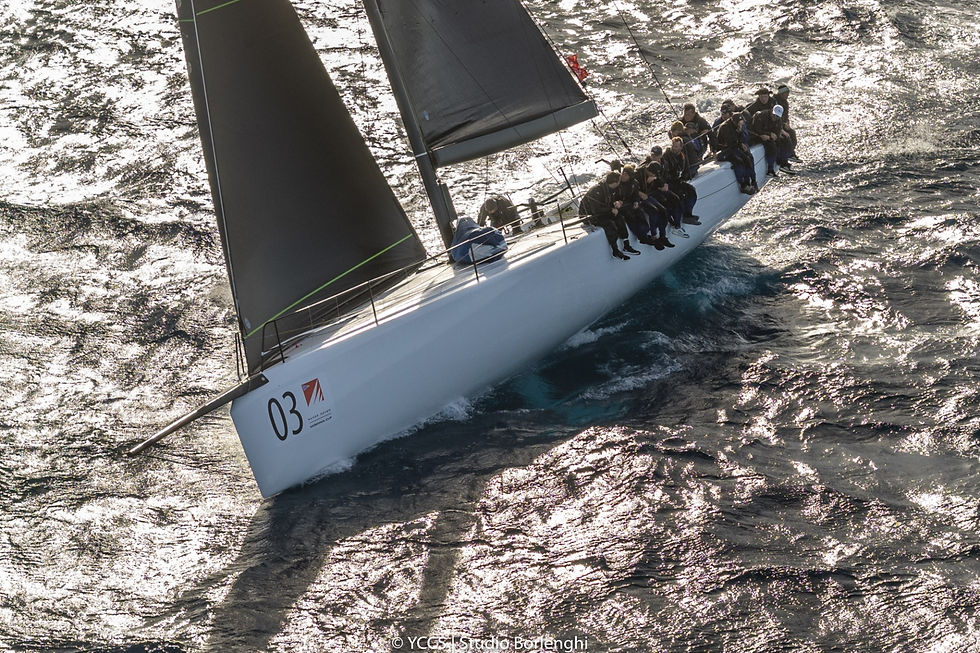
The TP52 fleet remains fully crewed, professional and ferociously competitive. The big Atlantic and ocean races still tend to reward proper crews, proper watch systems and proper offshore teams. The top of the sport is not empty. In places it is healthier, sharper and more international than it has been for years.
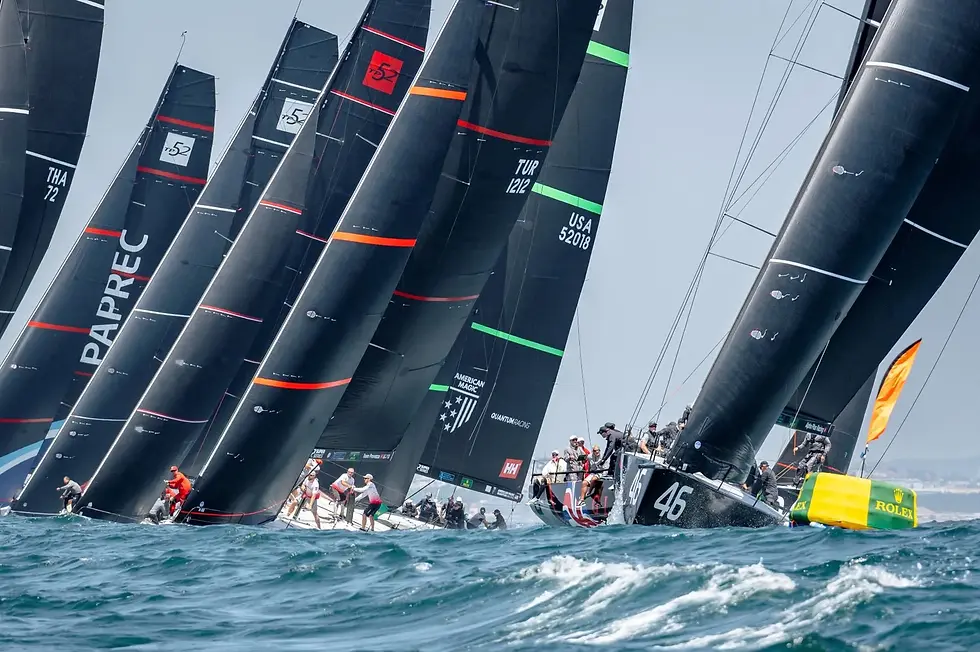
So the point is not that fully crewed racing has vanished completely. It has not. The point is that fully crewed racing is becoming polarised. At the top, it survives as elite, expensive, professionally managed campaign racing. At the other end, clubs and programmes like Griffin can create precious entry points for young sailors. What has thinned is the middle: the privately owned, season-long, fully crewed IRC boat where a mixed crew could learn its trade over years. That was the quiet school. That was where the young bowman became the watch leader, the trimmer became the tactician, and the owner learned that running a boat was really running people. What is actually being done, and what is missing This is not a counsel of despair. The most encouraging development in British offshore racing is that the RORC has recognised the problem and restarted the Griffin programme, giving sailors aged 18 to 30 a structured route into offshore racing: a club boat, proper coaching, navigation training on real software, and a season of RORC races to apply it in. The boat is out most weekends. It works. It is one boat. Beyond Griffin, the commercial race-training sector barely exists. I should declare an interest here. I am involved with Unity Sailing, a yacht race training company running a small fleet out of the Solent, and the pattern we see is instructive. The boats fill at weekends with people who want to race, properly race, not just gain qualifications. Midweek they sit idle. The demand is for racing and race training, and the supply, nationally, is a handful of boats. That is the gap. Britain has a mature industry for teaching people to pass Yachtmaster exams and almost no industry for teaching people to race offshore in crews and use those skills at the leading edge. Perhaps there is no quick answer This is the uncomfortable part, and perhaps the part where I owe the reader an apology. There is no quick answer. No rule change, youth scheme, rating tweak or inspirational speech will suddenly rebuild the fully crewed middle of offshore racing. The reasons it has thinned are real: money, time, family pressure, work, logistics, ownership cost and the sheer difficulty of getting eight or ten people to commit to a season. Double-handed racing did not cause all of that. It simply offered a brilliant escape route. So this is not a call for a ban, a grievance or a nostalgic return to some imaginary golden age. It is a call for a debate about what we still need fully crewed racing to do, if its relevant and who are the people prepared to help pay for it, organise it and open the berths. Perhaps the future is something else entirely The even more uncomfortable possibility is that there may be no clean restoration of the old model because the model itself is changing. The direction of travel is obvious enough. Pilots steer better for longer. Instruments think faster than tired humans. Routing software sees options no watch leader could hold in his head at 0300. Sail-handling systems improve. Batteries, hydraulics, sensors, load cells and software are becoming part of the crew. In the America’s Cup the trend is already brutally clear. The protocol for the next Cup cuts crews to five, requires at least one woman aboard, bans manual power outright and replaces the grinders with supplied battery packs: all energy stored, no human engine at all. Offshore racing will not become the America’s Cup, but some of the logic will travel offshore. It always does. The future may well be two highly skilled sailors managing an increasingly intelligent platform, not eight people dragging a conventional boat round the Channel by muscle, habit and shouted instruction. The skipper of the future may look less like a traditional watch captain and more like a systems operator, pilot manager, strategist, engineer, meteorologist and human risk controller. AI may not replace seamanship, but it will almost certainly change where seamanship is applied. If that is where the sport is going, then perhaps the question is not how we reverse it. Perhaps the question is what we choose to preserve. Do we still value the fully crewed offshore boat as a school for leadership, seamanship and human development? Do we still believe there is something irreplaceable about a watch system, a bow team, a cold handover in the dark, a tired crew becoming competent together? Or do we accept that offshore racing is moving toward smaller, smarter, more automated boats sailed by fewer, better-trained people? I do not pretend to have the answer. In fact, I think pretending there is a quick answer is part of the problem. The forces pushing the sport this way are real: cost, time, technology, logistics and the simple attraction of going faster with fewer people. But if fully crewed offshore racing still matters, and I think it does, then the debate has to be had openly, before the middle of the sport becomes too thin to rebuild. So what do we do? The practical agenda is not complicated to describe. It is just difficult to make happen. More Griffin-type programmes , at more clubs, with club-owned or chartered boats. A real race-training charter sector : boats that ambitious sailors can book, with race-qualified skippers, doing actual RORC and JOG races rather than just simulated exercises to get RYA qualifications. Owners treating berths as development seats. The fully crewed boats that remain are the sport’s classrooms. Fill one berth a season with someone under 30 who has never been offshore, and train them properly. Sponsor-backed and club-backed development berths , not just elite pathways. A young sailor should not need to know the right owner already to get offshore. Formats that fit modern time budgets : shorter offshore races, destination races, series that a working crew can actually commit to. The demand for destination racing is already visible; the calendar should follow it. Selling the second-order enjoyment honestly. Stop marketing offshore racing as total fun. It is not always fun in the moment; it is hard, cold and occasionally very challenging, and that is precisely the product. Hahn understood this. So does every crew in the bar at Cherbourg. Commercial sponsorship by outdoor brands similar to the French model with dare I say it prize money for races. Two versions of the same sport can coexist perhaps even three. There is fully crewed offshore racing it is human, messy, managerial, educational, expensive, difficult to organise and still unmatched as a school for leadership. There is double-handed offshore racing, demanding, modern, efficient, accessible to owners who no longer want to run a small human resources department before every start. And there is the future now perhaps arriving which pilot-led, data-heavy, system-managed sailing, where the human beings on board may become less like traditional crew and more like operators of a complex machine. All three can be magnificent. But only one of them creates crews in number. That is the point I keep coming back to. The sport does not need to choose between double-handed and fully crewed racing. It needs to stop pretending they do the same job. If the future is fewer people on smarter boats, then the fully crewed berth becomes more valuable, not less. It becomes the place where the team building part of offshore racing preserved. The sea will keep teaching. The question is whether we keep enough seats in the classroom. Please let me know your views. I’ve just completed the 2026 Round the Island race as skipper and took a crew of 6 novices on a Sunfast 3300 around in a messy, windy at times, fabulous race. The 3300 can be sailed two handed and fully crewed but even with all the spills it was a great challenge - and we were joined by 750 other yachts mostly fully crewed.


Comments