
Offshore yacht racing: How do we create the next generation and who pays for it?

This is an opinion piece by Stuart Greenfield, former RORC Rear Commodore and an offshore sailor for more than 50 years. The Griffin pathway is working, but demand now runs far beyond the places available. France’s Figaro system shows what sustained selection, coaching and progression can achieve, while Britain’s Olympic sailing programme demonstrates what becomes possible when funding is dependable enough to build a proper structure. RORC does not need to copy either. It can create something very effective, and it already has the tools. Maybe it is as simple as this: everybody who races contributes a little towards whoever comes next. I’ve outlined exactly how it could work here.
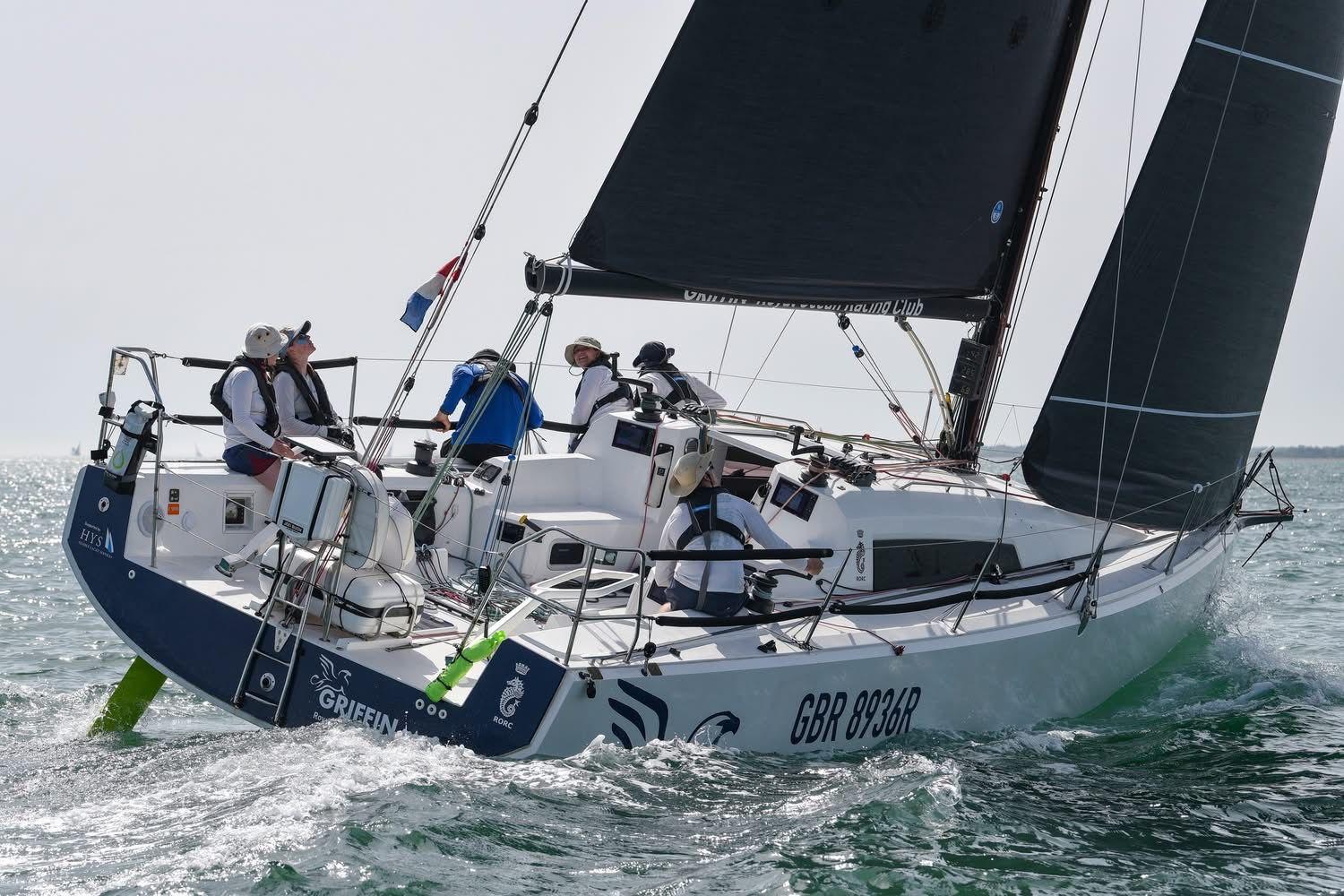
RORC’s Griffin - Sunfast 3600 - the new face of the youth programme and going really well
I began racing offshore properly in 1974 and, more than half a century and fourteen Fastnets later, one thing has barely changed: almost every offshore sailor starts on somebody else’s boat, at somebody else’s expense, usually without ever being told what it really cost to put them there.
That matters because offshore racing has always renewed itself through a rather informal compact between generations.
Owners supplied the boats and paid most of the bills. Experienced sailors supplied the knowledge. Younger sailors supplied enthusiasm, energy and occasionally useful weight on the rail. If you stayed around long enough, listened rather more than you talked and proved reasonably useful at three in the morning, you moved aft, took more responsibility and eventually became the person giving somebody else the chance you had once been given.
It was never a formal pathway. It was barely even a system. But for decades it worked.
The problem is that this path has become harder to sustain. Boats, sails, insurance and berthing cost more; safety equipment and qualifications are more demanding; campaigns are increasingly specialised; crews are smaller; and double-handed racing, hugely successful though it has been, creates very few introductory berths.
The informal apprenticeship that once put a schoolboy on the rail has narrowed into a competitive application process in which Griffin recently had 300 applicants for 20 squad places.
That, to me, is the real issue.
Let me declare an interest before going any further. I have served on the RORC Committee twice, first in 1999 and later as Rear Commodore from 2017 to 2020. I chaired the Offshore Safety Committee. I have raced more than two hundred RORC races, owned boats, paid entry fees, bought sails, paid insurance and spent a ridiculous number of nights wondering whether the next bill could be justified. I have also benefited hugely from the sport. It gave me friendships, competition, purpose and a lifetime of learning.
So this is not an attack on owners, RORC, youth sailing or double-handed racing. It is the opposite. I think RORC has created the beginnings of something unusually valuable in Griffin. The question is how to make it large enough, dependable enough and fair enough to matter.
The owner still buys the classroom
This is the uncomfortable economics of offshore racing.
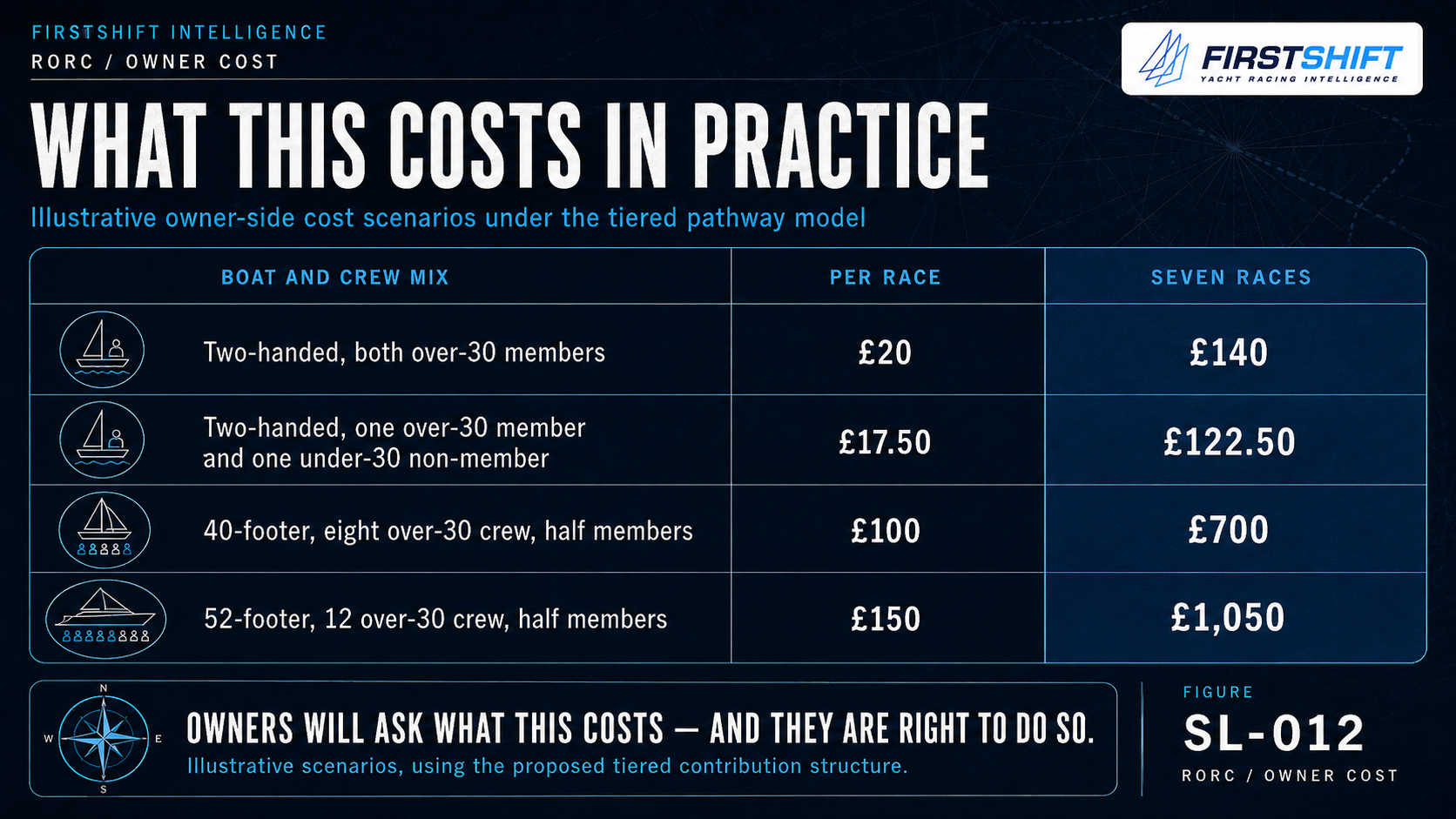
A fully crewed offshore boat might have eight people aboard. One of them owns it. The owner pays for the asset, the marina, the insurance, the rating certificate, most of the safety equipment, most of the sails, the maintenance and usually the race entry. The other seven may contribute time, skill and sometimes expenses, but economically the structure is profoundly asymmetric.
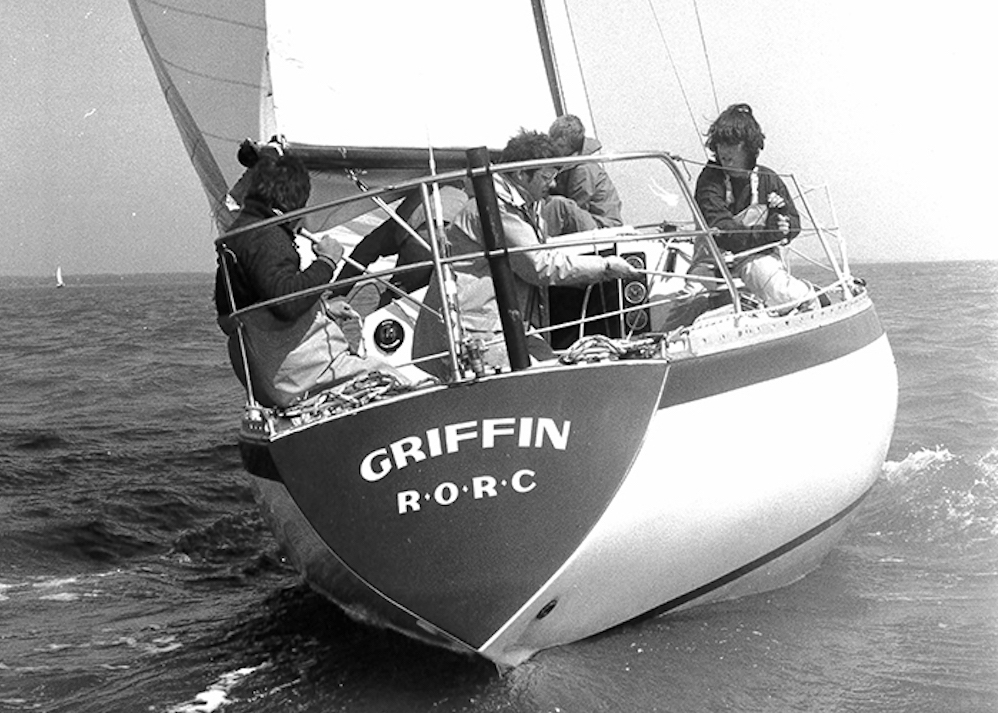
The owner buys the classroom. Everybody else gets to learn in it.
That has always been the bargain, and owners have accepted it because the crew make the boat possible. But it creates a structural problem when the sport asks the same owners to fund the next generation as well.
At present, youth development depends on a combination of owner generosity, club budgets, donations, sponsorship and the willingness of experienced sailors to coach. All are valuable. None is dependable.
The sport is effectively asking a small number of people who already carry most of its capital cost to voluntarily carry its succession cost too.
That is not a funding model. It is generosity.
What RORC has already built
This is why Griffin matters.
RORC did not simply announce a youth initiative and print some shirts. It acquired boats, created structured coaching, selected sailors and put them into serious offshore races. The current programme uses the Club’s Sun Fast 3600 Griffin as a training platform and gives young sailors meaningful responsibility rather than ceremonial berths.
The Griffin model is important because it makes the pathway visible.
The response has been extraordinary. Hundreds of applicants for a small squad is proof not of a lack of interest in offshore racing, but of the opposite. There is a queue.
And because there is a queue, selection matters.
A serious pathway cannot be a lottery or a reward for already knowing the right people. It needs published criteria, transparent selection, measurable progression and a clear answer to the question: what happens after Griffin?
That final question is the one that matters most. A training programme becomes a pathway only when it leads somewhere.
France did not discover better sailors
The obvious comparison is France, although the lesson is often misunderstood.
France did not become dominant in short-handed offshore racing because French sailors are genetically better at it. It built a visible ladder.
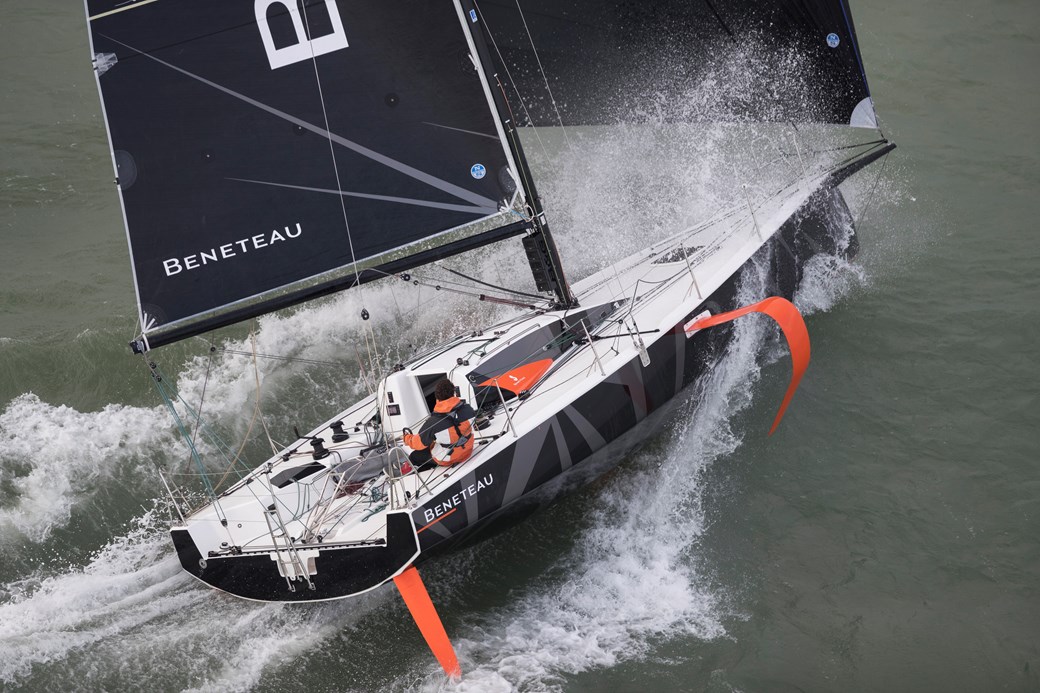
Young sailors can move through dinghies, Mini 6.50, Figaro and Class40 towards IMOCA. There are training centres, coaches, sponsors, selectors, fleets, media and races arranged around progression. Success at one level creates credibility at the next.
France’s advantage is not magic. It is continuity.
The Figaro circuit is especially important because it is difficult, selective and comparatively controlled. You cannot simply buy an enormous technical advantage and hide a weak sailor behind it. The sailor has to perform, repeatedly, against other good sailors.
That creates something Britain has often lacked in offshore sailing: a recognised professional middle.
We have excellent youth sailors and some excellent professional offshore sailors. What we have not consistently had is a broad, funded bridge between the two.
The Olympic lesson — briefly
British Olympic sailing offers a useful comparison, but only if we keep it tight.
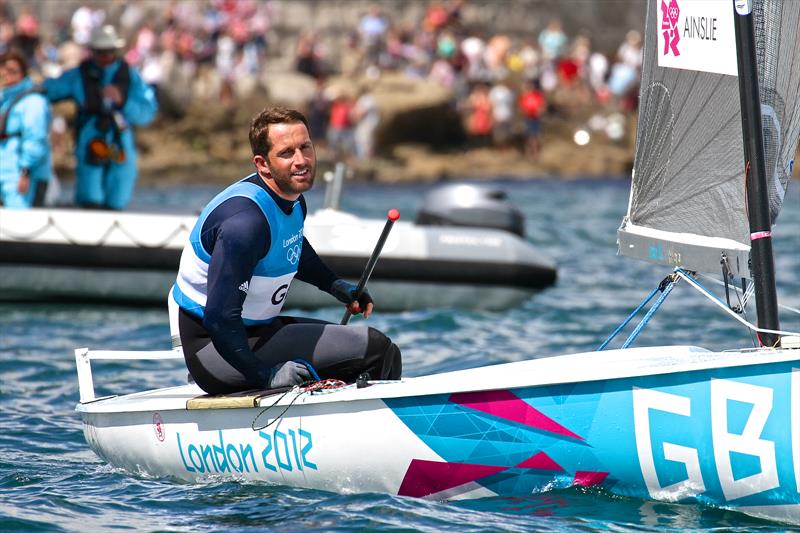
Lottery funding did not make British sailors talented. It made talent supportable. It paid for coaching, sports science, equipment, travel, selection systems and enough continuity for athletes to plan several years ahead.
Dependable funding does not guarantee medals. It makes a system possible.
When funding tightens, the effect is rarely visible the next morning. It appears later, in smaller squads, less depth, fewer training opportunities and a thinner pipeline.
That is the only Olympic lesson offshore racing needs: dependable funding allows a pathway to be managed rather than improvised.
The proposal: fifteen pounds a head
So how do you fund it without creating another committee, another dinner, another sponsorship deck or another appeal to the same owners?
My suggestion is deliberately boring.
Add a small youth-development contribution to every crew member entered in a RORC race.
Fifteen pounds per person per season would be enough to begin. Not per race. Per person, per season.
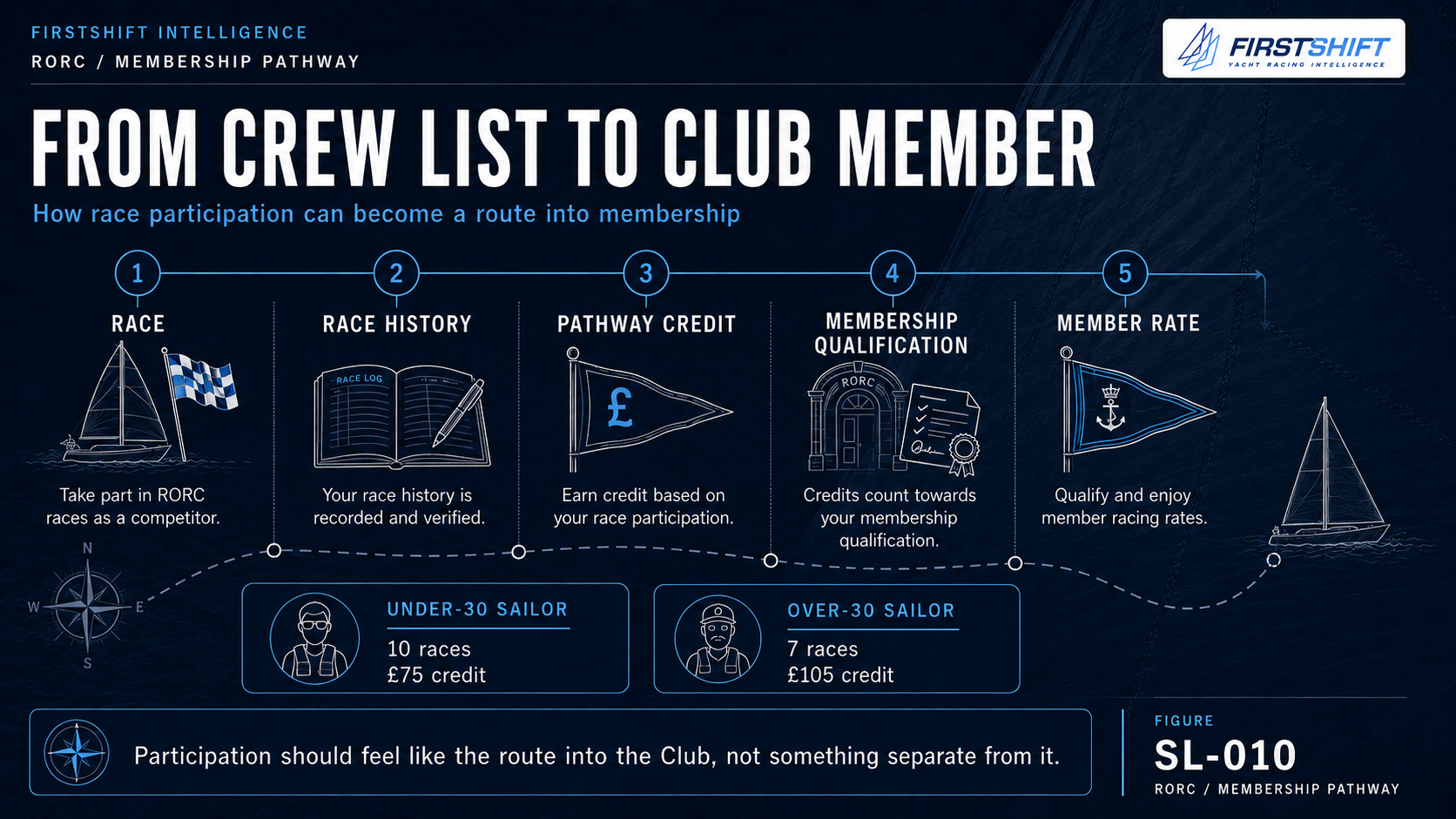
The owner still buys the classroom. Everybody pays for the next class.
Why per crew member rather than per boat? Because the benefit belongs to the sport, not the asset owner. The crew who learned on somebody else’s boat are part of the same system as the owner who paid for it.
Why fifteen pounds? Because it is small enough not to alter anybody’s decision to race and large enough, across a serious participation base, to create dependable money.
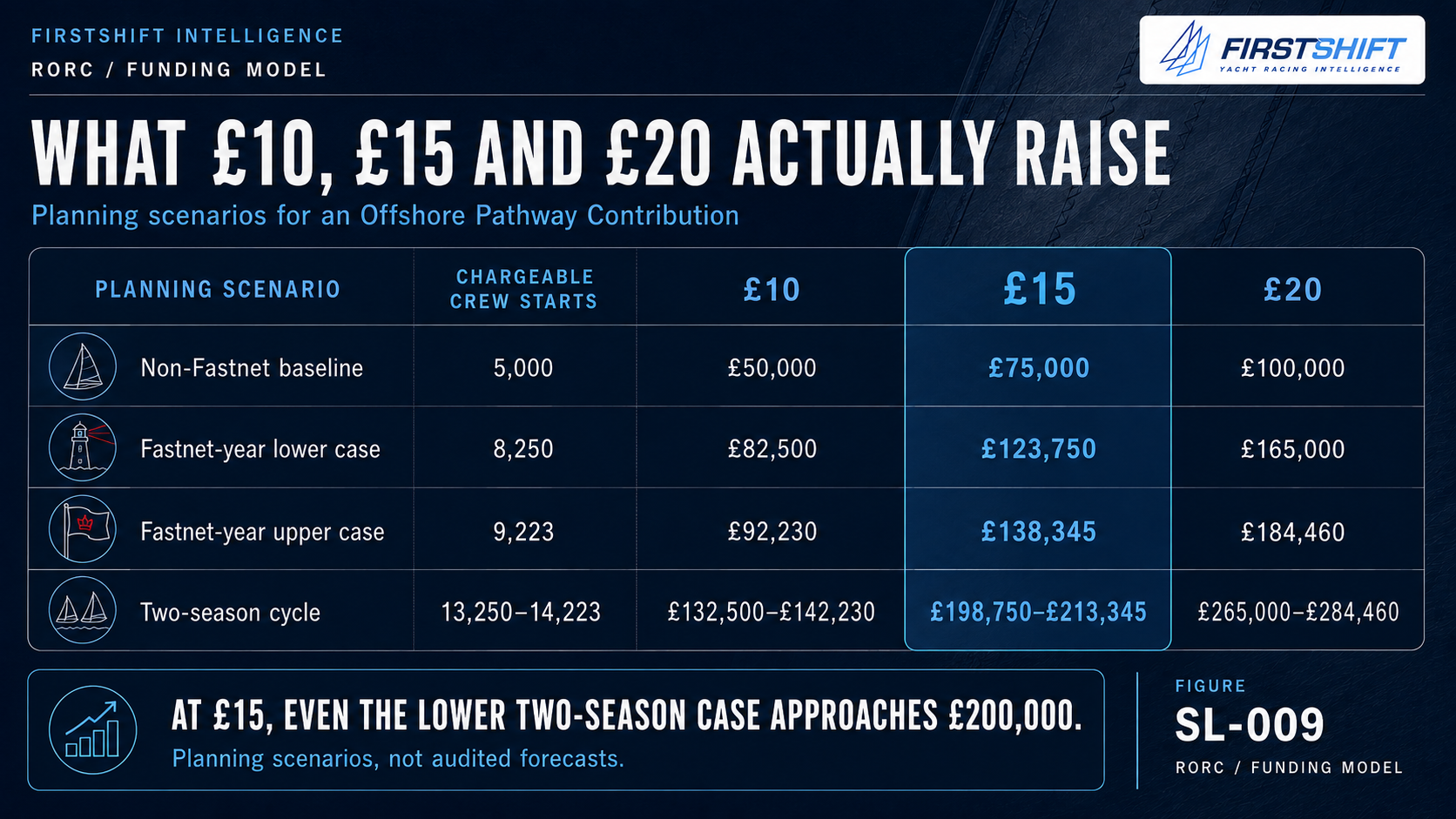
The important point is not the exact figure. Ten pounds, fifteen pounds or twenty pounds can be argued. The principle matters more: youth development should become part of the cost of participating in the sport, rather than a charitable extra.
Does the arithmetic work?
It does, provided we are realistic about scale.
Suppose 2,500 individual sailors race under RORC in a season. At £15 each, that creates £37,500.
At 4,000 sailors it becomes £60,000. At 5,000, £75,000.
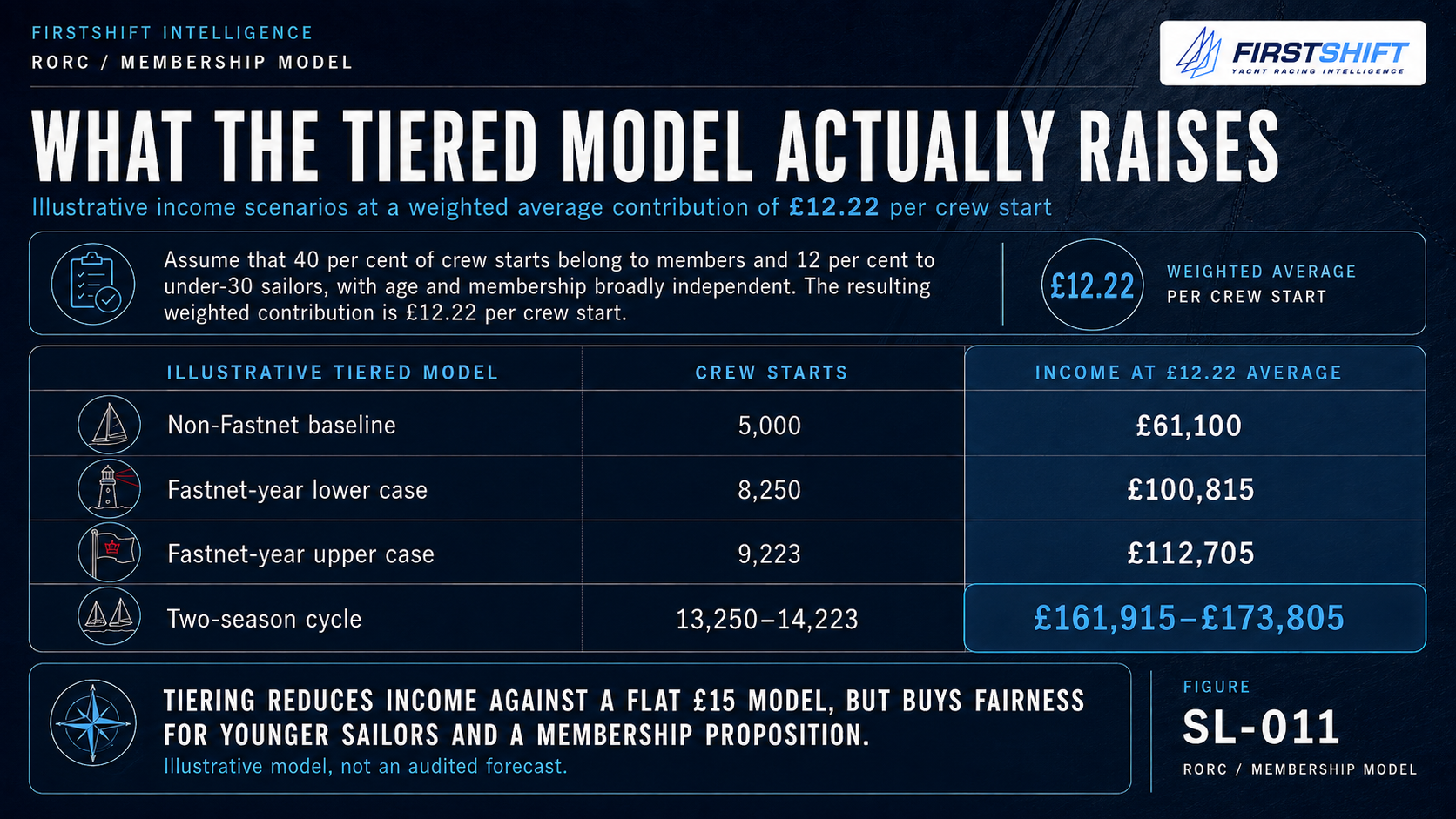
Small contributions become useful infrastructure surprisingly quickly.
That does not finance a French-style professional academy. Nor should it. But it can support more Griffin places, coaching days, safety qualifications, travel grants, race entry, boat operating costs and progression grants for sailors moving to the next stage.
More importantly, it creates a predictable base. Sponsorship then becomes additional money rather than survival money.
Ring-fence it
This only works if sailors trust it.
The money should therefore be visibly ring-fenced, separately reported and used only for youth and pathway development.
Publish the annual income. Publish what it paid for. Publish how many sailors were supported. Publish the selection criteria. Publish where they went next.
If £15 disappears into general club finances, the proposal deserves to fail.
What would the pathway actually look like?
The money is only useful if the structure behind it is clear.
I would build four stages.
Introduction. Get young sailors onto fully crewed offshore boats safely, with vetted skippers and defined learning roles.
Development. Structured Griffin-style coaching: helming, trimming, navigation, safety, watch systems, preparation and leadership.
Performance. Selected sailors given race responsibility and results-based progression, not simply more training.
Progression. Small grants or partnerships to move the best sailors towards serious campaigns: Figaro, Class40, professional crewed programmes, navigation roles or ownership pathways.
A pathway needs a visible next step at every level.
Not everybody needs to become a professional sailor. That would be absurd. A successful pathway also creates future owners, navigators, race officers, measurers, coaches, committee members and experienced amateur crew.
The objective is not to manufacture Olympians of offshore racing. It is to keep producing people capable of carrying the sport.
Why fully crewed racing matters
This connects directly to the debate about fully crewed and double-handed offshore racing.
I have raced both and like both. The issue is not which is purer or harder. They perform different functions.
A double-handed boat creates two sailing places. A fully crewed boat can create six, eight, ten or more. It can carry a first-timer beside an experienced trimmer, navigator, bowman and skipper. Knowledge is transferred in real time.
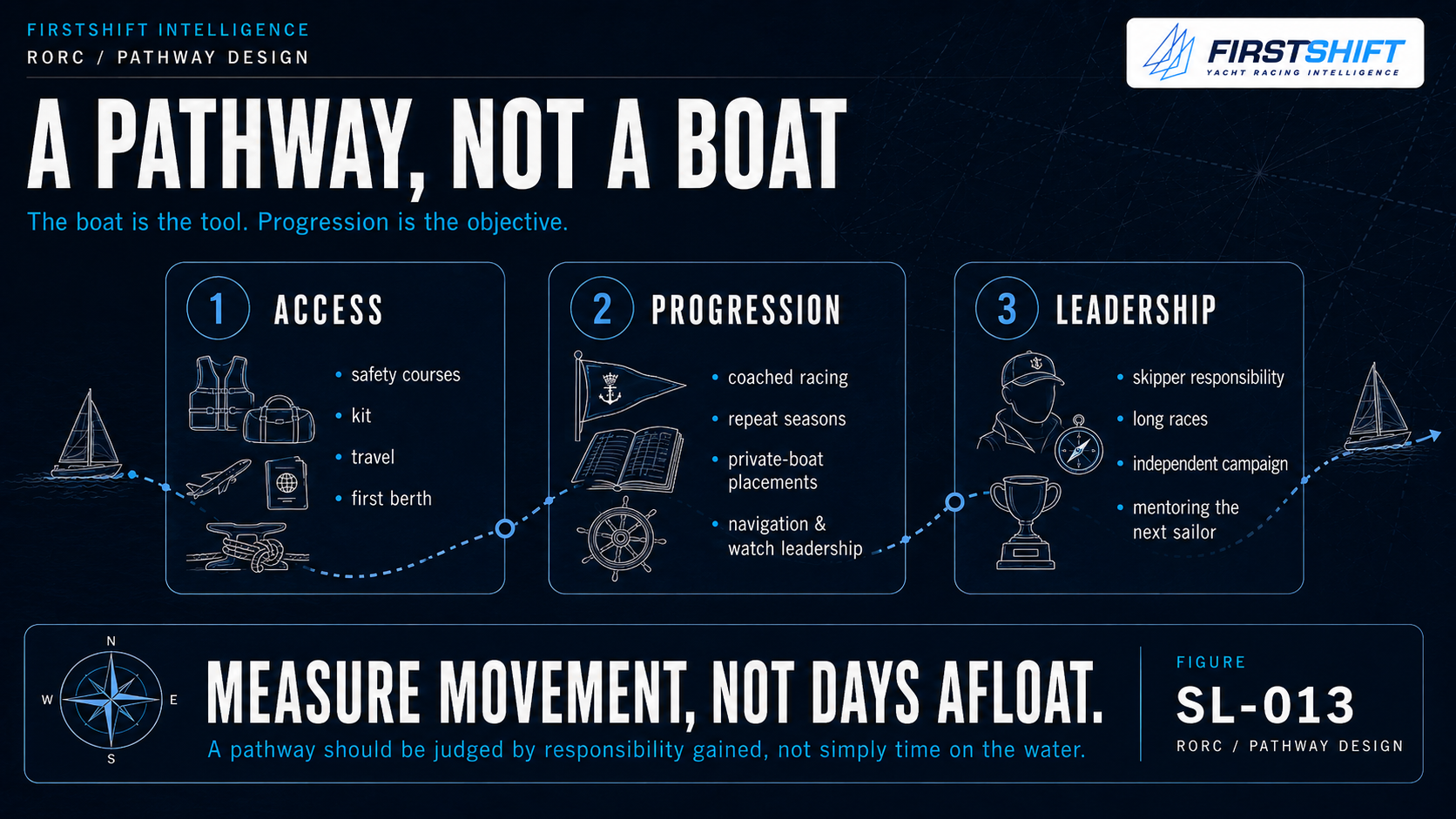
Fully crewed boats are not just competitors. They are classrooms.
That does not mean double-handed racing should be restricted. It means the sport should recognise that fully crewed racing performs a development role beyond its results sheet.
The objections
There are obvious objections, and they are worth taking seriously.
“I already pay enough.”
True, especially for owners. Which is precisely why I would charge the sailor rather than add another levy to the boat.
“Young sailors should pay their own way.”
Some can. Many cannot. More importantly, almost none of us paid the true economic cost of our own introduction to offshore racing. Somebody subsidised us, usually an owner.
“It will become bureaucratic.”
It will if allowed to. Keep the fund small, transparent and operational. Boats, coaching, qualifications, travel and progression. No lifestyle department required.
“Why should a fifty-year-old sailor fund a twenty-year-old?”
Because somebody funded the fifty-year-old once, whether they noticed it or not.
What success would look like
The measure should not be how many young sailors attend a coaching weekend.
It should be what they are doing five years later.
How many are still racing? How many are navigators? How many are skippering boats? How many have moved into professional campaigns? How many have become owners? How many are now taking somebody younger offshore for the first time?
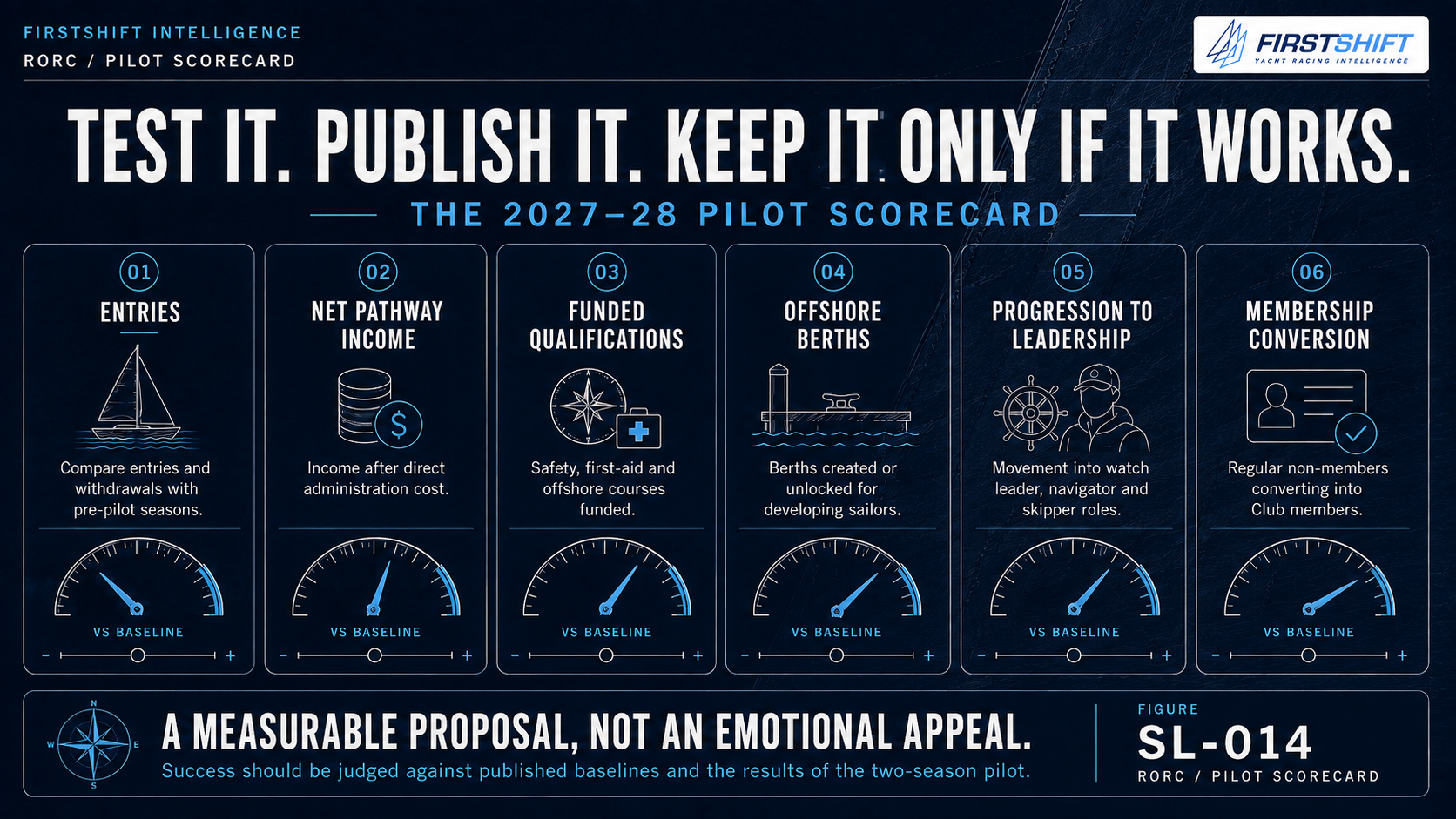
The real KPI is whether the next generation becomes the generation after that.
Fifteen pounds is not the point
I am not particularly attached to fifteen pounds.
I am attached to the idea that the sport should fund succession as infrastructure.
We already accept that racing requires race officers, safety rules, rating offices, tracking, rescue plans and trained volunteers. Nobody describes those things as optional acts of kindness. They are part of making the sport exist.
The next generation should be treated the same way.
RORC has already done the difficult part. It has proved there is demand, created a credible programme and given it boats and coaches.
The next step is not another appeal to generosity. It is to make participation in the future of the sport part of participation in the sport itself.
The owner can keep buying the classroom.
Perhaps the rest of us can at least pay for the next class.


Comments