
The hardest thing in offshore racing is other people - Is it time to change who gets to win?

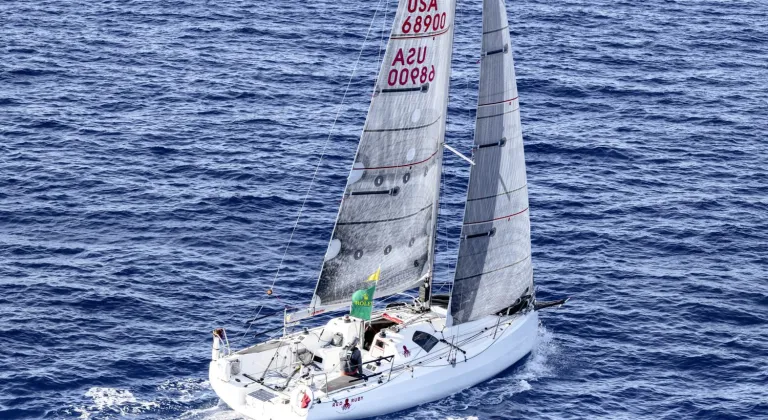
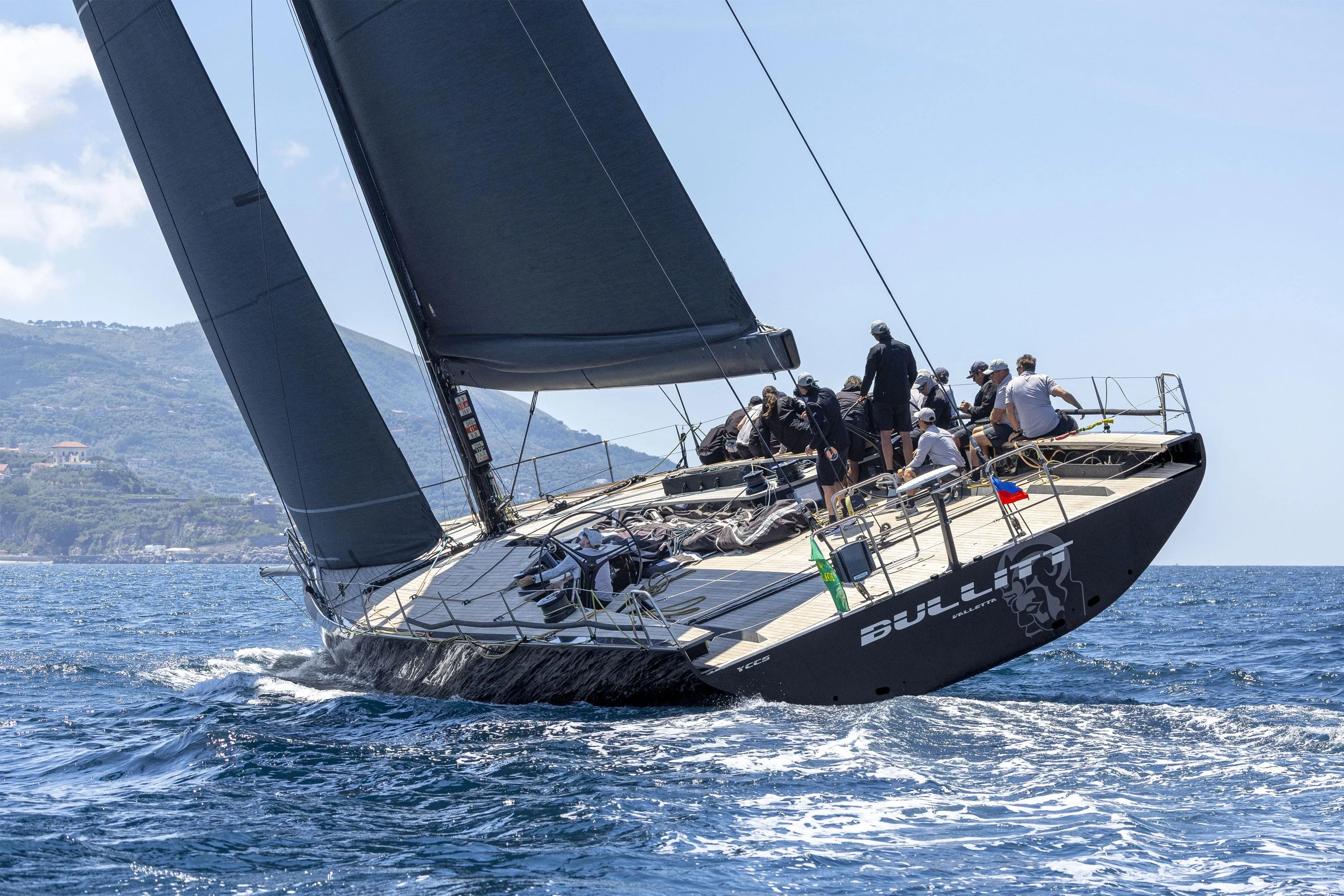
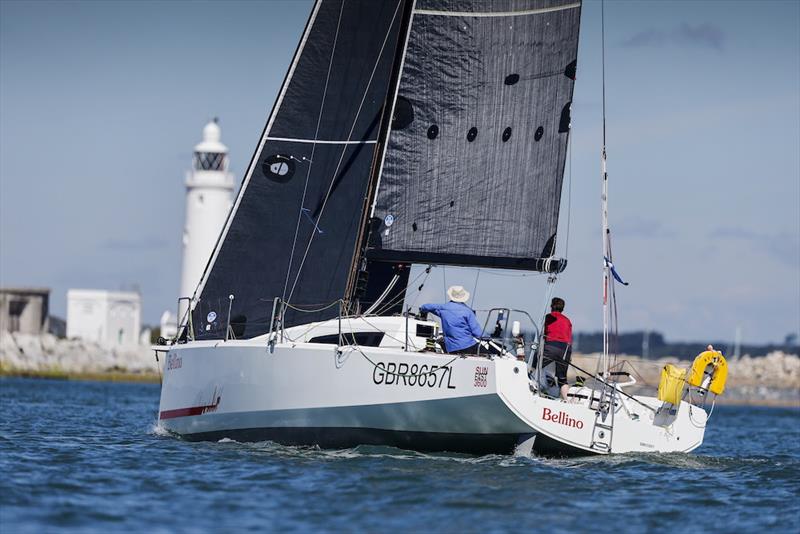
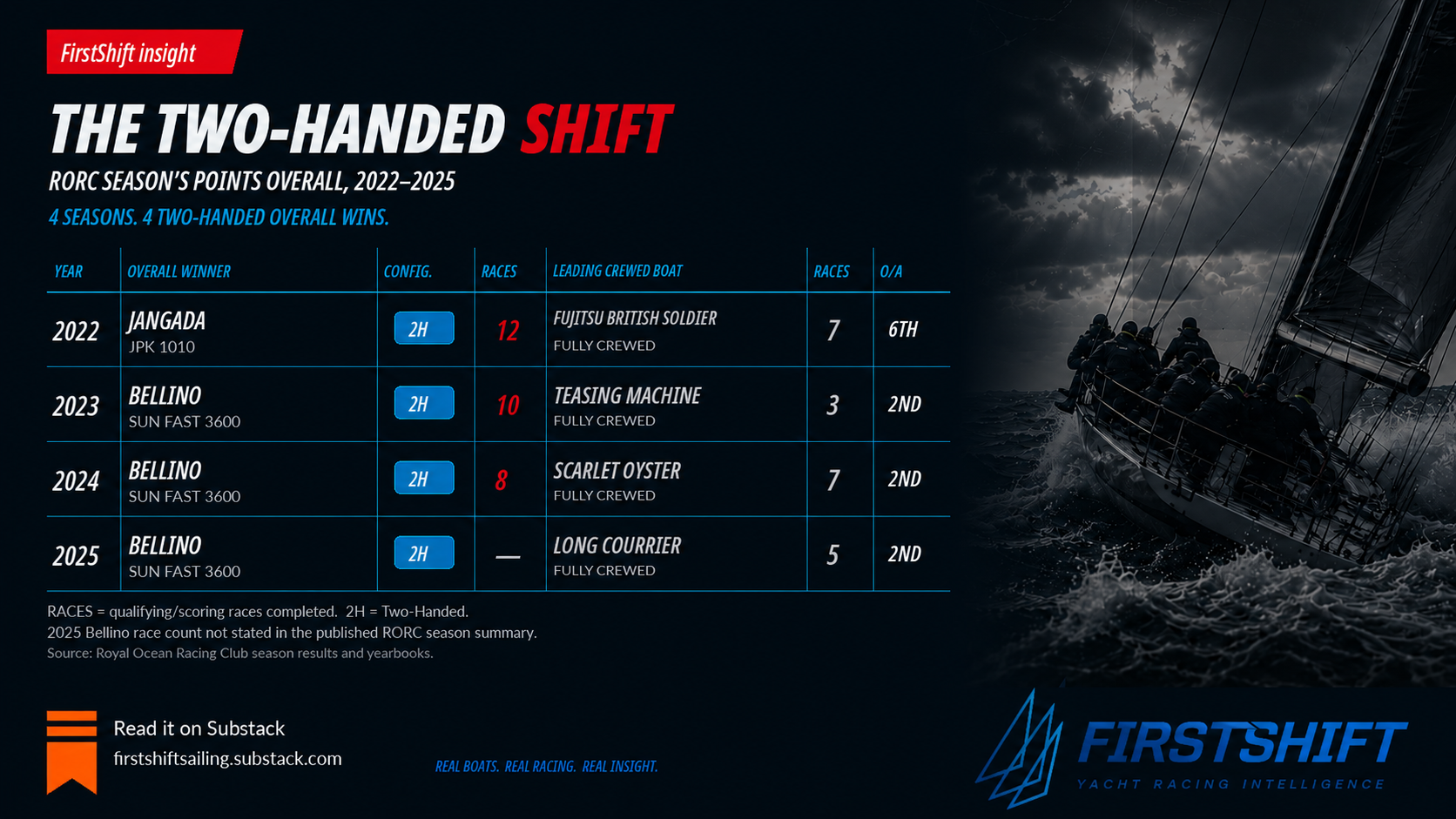
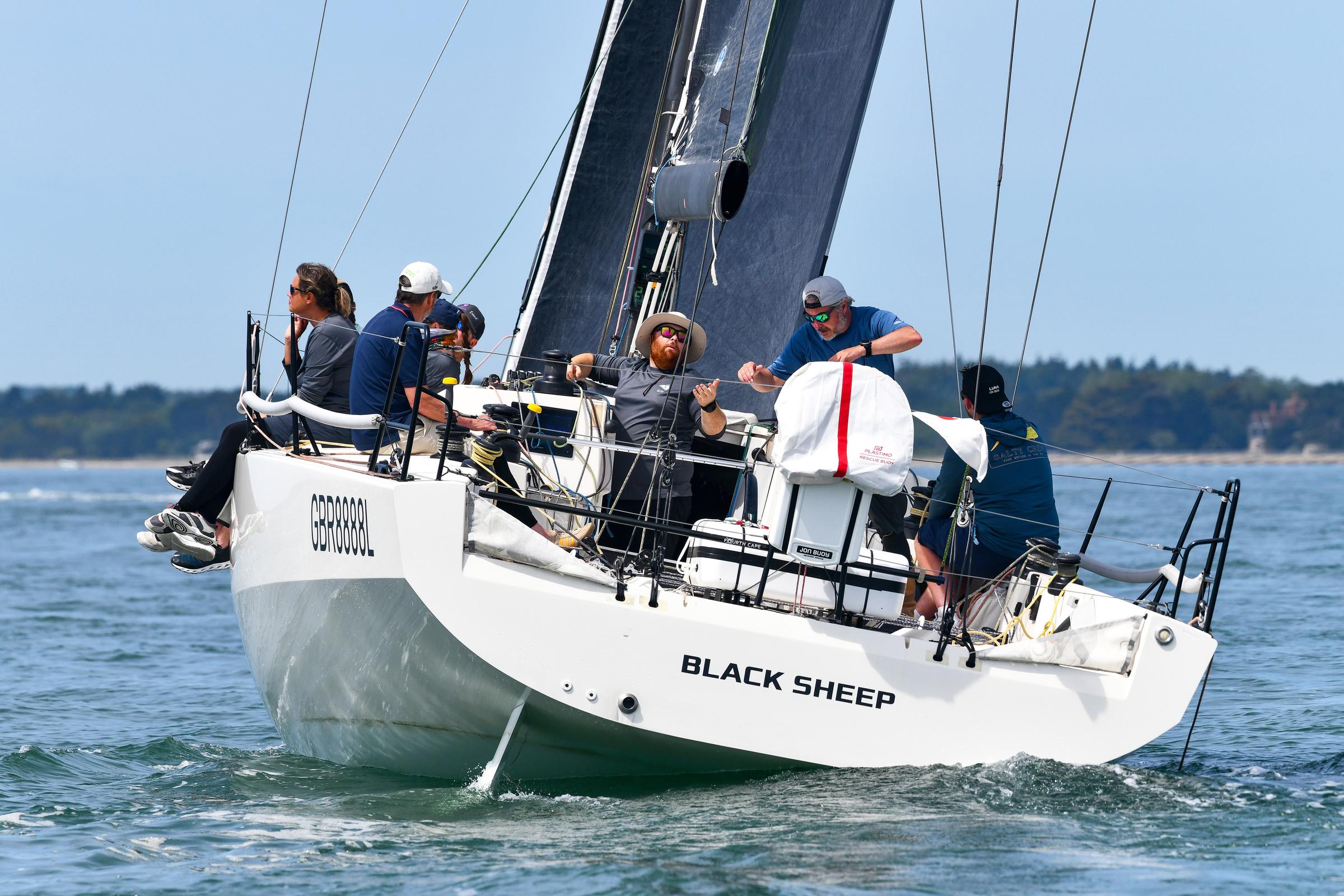
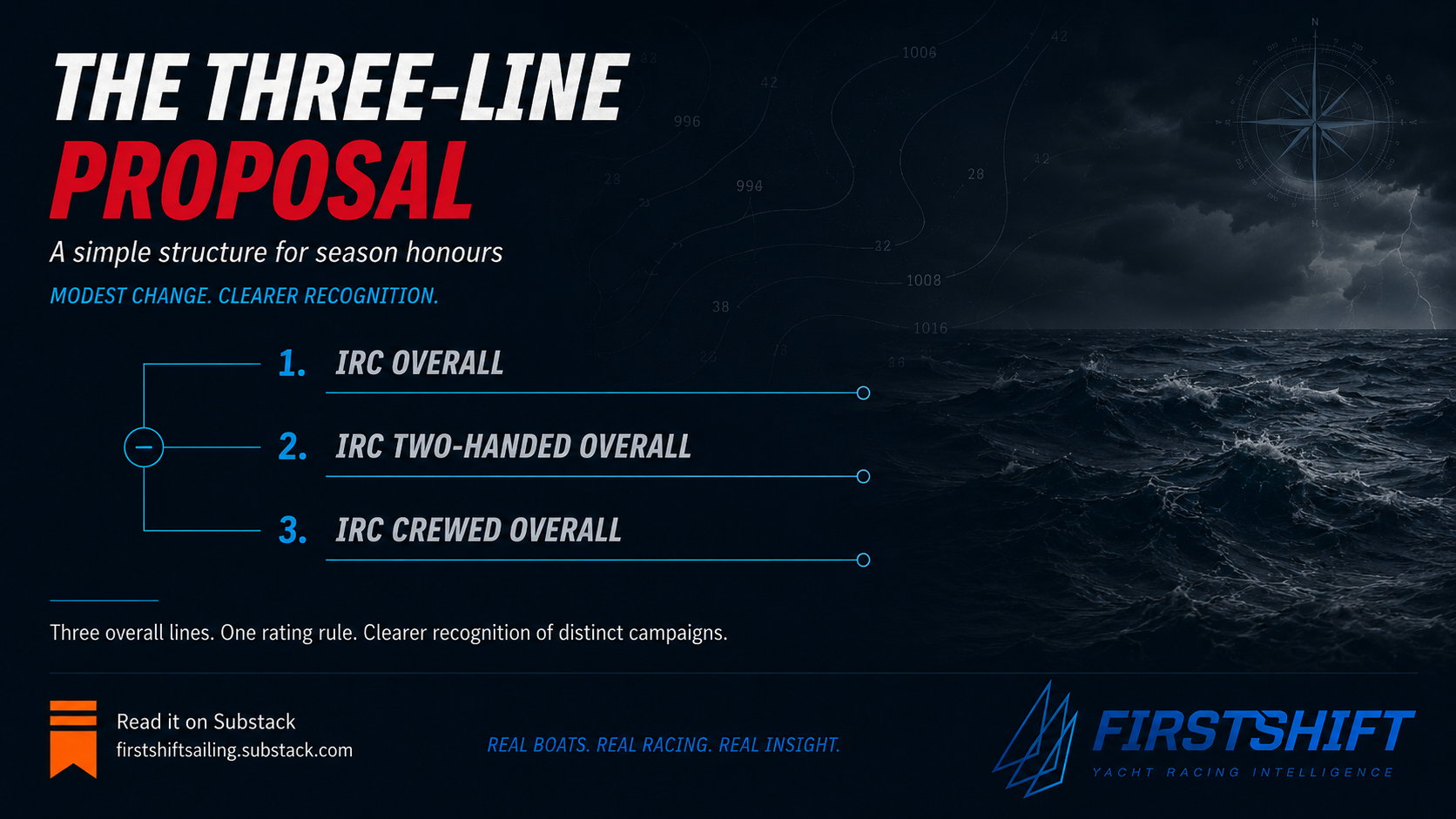
The RORC Season’s Points Championship has now been won by a two-handed boat for four seasons in succession. That is not a complaint about two-handed racing. It is evidence that offshore racing has become two disciplines, and that the results should recognise both. In October 2023, at the end of the Middle Sea Race, the first race of the RORC’s 2024 season’s championship, a fully crewed 93-foot maxi beat a double-handed 33-footer by twenty-four seconds. Bullitt, a 93-foot Wally crewed by names from the America’s Cup and round-the-world circuit, won on corrected time ahead of Red Ruby, a 33-foot boat sailed double-handed by Christina and Justin Wolfe. Six hundred miles of racing. Twenty-four seconds. On the podium, Bullitt’s owner invited the Wolfes up to hold the trophy with him. It was a generous gesture, and an accurate one. Because what stood on that stage were not two versions of the same challenge. They were two profoundly different disciplines within one sport sharing a rule, a course and a trophy, and demanding almost nothing else in common. Both of them, at their best, are magnificent. This piece is about the winners we’ve stopped naming because, perhaps, we didn’t really notice what was happening to our sport. Two disciplines, both brutal, both brilliant Consider what each of those boats actually did for six hundred miles. Aboard Red Ruby, two people ran everything. Every sail change, every reef, every repair, executed by a pair, one of them often already pretty tired no doubt, or trying to sleep through the other’s manoeuvre. The autopilot working as the third crew member. No margin for injury, indecision or a badly executed peel. Both sailors carrying the weather, the routing, the systems and the boat in their heads, because there is nobody else to carry them. It is a discipline of self-sufficiency and endurance, and the people who do it well are among the most complete sailors alive. Aboard Bullitt, with a large crew, but was a lot to do, which is a different problem entirely, and in its own way just as hard. Someone recruited that crew. Someone trained them, built the watch system, decided who helms in the dark hours and who calls the sail changes. Through six hundred miles, the bow team, pit, trimmers, navigators and watch leaders had to function as one team, communicating through all the weather and fatigue, absorbing each other’s mistakes, holding the boat at its potential when half of them were asleep and the other half wished they were. A two-handed crew must manage exhaustion. A crewed boat must manage people, their differences, their moods, their mistakes and their brilliance and anyone who has ever tried to get ten humans to peel a spinnaker cleanly at 0300 knows exactly which problem is harder to solve with engineering. Neither discipline is purer. Neither is easier. They are difficult in gloriously different ways, the loneliest form of teamwork, and the most crowded. When this piece says the hardest thing in offshore racing is other people, it means hardest in its own dimension: the challenge unique to the crewed boat. The two-handed sailors own a different set of challenges in actual fact. But only one of them is explicitly named by its crew configuration. Two-handed racing has its own division and a national championship contested through RORC races and of course lots of double handed events elsewhere in the World, especially France of course. Crewed racing is honoured through the overall title and the class prizes, and honoured well but nowhere in the structure is the team discipline named as a discipline. It is simply what’s left over: the undivided remainder of the fleet. And the last few years results now make that omission impossible to ignore. Rob Craigie’s Sun Fast 3600 Bellino, raced two-handed with Deb Fish, has won the RORC Season’s Points Championship three years running. Add Jangada’s overall win in 2022, and the largest offshore series in the world has crowned a two-handed boat four seasons in succession. Bellino took six trophies home from the Centenary Dinner. The leading fully crewed boat, Géry Trentesaux’s Long Courrier, finished second overall and was recognised through the existing overall and class structure but no title anywhere in that structure identified it as the season’s leading crewed campaign. The comfortable response is to say the handicap system might be wrong. I don’t believe it is or at least, nobody has shown that it is. The more interesting response is to ask what these results actually reveal and I suspect the answer has less to do with ratings than with how a season championship works. But suspicion is not evidence, so treat what follows as a hypothesis. What it points toward, either way, is the same conclusion: crewed racing has become a discipline that deserves its own place in the structure. Look at how the season is actually scored None of what follows is the argument itself. It is the first and clearest piece of evidence for it. I believe that it is one of the reasons that explains why the case for specifically naming crewed racing has become urgent now and might start a new trend. The overall winner under IRC is determined by cumulative score across the season. The six IRC class titles are decided differently, on each yacht’s best five results from a possible sixteen races. The class titles forgive absence. The overall title rewards presence. On the club’s published description of the scoring, every race entered and finished feeds the cumulative total which means the overall championship is won not only by sailing well but by sailing often. Now ask which configuration can sail often. A settled two-handed partnership has two diaries to coordinate and, in fairness, no cover at all if either sailor drops out. But a crewed campaign must field six, eight or ten competent, available people for every start, usually drawn from a larger rotating pool if the programme is to survive the season. The aggregate burden of recruitment, training and continuity is of a different order and any owner who has tried knows that the crew list for the Cervantes rarely survives contact with the De Guingand Bowl. This is not a flaw in the two-handed boats. It is a feature of the scoring interacting with a fact about human logistics. A season championship weighted toward participation will, other things being equal, favour the configuration that finds participation easiest. The champions themselves describe it exactly this way. “Stick to what works, keep the boat reliable, keep the programme active,” was how Rob Craigie summarised the campaign. And at the Centenary Dinner: “We never set out to make history; we just love the racing. Every season brings a new mix of weather, courses, and rivals, and the goal is always the same: prepare well, race hard, finish every race.” Prepare well. Race hard. Finish every race. That is more than a boatspeed strategy. It is a complete season strategy preparation, reliability, performance and sustained participation. And sustained participation is precisely what cumulative scoring rewards. Nothing in it requires a rating advantage which is precisely my point. But be clear about what the scoring argument is and is not doing in this piece. The 2H dominance is not the only argument for recognition. The disciplines earned that on their differences alone: they demand materially different campaign structures, different skills and different sailing practices, and one of them is already named by its crew configuration. What the recent dominance has done is make the asymmetry impossible to keep ignoring and what the scoring mechanics suggest is that if a participation effect exists, no adjustment to IRC could ever address it, because the season genuinely asks something different of a two-handed campaign than it asks of a crewed one. The remedy for that is not a rating change. It is a named result. Race by race, the picture changes Here is the evidence that should stop anyone blaming the handicap. In the 2024 Cervantes Trophy Race, the overall winner after IRC time correction was Trevor Middleton’s Sun Fast 3600 Black Sheep, crewed. Third overall, under four minutes behind after correction, was Bellino. Sisterships of the same design, one crewed, one two-handed and the crewed boat won. One race proves nothing, and I am not pretending it does. What it demonstrates is narrower but still useful: IRC does not make a two-handed 3600 unbeatable by a crewed sistership. What it cannot tell us is whether either configuration performs better on average, in particular conditions or across a season that needs the data, not one Channel race. Which sharpens the real question considerably. If crewed boats can win the races, why can they no longer win the season? The data still deserves study None of this means the on-the-water questions disappear. Several owners have written to me since FirstShift launched describing the same race. It starts in a breeze. The crewed boat is quick weight on the rail, hands for every change, the investment in assembling the team visibly paying off. Then the wind dies, the sea flattens, and the crew, a typical six-person team might represent about 650 kilograms, are no longer righting moment but simply displacement. Nearby, a Sun Fast carrying roughly 170 kilograms starts to slide away. The picture is not one-sided even then: spare hands can hold a big boat closer to its optimum in light air, moving weight precisely and executing changes a tired pair might skip. But the mass itself does not leave. Twenty minutes later it carries the fair tide through Portland Bill or the Alderney Race, and the crewed boat arrives at the gate as the stream turns. A modest speed difference has become an unrecoverable one. Obviously you could reverse this scenario, however, outcome would be similar. Was that rating, weight, timing, weather, or simply better sailing? Nobody can currently say and IRC is a single number system unlike ORC, which I’ll come onto later. I remain deliberately cautious here. Crew weight cannot be examined in isolation: its effect depends on displacement, beam, ballast ratio, stability, sail area and the leverage of bodies on a rail. Modelling it properly starts to resemble a full velocity-prediction problem, and demanding a two-handed correction factor off the back of four championship results would be exactly the kind of lazy conclusion this piece exists to avoid. But there is an analysis nobody has published: take the designs raced in both configurations the 3600s, the 3300s, the JPK 1010s and 1030s, across ten years of RORC results, and compare corrected-time performance by conditions and by races entered. Done properly it needs weather reconstruction, tracking data, certificate history and care with selection effects a genuine research project rather than an afternoon’s spreadsheet. It is still worth doing, and the Rating Offices are the natural home for it. Evidence first. Rating changes only if the evidence demands them. If any reader has access to that data, or has run anything like this analysis privately, I would be interested in it. I have sailed both I should declare where I stand, because it is the only qualification I have for asking the question at all. Almost everything I know about offshore racing was taught to me on crewed boats. I came up through campaigns where learning your place in a team was the whole apprenticeship, Admiral’s Cup boats, Sigma 33s and 36s, Swan 40s, Farr 40s, and a 12 Metre season in 1982 when I was mast man on Victory under Harold Cudmore. Fourteen Fastnets and more than two hundred RORC races later, most of my miles are still crewed miles: someone recruited me before I was useful, someone taught me to trim, someone let me helm at night before I deserved to, and eventually someone trusted me with a watch and then a boat. But I have also raced Silver Shamrock, a Ron Holland Half toner, and Morning After, S&S 34, double-handed, and I learned quickly that the boat you step onto with one other person is not the boat you knew with eight. Sail inventories shrink. Manoeuvres are redesigned around what two tired people can safely execute. Reliability stops being a virtue and becomes the entire strategy. The autopilot stops being a convenience and becomes the third member of the crew. It is a different discipline, and doing it changed my respect for the people who do it well from theoretical to earned. So this is not a traditionalist’s complaint dressed up as analysis. I have been the beneficiary of the crewed pathway and a student of the short-handed one. That is exactly why I think the sport is currently now only naming only one of them by default. What we lose if crewed racing quietly shrinks Most offshore sailors of my generation were made through some version of the same process. You began as ballast on the rail. Someone moved you to the mast, then the pit, then the bow. A watch leader let you helm in waves at night. A navigator let you sit beside them through a tidal decision. Somewhere across those seasons, participation became competence, and competence became responsibility for a boat and the people on it. That production line has one requirement: spare berths. A boat with eight aboard can carry a novice. A boat with two cannot, not as criticism, as arithmetic. Both sailors must be able to keep the vessel safe while the other sleeps. Two-handed racing creates exceptional sailors; it does not create entry-level positions, and it never will. France has built structured short-handed pathways through the Mini and the Figaro a depth and continuity of institutional support that few other countries have matched. Closer to home, RORC’s Griffin programme is putting young sailors afloat and deserves real credit. But centrally funded berths, however valuable, cannot substitute for the hundreds of developmental places a healthy crewed fleet generates organically every season. For most of the offshore world, the pathway remains the crewed boat and the owner willing to fill it with people who don’t yet know what they’re doing. I am not claiming the current structure is driving crewed campaigns out. I have no evidence of that, and recruiting difficulties, cost and time pressures were squeezing crewed racing long before Bellino’s streak began. The point is about direction, not blame. If crewed participation dwindles, for whatever combination of reasons, the sport does not just lose entries. It loses the mechanism that manufactures its future and a championship structure that names the team discipline is one small, cheap way of leaning against that tide. A small change, offered as a question I want to be careful about what I am and am not saying, because this is the first time in these pages I have proposed changing anything. I am not proposing that two-handed boats lose the overall trophy, or that any rating rise, or that a crewed Fastnet is harder than a two-handed one. Both disciplines should remain capable of winning the combined title, and the best boat in the fleet, however many crew, should keep lifting it. The proposal is narrower. Keep IRC Overall exactly as it is. Keep IRC Two-Handed Overall. Add IRC Crewed Overall every boat not entered two-handed, whether it carries five or fifteen. A results table and a trophy. That is all. No result rewritten, no winner displaced, no rating touched. But sporting bodies communicate direction through what they choose to name. Two-handed racing was named and supported as a discipline while it flourished its strength now runs right through the results. Crewed racing has never needed naming because it was simply what offshore racing was. That assumption no longer holds, and what goes unnamed in a championship structure eventually goes unnoticed in one. Nor does the question stop at the RORC. Every offshore organiser combining fully crewed and short-handed entries in one structure should be asking whether its trophy cabinet reflects the sport it has today or the sport it had twenty years ago. Perhaps the existing structure is right. Perhaps four championships in a row is nothing more than brilliant sailors running the best-organised campaigns in the fleet there are worse explanations for winning. But here is what I keep returning to. The hardest thing in offshore racing is other people. Finding them. Training them. Persuading them to commit to a season. Discovering who remains dependable when the forecast deteriorates. Building watches that work. Teaching people without slowing the boat unnecessarily. Trusting them to helm in the dark. Leading them through a filthy night at sea and bringing them ashore still wanting to return for the next race. That challenge built much of offshore racing. It is still building offshore sailors. Two-handed racing has earned its name, its championship and its silverware. Crewed racing does not need protecting from it. It needs to be recognised alongside it for the different challenge it represents and the different contribution it makes. Keep the combined overall title. Keep the two-handed award. Add the crewed award. Then let both disciplines race for everything offshore racing has always promised: competition, adventure, improvement and, when it all comes together, the chance to win. Is time the silverware said so?


Comments