
From the Channel to Sicily: What to change for the Middle Sea Race, part 2

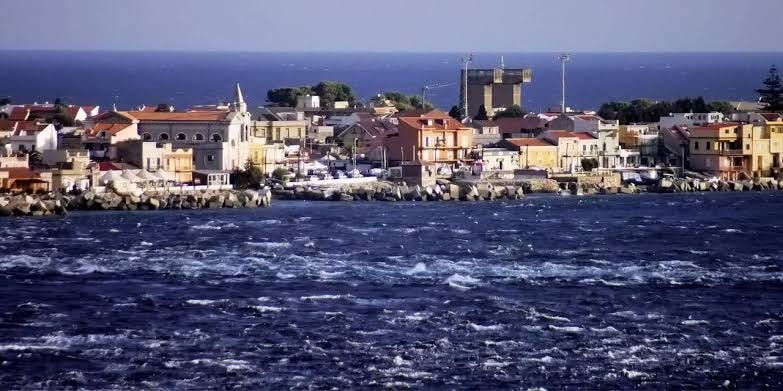
The strait of Messina - Chaotic, changing currents, ferries, gusts and who’s obeying the rule of the road… beware!
Part 2: the Nitty Gritty bit…but first a story from closer to home: The anchor at Portland
In 2016 I won my class in the Myth of Malham by stopping.
Silver Shamrock, a Ron Holland half tonner, off Portland Bill with the stream about to turn foul and no prospect of getting past it. So we anchored. Boats that kept sailing went backwards over the ground while we sat still, and when the tide turned we picked up and went. It is not a clever trick. It is the correct answer to a problem the Channel sets you over and over: the tide will start working against you so be somewhere useful when it does.
That habit is worth a great deal. Bring it to Malta.
What will not come with you is the assumption underneath it: that the deadline is always tidal, and always in the almanac. Round Sicily the thing that closes the door on you is more often a land breeze dying as the coast cools, or a wind shadow you sailed into three hours ago, or a squall that came from no where . The skill is the same. Deciding which process is setting the pace is the new work.
Ian Moore, navigating Mascalzone Latino into second by nine seconds in 2015, put his finger on where that work pays:
“B2 was always going to be quicker than us in a straight line and they did well in the transition zones at Stromboli and Capo San Vito.”
He is not saying boatspeed did not matter. He says plainly that it did. He is saying that once speed was accounted for, what was left went at two corners.
What follows is what I would change, section by section, coming to this race from the Solent and the Channel.

1. Messina is the one place your tidal training pays for itself
In the Channel you know it. Big springs, big streams. The Alderney Race runs at close to ten knots at its worst because a large range is being forced through a narrow gap, and you learn the relationship so young that you stop noticing you are using it.
Malta’s astronomical tidal range is tiny, of the order of five centimetres at neaps and twenty at springs. So the reasoning gives you nothing, and the temptation is to conclude there is no current worth having anywhere on the course. That conclusion is wrong twice over.
First, Messina. The Tyrrhenian and Ionian are close to opposite tidal phases, so twice a semidiurnal cycle there is a real difference in water level between the two ends of a strait under two miles wide at its narrowest. Squeeze that through the constriction and over the sill and you get a serious stream. Tom Cheney puts it at up to five knots. Carl-Peter Forster reported six knots with him in 2024, the fastest of his seven crossings. Both are credible; neither is a published ceiling.
There is, howeverm an App: https://apps.apple.com/gb/app/messina-strait-currents/id6799481803
Then work it like any tide gate you know:
When the stream is against you, look for relief inshore, initially on the east side and then along the north shore. That is Cheney’s advice and it is advice about fighting the current, not a fixed track. With the stream under you, the main flow is usually where you want to be.
Check the water rather than the plan. Overfalls, boils and the line where the surface changes texture will tell you what is actually happening before any product does.
It is a working seaway. The 2026 Notice of Race invokes the racing rules appendix covering traffic separation schemes for Messina. Get the current local traffic information, keep a proper lookout and take your own responsibility for compliance. Ferries cross constantly.
Second, the rest of the course is not still water. Tidal constituents in the Malta to Sicily channel are weak but measured, and the broader circulation is a separate thing again. Tom Ripard warns that the set near Lampedusa and on the run home is stronger than people expect. Half a knot moves you two miles in four hours, and you will spend hours at a time barely moving. Keep current in the calculation for the 453 miles after Messina.
2. Terrain: shelter or shadow, and you have to decide which
In the Channel the inshore option is usually a positive. You go in for the back eddy at Portland, for reduced foul stream along the Dorset coast. Inshore means the water is helping you, or hurting you less.
Round Sicily the coast can give you a useful local breeze or take your wind away entirely, and the two look identical on a chart.
Mount Etna is over three thousand metres of mountain sitting beside the second leg of the race. Cheney’s published rule of thumb is to stay at least eighteen miles offshore of it. That is a navigator’s starting point rather than an exclusion zone, and it is a big number: eighteen miles is well beyond any offing a Solent sailor thinks about.
At Capo San Vito, on the north western corner, the same question comes up as a fleet splitter. Tom Ripard’s example is from 2019 aboard Tom Kneen’s JPK 11.80 Sunrise: the boats that went offshore held pressure, the boats that hugged the coast stopped, and it turned the fleet on its head. Moore named the same corner four years earlier.
But note what section 3 is about to tell you, because the draft of this article originally contradicted itself here. There are also times when you want to be close in, working a land breeze at dusk. Both are true. The decision is the article.
Before you commit to an offing, answer three questions. Which side of the terrain’s airflow am I on, because distance alone will not tell you and eighteen miles in the wrong direction is still shadow. What am I buying, and does the pressure pay for the extra distance. And what would tell me I am wrong, named before I go, which is usually the boats inshore failing to slow down.

Mount Etna - A huge wind shadow plus gusts when the wind is from the West - but convection and other effects can alter this pattern in a random way
3. Calms, patience, and the watch plan
In the Channel, stopped is a countdown to a tide change. Round Sicily it is usually just slow.
There is no six hourly stream turning against you and no gate closing at a time you could have looked up. So the itch to do something, which serves you well off Portland, is the wrong reflex here. What replaces it is not passivity. It is disciplined observation, and decisions made before you are in the hole rather than after.
Prepare for a prolonged calm without promising the crew one. George David, after the 2017 race in Rambler 88, said they “parked for six hours at Stromboli like we always do”, which establishes that a very fast, very professional campaign can be stopped there, not that every boat stops every year. A poor approach narrows your options; it does not end them, and small shifts, residual motion and current can still get you out. Change sails when the expected gain justifies the effort and not otherwise, because restless work with no gain in it is how a crew reaches the north coast already tired.
The watch plan follows geography, not a tidal clock. Ripard’s advice is to watch for a transition around the Catania headland as the first dusk draws in, when the land breeze may come into play. Note the conditionals: he says look out for it, not that every boat will meet it at the same hour. Your arrival there depends on your boat and the breeze, and dusk keeps its own schedule.
So build a watch system that is sustainable for four to six days first, then plan additional expertise on deck around your own estimated arrival at the likely transitions, with clear triggers for calling people up and protected rest afterwards. A permanently designated A team is a good way to exhaust your best two people by day three.
And sleep in the first twelve hours. It feels absurd at eleven on a Saturday morning in Grand Harbour with a hundred boats around you, and it is one of the most useful things an amateur crew can do for the second half of the race.
4. Forecasts: compare them, do not rank them
I have written before about why a routing output is not a plan, and the argument has more force here than anywhere I have raced. It needs stating precisely, though. A global model at a quarter degree has a grid cell of roughly fifteen miles north to south around Sicily, so expect Etna’s shadow, the circulation round Stromboli, drainage off the northern mountains and a cell that formed over warm water at two in the morning to be poorly resolved, and some of them missing. That is not the same as saying the model cannot see the race. Note too that the GRIB you downloaded is not necessarily at the model’s native resolution.
What to do instead of ranking your sources:
Start with the pattern, then compare a high resolution regional product against the global runs. LaMMA’s marine products are the ones professionals in this race name. Before you rely on one, check its domain, its run times and whether it actually covers the water you will be on, because coverage of the Tyrrhenian is not coverage of the whole course.
Check both against observation. Satellite imagery is evidence to interpret, not a wind reading: visible needs daylight, infrared works at night and tells you about cloud tops. Use sequences, and use radar and lightning data where you can get them.
Treat AIS as evidence, not as an instrument. SOG and COG mix boatspeed with current, and also reflect sail choice, damage and manoeuvres. Compare several boats over time, check how old the data is, and remember that a boat twenty miles away only matters if her conditions will become yours.
Before each corner, ask what supports this route and what would change it. Give less weight to a route that moves a long way when the forecast moves a little.
5. Squalls: rehearse the first response
The British working model of heavy weather is a front: the barometer falls, the sky organises itself, the wind veers, and you get notice. Fronts are not the only way weather arrives, in the Channel or anywhere, and round Sicily in October a warm sea under cooling air makes convection likely. Convection can build faster than your normal sail reduction sequence.
The 2024 race is the case study. The organiser’s report of 20 October describes the wind rising from twelve to fifteen knots to a sustained forty plus, gusting higher, as a squall hit the main body of the fleet near Capo Passero. Three boats were dismasted. Twenty nine retired after the episode. The defending champion, Bullitt, was among those forced out, with damaged sails rather than a lost rig.
Didier Gaudoux was aboard Lann Ael 3:
“Suddenly the wind went from 15 to 50 knots, and the boat was flat on its side for about three minutes.”“The compression tube exploded, and the mast dropped.”
He also said this, and it belongs in any article about this race:
“I would like to mention the boat named Goose, who dropped all their sails and circled around us during an hour and a half just to check everything was OK”.
What that means for your procedure:
Rehearse an immediate first response the on watch can start alone, and set boat specific triggers for calling more hands. Depowering now and completing a reef are different jobs. A printed procedure should never make waking people sound like a failure of nerve.
Reduce sail early enough to finish the job with the crew and gear on deck. Under the Offshore Special Regulations responsibility for a trained crew and for the decision to sail sits with the person in charge; a minimum crew number says nothing about what one person can complete in forty knots.
The recovery can stay dangerous. Forty knots for twenty minutes, then six knots and a leftover sea, is how gear breaks. Reassess sea state and rig loads before powering up.
Use the sky, the radar and the pressure trend together. No single indicator is enough.
The 2026 race is Category 2 under the Offshore Special Regulations 2026/2027 with RORC prescriptions, minimum crew two. Read the actual Notice of Race rather than my summary of it.

Waterspouts - good to know the facts
6. Sail changes: build the chart for angle as well as strength

Example of a sail plan crossover chart - many ways to display info, your sailmaker may help, best to create your own over time
Justin and Christina Wolfe made at least twenty two sail changes in the 2023 race, two handed, aboard a 33 foot Sun Fast 3300. Take that as what one crew did in one edition rather than as a rule, but it tells you the shape of the work.
A crossover chart needs both axes, wind speed and true wind angle, plus sea state and what the crew can handle. Most charts get built around the beat and the run, because that is what we practise. This course spends its time in between.
Reaching sails earn their keep. A code zero or an A3 may let you sail closer to the rhumb line rather than soaking or pinching round it. But not all A3’s are equal!
Rehearse the change you will actually make. A peel is not always right, especially two handed or at three in the morning. Practise the simpler sequence too, and know which you are choosing and why. The limit is rarely the sail. It is the space, the hands and the hour.
7. What transfers, from Channel to Middle sea?
A Channel background is an advantage here, not a handicap. You already think of a race as a set of discrete problems rather than a distance, which is the right frame for a course with eight corners. You know a mid race position is a work of fiction, because fleets compress at gates. Christian Ripard, four times a winner of this race, describes the same effect: “like a bungee effect, you can run away from your opponents and then you round a corner and everybody comes back again”. You can sleep in ninety minute pieces in a wet bunk, which is worth a great deal on day three. And Category 2 a long way from help rewards a scrutineering habit.
My list of some key points
It goes with your own preparation and the current race documents.
Name the thing setting the deadline on this leg. Current, terrain, the diurnal cycle, or crew state. Reassess when the evidence changes.
Prepare Messina on its own. Local current predictions, current traffic information, and a track chosen for what you find rather than what you read.
Keep current in the calculation for the 453 miles after Messina. It matters most when the boat is slow.
Make the coastal choice deliberately. Shelter, local breeze, or shadow. Decide which is operating before you decide how close to sail.
Plan before the transition and keep looking inside it. Brief the approach, the escape and the evidence that would change your mind.
Prepare for a long calm without promising one. Deliberate changes only, and protect the crew from pointless work.
Build a sustainable watch system first. Then add expertise around your own estimated arrival at the likely transitions, with call up triggers and rest afterwards.
Sleep in the first twelve hours.
Compare forecasts and observations. Be cautious as uncertainty rules. Read AIS carefully and use the tracker if using Sat systems this will give even more intel.
Rehearse the first response to a squall, and the point at which you call more hands.
Prepare the last hundred miles while you are still fresh. Lampedusa to Malta, the South Comino Channel, the traffic and the finish requirements, all before fatigue and close navigation arrive together.

Why is it always the middle of the night when you finish of Marsamxett
So in conclusion

B2 - Winner in 2015
Nacho Postigo navigated B2 to that nine second win in 2015. Asked what sort of race it had been, he said:
“For me this was a typical Middle Sea Race; you struggle to find the wind, and when you do, it happens in excess.”“This time it was more about managing the light than about strong winds.”
Note the “this time”. He is describing one edition, and he is describing the edition I sailed.
The Channel trains you to be excellent at a problem with a published answer, and to be busy. Six hundred and six miles round Sicily asks you to work out what the answer depends on this time, commit early on incomplete information, and be somewhere useful when the breeze decides.

RMYC put on the best party
Both times I have raced both have delivered everything from dead calm to Force 9. It is one of the most extraordinary races. The racing is crazy the parties off the scale!
Preparation. Decisions. Execution.
Stuart Greenfield FirstShift — Yacht Racing Intelligence From first shift to first place.
Offshore racing is never just about the boat, the forecast, or the routing software.
It is about decisions made under pressure, in changing conditions, by tired people trying to keep the boat moving fast and safely in the right direction.
That is where races are won and lost.
At FirstShift, my aim is simple: to help owners, skippers and crews race offshore with more clarity, more confidence, and better preparation whether that is a RORC Channel race, a Fastnet campaign, or your first serious step into offshore racing.
Thanks for reading Firstshift - yacht racing intelligence! This post is public so feel free to share it.


Comments