
The second greatest offshore race, The CYCC Sydney Hobart race - Discuss?

There is a boat I’ve owned that has already sailed the race I never have.

The rebuilt S&S 34 Morning After, 56 years since her first Sydney Hobart race
Morning After is an S&S 34, the sister of the Morning Cloud that Edward Heath took to Sydney in December 1969 and won outright. Morning After raced that same Hobart herself under Rodney Hill as part of the English Southern Cross Cup team. I found her at Island Harbour twenty years out of the water under a tarpaulin and corrugated iron, rebuilt her single-handed through COVID, and in 2022 the RORC gave her the Cowland Trophy for IRC Four and the Freddie Morgan Trophy for best classic yacht. I have told that story already, including the business of the boat-show swap and the hull order nobody has yet settled, and I am not going to tell it twice, link below:
Two boats, one conversation: Morning Cloud, Morning After, and the races Illingworth invented", FirstShift, 6 July 2026.
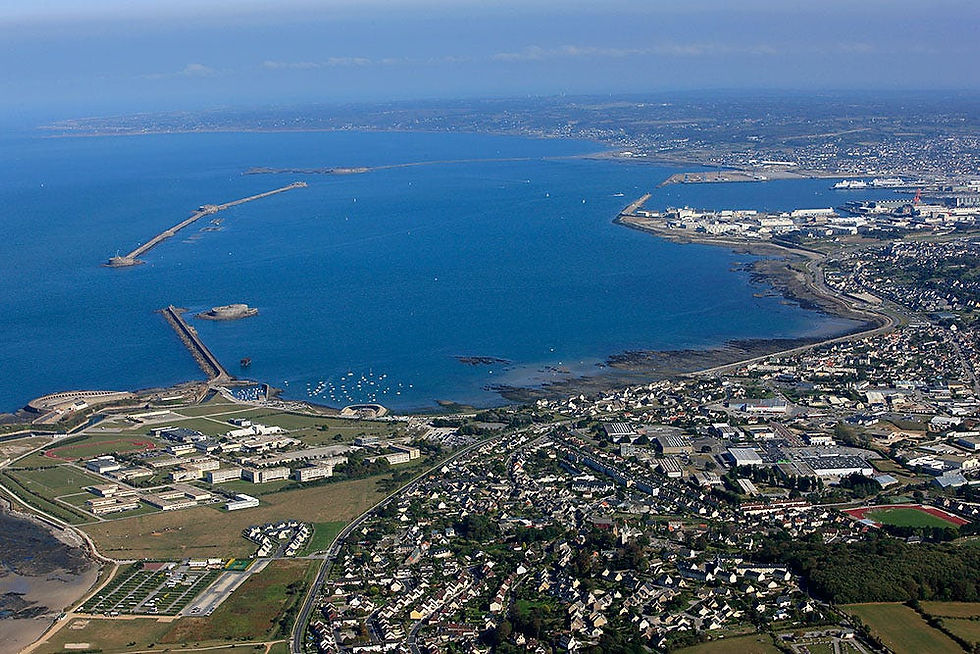
The part that matters here is shorter. I first went offshore aboard an S&S 34 in 1971, aged eleven, in the RORC Seine Bay Race. The design has been in my hands, on and off, ever since. And the race it made its name in is the one race I have never done.
The Fastnet, fourteen times. The Rolex Middle Sea Race. The RORC Caribbean 600. The Transatlantic, The Round Britain and Ireland, which at roughly 1,800 miles is a different animal altogether but belongs in the comparison. Two hundred and more RORC offshore races. What the record does not include is the 628 miles from Sydney Harbour to Constitution Dock.
The comfortable assumption is that offshore experience is fungible: that a sailor who has done enough of these will do well at the next one. That assumption is worth testing rather than asserting, and testing it is most of what follows.
What each race actually taught me

Classic view of Portland Bill on a RORC Race - many domestic races pass it by
The Fastnet teaches gates.The Solent, Portland Bill, the Lizard, the Scillies. Each is a timing problem with a hard edge, and the fleet compresses and expands around them in a way that often has little to do with boat speed. Arrive at Portland at the wrong hour and you will watch boats you have beaten all season sail past a mile inshore. The skill is arithmetic under fatigue: working out at two in the morning whether the extra two miles buys back the ninety minutes.

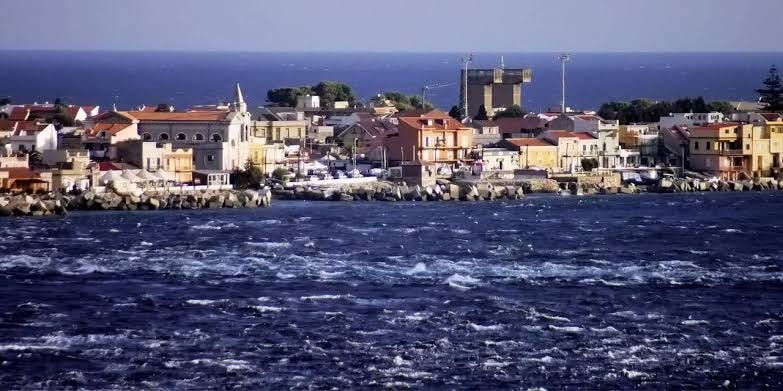
Never get too close to Stromboli on the Middle Sea Race

The 600 - Everyday a new way and its hot
The Caribbean 600 teaches crossovers. The navigation is the most predictable of the four, and what it punishes instead is sail selection and the discipline to keep changing when you are hot and tired. The boat that wins spent the least time in the wrong gear. Of the four, it is the one whose lessons are most about execution and least about strategy, and as it happens that execution is among the most transferable things on this list.

RBI, It’s relentless and take every day as clean slate!
Round Britain and Ireland teaches the planning horizon. At 1,800 miles the forecast you start with is worthless by the time it matters. You stop planning the race and start planning the next twenty-four hours, repeatedly, for a week and a half. You also learn what a crew looks like on day eight. Racing Morning After four-handed round Britain in 2022 we led overall on corrected time for eight days and lost it becalmed off Muckle Flugga. There was no escape available once we were in it. The more useful question is what we might have seen coming, and how much earlier we could have committed to the other side. Now set the Hobart against that.
Why the Hobart is a different problem
The professional navigator Tom Cheney, writing in Yachting World in December 2023, called it "the hardest of the classic offshore races" and made the case on structure rather than length. That is the right frame. At 628 miles the Hobart is shorter than the modern Fastnet's 695 to Cherbourg, and the older Plymouth course was 608. Distance is not the issue. Three things stacking on top of one another is.
The first is the East Australian Current. It runs south along the coast, which is where you want to go, and is therefore free distance. But it moves. It sits close inshore in some years and well offshore in others, throws off eddies ten miles across that deliver the opposite of what the routing expects, and shifts on a timescale of weeks rather than days. Chris Bedford's account for North Sails is the clearest I have read on this. Its position can be tracked remotely and should be; what cannot be done remotely is the local validation, and that is the part I am short of.
The second is what happens when the southerly change meets that current. Wind against a south-setting stream builds a sea state that is not merely uncomfortable but structurally expensive. Adrienne Cahalan, six times a line honours navigator, has described the priority through that phase as "keeping the boat together", which from a navigator is a striking admission. In the Fastnet the big call is where to cross the Channel. Here the big call may be how hard you are willing to push a boat you still need in three days' time.
The third is exposure. The New South Wales coast offers fewer places to stop than the Channel does, Bass Strait has a fetch running back into the Southern Ocean, and Cheney notes that communications drop away quickly once you are clear of the Heads. Exposure is not only a function of distance from a lifeboat station: what matters is what can reach you, in what conditions, and how long the water gives you. On every one of those counts eastern Bass Strait is a harder proposition than the Celtic Sea.

The start deserves a word. The fleet leaves a harbour full of spectator craft, turns hard south at the Heads, and the first hour is a clear-air problem rather than a navigational one. The boat that comes out of the harbour in its own breeze begins with something the others have to win back.

The start, Sydney Harbour to the Heads. Shark Island line, exclusion zones, the exit and the first turn south
Then the race ends with a trap. Storm Bay and the Derwent can hand thirty miles of parking lot to a boat that has sailed 600 good ones, or accelerate a gradient wind around the Tasman Peninsula into something vicious. Those local effects are poorly resolved by the standard models, and the crews who do well there watch observations and AIS rather than the GRIB.
1998, and what it is fair to take from it
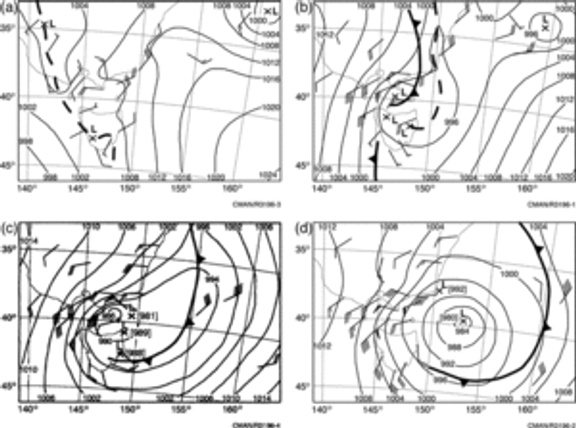
In 1998 the fleet of 115 met an east coast low that developed explosively over eastern Bass Strait, with mean winds reported in the 50 to 60 knot range and seas over ten metres. A storm warning was issued barely an hour after the start, the first in the race's history. Forty-four boats finished. Five sank, six men died, and the CYCA's own recap puts the number rescued by helicopter and surface vessel at 56, where other accounts say 55.
The tempting summary is that the maxis ran clear while the storm went through the middle of the fleet. There is something in it, since the leading boats were further south and ahead of the worst, but individual encounters varied enormously and the neat version flatters the explanation. What is defensible is narrower and more useful: the storm caught boats of the size most of us actually sail, in the part of the course where help is furthest away, and it did so after a forecast that had not conveyed what was coming.
The disaster prompted a review whose recommendations reshaped the race. Qualifying passages, safety audits and crew experience requirements all feature in the modern Notice of Race, and anyone writing about how those specific rules evolved should compare the 1998 and current documents rather than assert a single origin.

Satellite view of the storm a-d 6hr gap
One night of my own, so you can believe a little
I was in the 1979 Fastnet. The numbers are well enough known and I will not rehearse them: 303 boats left Cowes on 11 August, the storm came through on the night of 13 to 14 August, eighty-five finished, fifteen competitors died.
My father owned a Sigma 33 called Cabadah and asked me to navigate (well at least give me a go)! I was at Dartmouth, had just finished my navigation training, and was more than up for it. There were six of us.
By the evening of 13 August we were about twenty miles north-west of the Scillies. The race down had been light and unremarkable and we assumed it would stay that way. As it got dark the wind came up in a manner that stopped feeling like Summer. By eleven it was black, the sea was enormous and had no pattern in it, and our instruments had already given up, so the figure I can give you is an estimate rather than a reading: thirty knots, gusting forty, at our position. Boats further west had a different night entirely.
We came down to a jib, took that off her too, and she went over anyway. The cooker left its gimbals and most of the contents of the boat joined it to leeward. We put everyone below except me and my father, closed the washboards, and when she would not be held on that heading we turned her round and ran off under bare poles, because sending anyone forward would have been worse than useless.
Running off before a westerly from twenty miles north-west of the Scillies points you at the gap between the islands and Land's End, and the Seven Stones lies in it. This was before the traffic separation scheme, so nothing was steering us into a lane; we went where the sea would let us go, which is pretty mad and also a way of arriving somewhere you had not chosen. By one in the morning we had a very large sea behind us, no stars, no horizon, and a navigator who had quietly stopped being certain where he was.
So I stood on deck and looked for the Seven Stones light vessel. At fifteen or twenty miles you might raise her if you are lucky. I was lucky. She flashed where she should have been, and that one bearing told me which side of the reef we were on and that we would clear it.
By dawn it had eased.
That is the whole of what I want to take from that night, and it is not a survival story. An uncertain position was resolved by a manned light vessel sitting on the hazard, in waters charted and lit to a standard that is the accumulated work of two centuries. The Celtic Sea is a managed environment. Eastern Bass Strait is not, and the habit of assuming that something will be there to tell you where you are is precisely the sort of assumption worth finding in yourself before you go.
Cabadah was one of only two Sigma 33s entered that year, the class being barely a year into production; the other was sailed by the man who drew her, David Thomas. Both came through. We retired into Falmouth thoroughly fed up with ourselves, and it was not until we tied up that we learned what the same night had cost everyone else.
So what can you take from that?
The planning horizon from Round Britain, because the Hobart forecast degrades quickly and the Derwent is four days out at the start. Watch discipline and fatigue management, because a change at 0300 on night two is a crew-state problem before it is a tactical one. Sail crossover discipline, because the transition from kite to heavily reefed upwind happens fast and gear is lost in the first hour of it. Confused sea states, warm then really cold as you clear the land - that all works. What transfers badly. Tidal-gate thinking. The Fastnet trains you to solve a timing problem against a predictable, published stream. The EAC is neither, and treating it as a tidal gate is the error a northern hemisphere sailor is primed to make. The Middle Sea trains you to expect the trap behind terrain; here it is a sea state inside a current. What does not transfer at all. Local knowledge. I would not claim that divisional winners are always crews who raced the Australian season first, because I have not done the results analysis to support it. I would say that every account I have read from a winning navigator treats the season beforehand as the place where the EAC, the change and the Derwent stop being abstractions.
What I intend to check before the start
This is the part that matters more to me than the history, and it is what I would want an owner to judge me on. How does this boat behave driven into a steep, short head sea, and at what point does making the mileage stop being worth the loading? Has the watch made the heavy-weather transition together, in the dark, rather than talked about it? Who, other than the owner, is empowered to call for less sail or less speed, and does the on-watch know that before the night it matters? How will forecast current be checked against what the instruments and the water are actually showing, and what will we do when the two disagree? What conditions would change the route, and what conditions would end the race for us, decided in Sydney rather than at three in the morning off Eden? And who aboard, or ashore, knows the Derwent approach well enough to tell me what the models will not? None of those questions needs a Hobart on my record to be worth asking. All of them are better asked by somebody who has been through a night when the answers were not ready.
The knowledge gap
Fourteen Fastnets will not teach me Bass Strait, and two hundred RORC races will not teach me the Derwent. What they will teach is how to run a watch when the forecast has failed and the crew is past its best, which travels, and what a small boat feels like when it is being asked for more than it should reasonably give, which travels too.
I am looking for a berth in the 2026 Rolex Sydney Hobart as a watch leader or in the afterguard, and I can be in Australia in good time for the Bird Island Race on 14 November and the full run-up through Cabbage Tree Island on 4 December. If that is useful to your programme, my details are at the foot of this page.
Fifty-five years after an eleven-year-old was sick over the side of an S&S 34 in the Baie de la Seine, it would be a reasonable place to finish the set.
Stuart Greenfield FirstShift — Yacht Racing Intelligence From first shift to first place.
Offshore racing is never just about the boat, the forecast, or the routing software.
It is about decisions made under pressure, in changing conditions, by tired people trying to keep the boat moving fast and safely in the right direction.
That is where races are won and lost.
At FirstShift, my aim is simple: to help owners, skippers and crews race offshore with more clarity, more confidence, and better preparation whether that is a RORC Channel race, a Fastnet campaign, or your first serious step into offshore racing.
Thanks for reading Firstshift - yacht racing intelligence! This post is public so feel free to share it.

Comments