
More boats, more points: Why Cowes to St Malo is the RORC Summer’s race to win

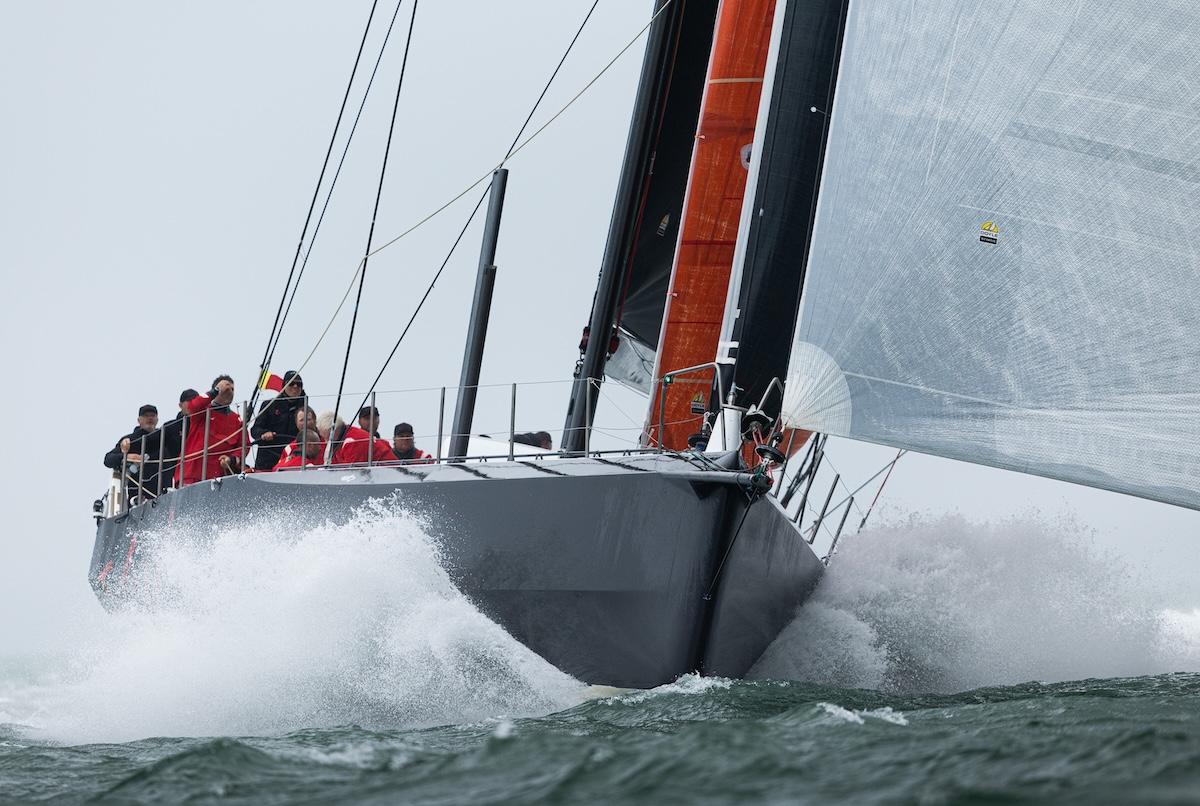
The last time I took Morning After to St Malo, she was the oldest boat in her class by a clear margin and we sailed her two-handed, myself and Louise Clayton, a very talented sailor. A 1968 S&S 34 against forty-five teams in IRC Two-Handed, close to half the fleet. A boat of her age and rating is not supposed to trouble the corrected-time podium of a race this size. We won the class and finished third overall.
That was 2022, and the reason it happened is the reason this race is worth writing about at all. It was a slow, soft edition. The breeze never settled, the quick boats could not convert their rating into elapsed-time advantage, and the race compressed back down the fleet to where patience and a clean read of the tide count for more than horsepower. We did not beat anyone on the water in absolute terms. We beat them on corrected time, by sailing close to our rating when the conditions stopped others sailing to theirs. The course handed us that chance. Reading it correctly is the whole craft of this race, and it is why I would tell any crew stepping aboard for Friday’s start to stop watching the rating band above them and start studying the soft spots.
Prizes for everyone!
The thing a newcomer to RORC offshore handicap racing might need to know first is that there are always a number of winners in any race. Line honours goes to the fastest boat across the water, which in a breeze normally means the longest, highest-rated machine in the fleet. In the St Malo race The King Edward VII Challenge Cup, however, goes to the best corrected time under IRC, the winner of the handicap race.
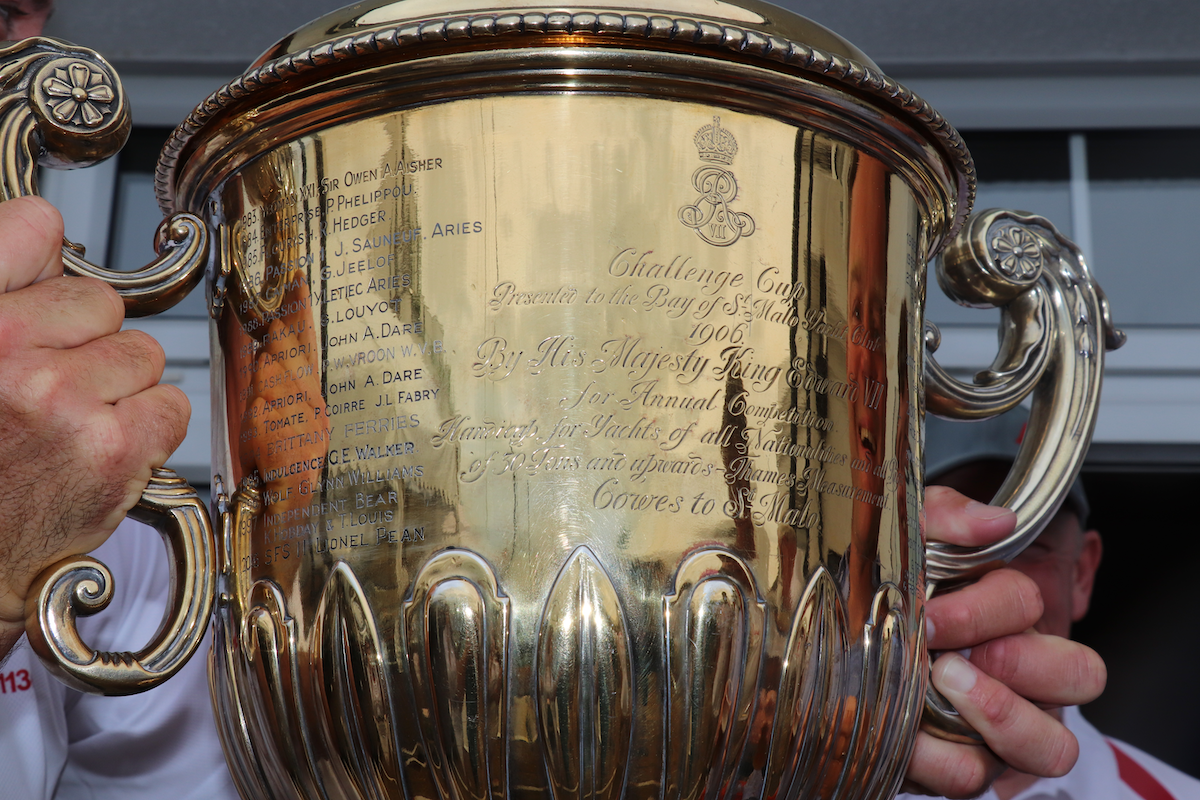
The trophy is older than the club that now awards it. The St Malo race dates back to 1906, and the King Edward VII Challenge Cup was originally donated by King Edward VII, long before the RORC became the force it is today. RORC’s own history records the Cowes-Dinard race being revived in 1935, so the modern race sits in that lovely Anglo-French seam between Edwardian silver, inter-war offshore racing and the present IRC season.
The handicap point is the one that matters on Friday. Because the cup is decided on corrected time, it has gone clean across the rating spectrum depending on the weather.
The last five editions, and what they prove
You do not have to look far back to see the handicap logic at work. The last five runnings have gone to five completely different boats overall, and a parallel story has been building in the two-handed column alongside them.
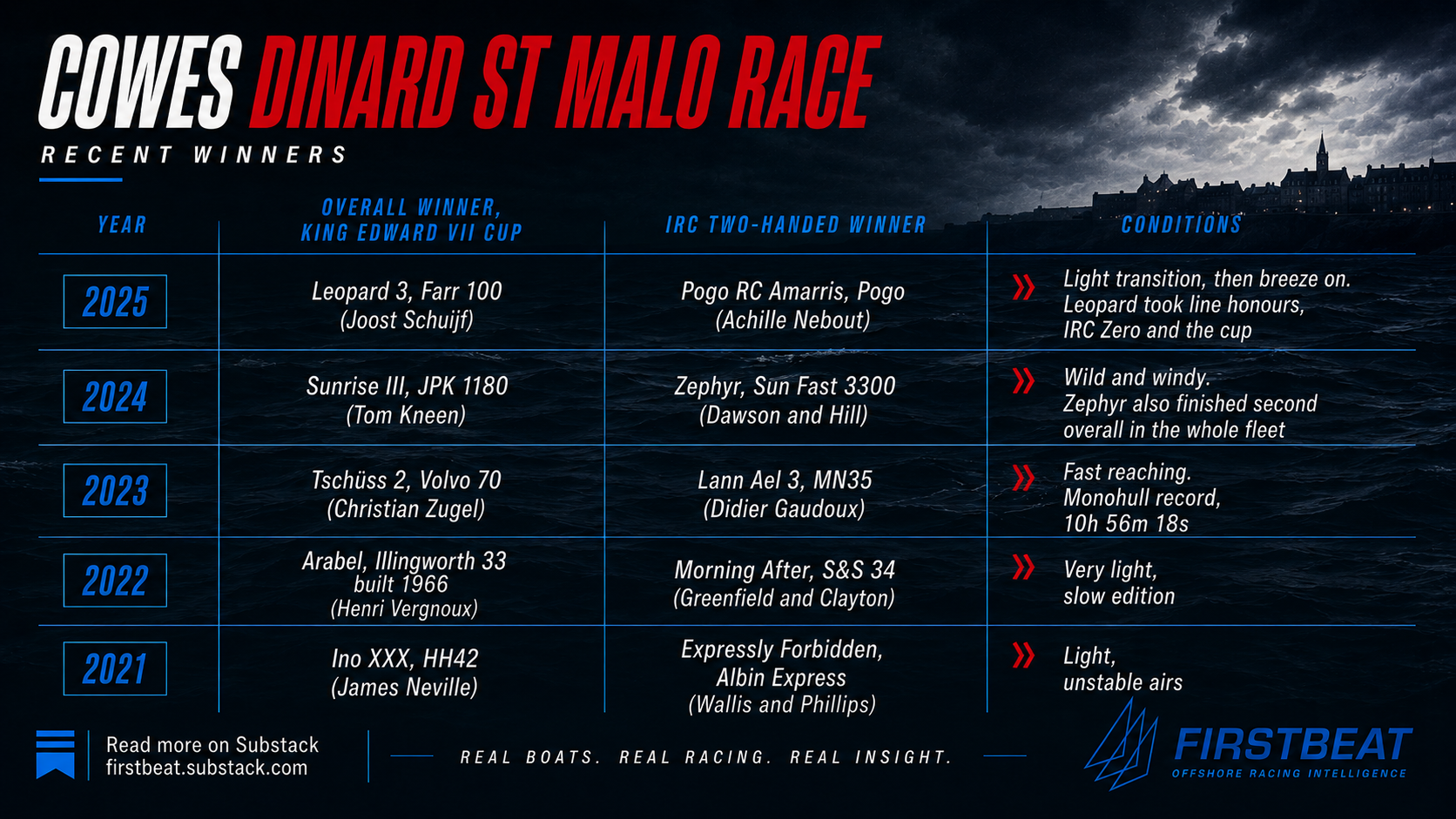
Read down that table and the spread is the point. In 2021 the cup went to Ino XXX, a 42-footer sailed by the serving RORC Commodore. In 2022 it went to Arabel, an Illingworth 33 from 1966. In 2023 it went to a Volvo 70. St Malo does not simply reward horsepower. It rewards the boat that converts its rating into reality when the course starts asking awkward questions, and which boat that is depends almost entirely on the conditions and the navigation.
The two-handed story is the one to watch, though, because that is where the race is heading. The division is now the largest and arguably the most competitive class in the fleet. Thirty-nine boats contested it in 2025, and in 2024 the two-handed winner, the Sun Fast 3300 Zephyr, finished second overall in the entire race, ahead of nearly every fully crewed boat behind the maxi. In 2026 the race is the opening round of the RORC Double Handed National Championship, with the decider at the Cherbourg Race on 4 September. Even over 150 miles it is a brutal little test for two people: Solent exit, shipping lanes, Casquets, sleep, tide, and then the final approach to St Malo when the race is quite capable of starting again. Achille Nebout, who won the class in 2025 on the Pogo RC Amarris, put the trend plainly: “It’s a format that’s growing fast, with more and more boats at every start line, and the competition is getting stronger.”
And the size of the fleet is the point, not just the backdrop. The RORC Season’s Points Championship, the largest offshore series in the world, scores on a high-points system weighted to fleet size, so a win or a podium in a big-entry race counts for more than the same result in a thin one, with bonus points on top for the major races. With well over a hundred boats on the line most years, St Malo is one of the richest scoring opportunities of the domestic summer, and it sits inside the seven-race RORC Cowes Offshore Series as well. More boats, more points. That is why the race matters out of all proportion to its 150 miles, and why anyone chasing the season title cannot treat it as a delivery with a party at the end. Everyone loves this race. The serious crews love it twice.
The gates down the course
The race breaks into a sequence of gates. Each one is a place where you either hold your corrected-time position or leak it, and where preparation pays directly into the result. Run through them in order.
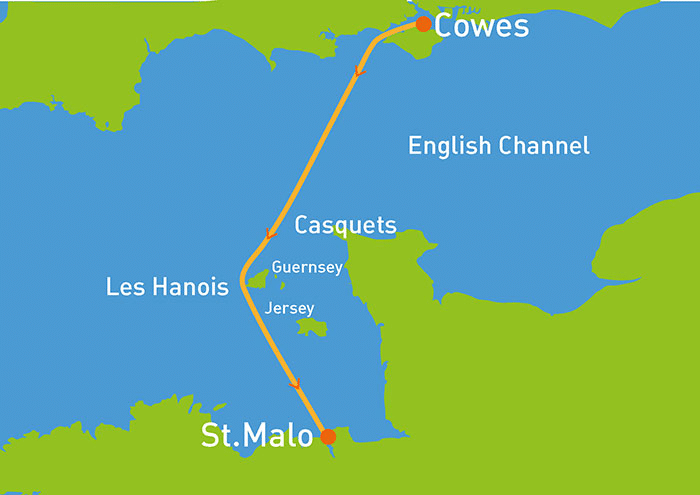
The Solent exit. Clean air and a clean lane to the Needles. For the high-raters the early work is converting pace into a lead before the Channel opens up. For everyone else it is about not losing time to dirty air and foul tide before the race has properly begun, because time lost here is time you will never claw back on handicap.
The Needles and the shipping lanes. Commit to the cross-Channel leg with the traffic separation scheme to manage. Routine seamanship, but it is where tired navigation quietly starts costing you minutes against your rating. Tidal eddies - all to pay for around Casquets, Alderney and Guernsey.
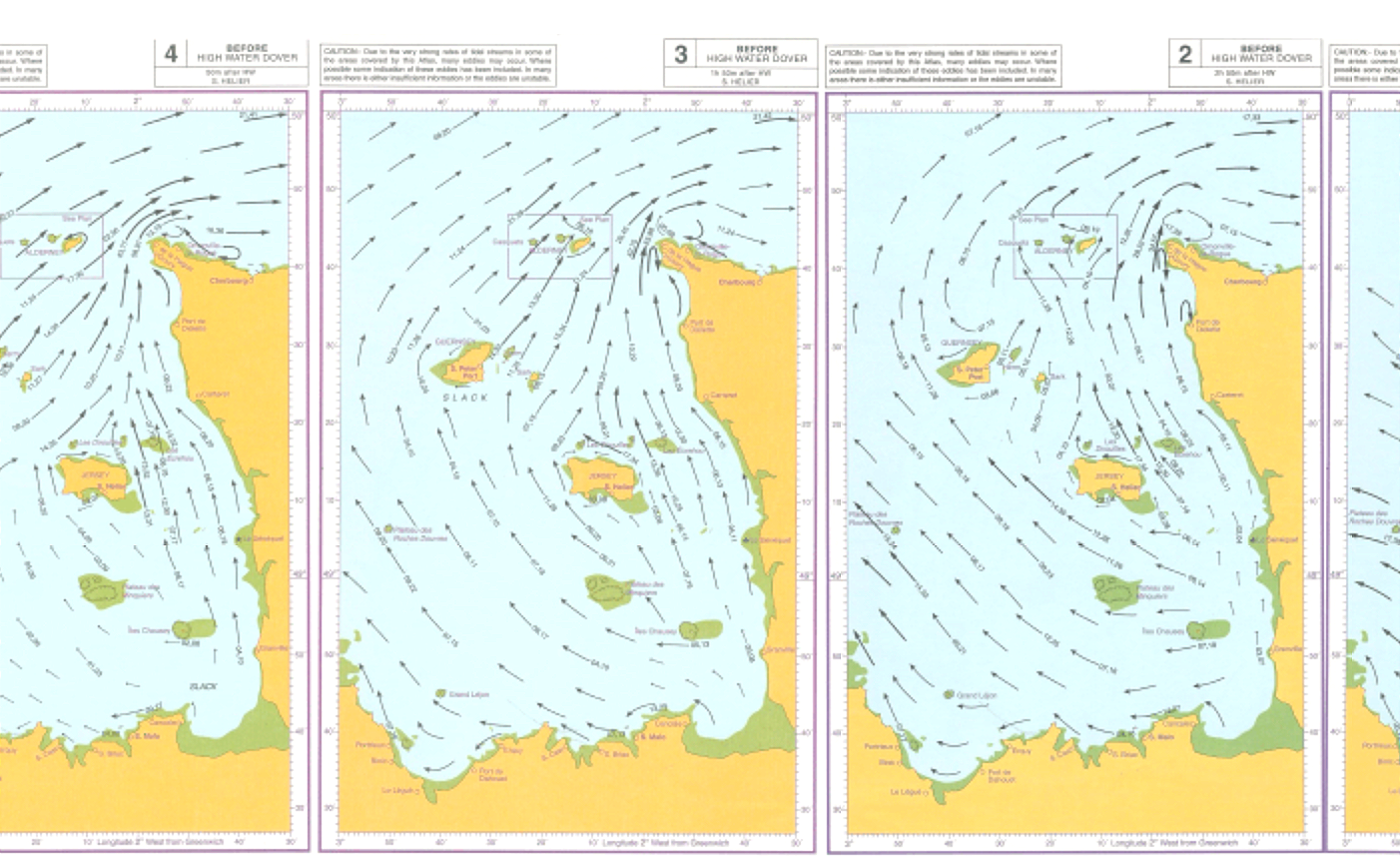
The Casquets. The tidal gate off Alderney, and the first place local knowledge converts straight into corrected time. There is a back-eddy here that the canny exploit. Ross Applebey, who has won his class in this race more than once on the Oyster 48 Scarlet Oyster, put it plainly after the 2023 edition: “We know about a useful back-eddy at The Casquets and we could see the boats offshore really struggling.” That is the handicap race in one sentence. The gain is local, repeatable, and invisible to anyone who has not done the homework, and it lands on the clock regardless of how you rate.
The Channel Islands and the run to St Malo. Big tidal range, strong streams, and the place where the cup is most often decided. Tide and wind changes here compress the fleet on elapsed time, which is exactly what lets a well-sailed lower-rated boat stay inside its handicap window all the way to the finish. And it is here, on the final approach, that we meet the ghost.
The ghost off the Minkies
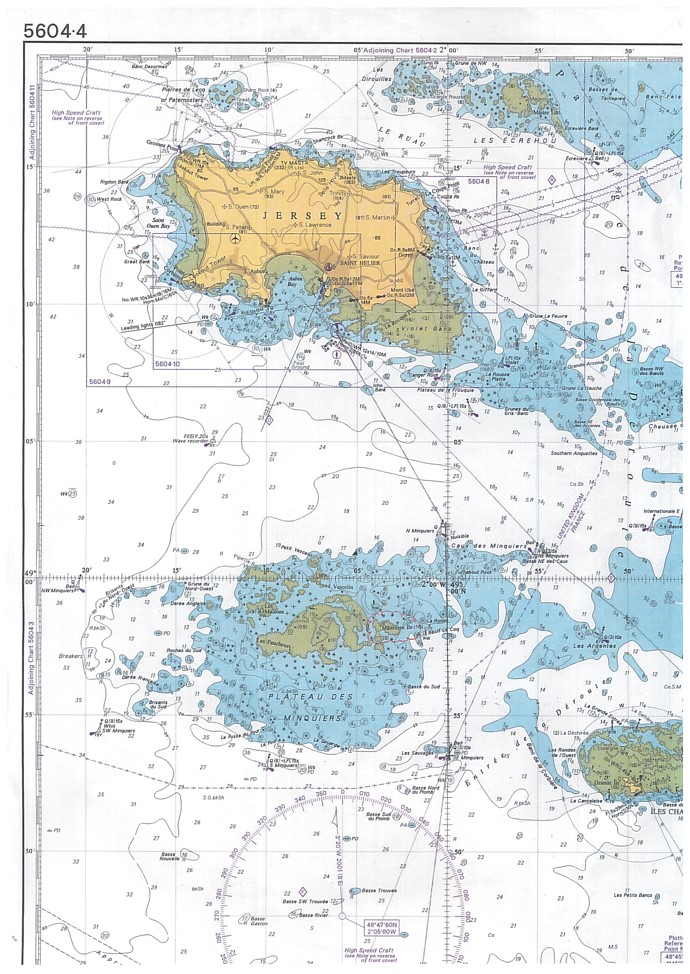
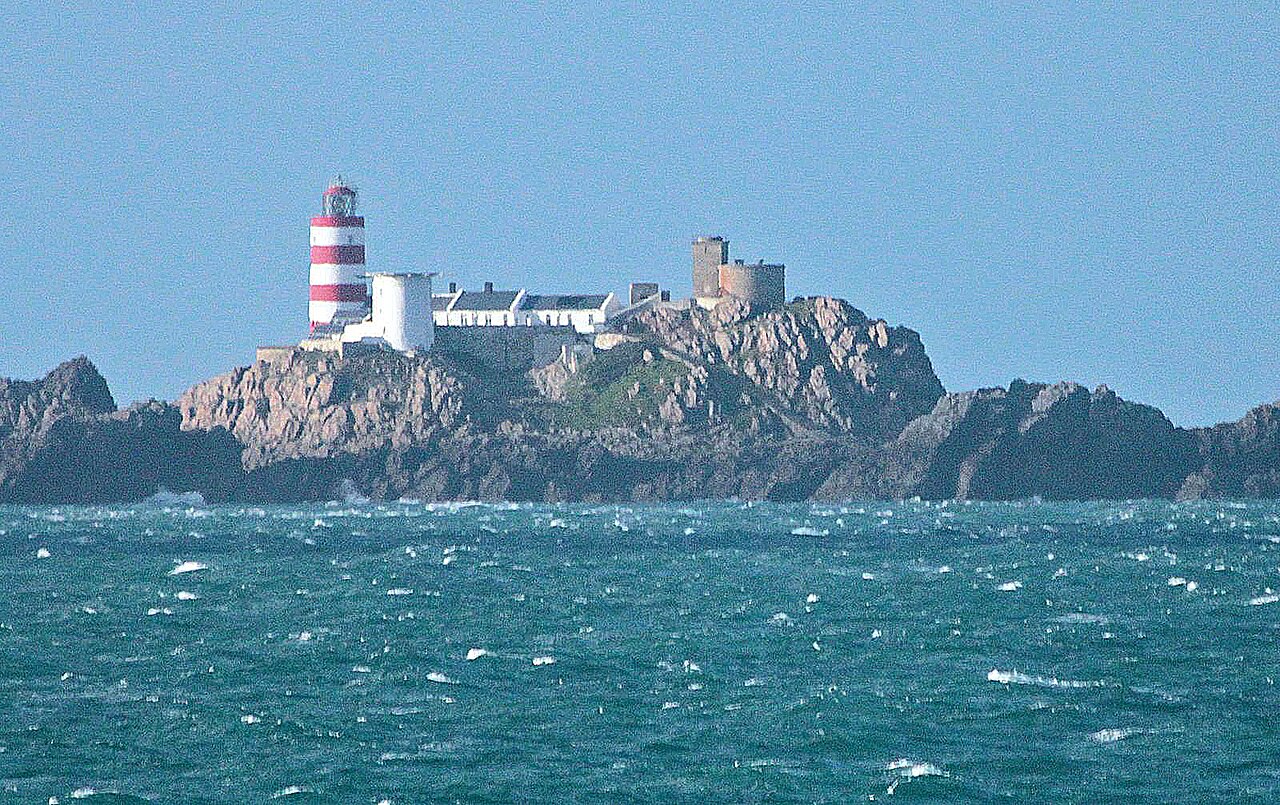
South of Jersey lie Les Minquiers, “the Minkies” to anyone who races here, a reef of rock and drying sand the fleet must respect on the way into St Malo. The wind here has a habit of going soft and fickle without warning, dying in patches while the tide keeps working, and crews have found themselves drifting, becalmed, watching a rival a mile off carry a private slant of breeze clean past them. It can make you look like a ghost ship, which brings me to the one that supposedly haunts these waters.
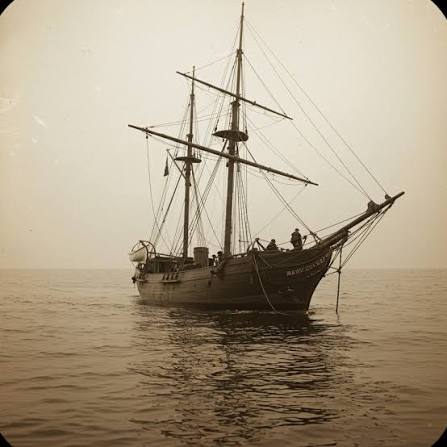
Ask around and someone will tell you the Marie Celeste, the ship found sailing crewless, met her end somewhere off here. Wrong on every count, and the way it is wrong is the fun of it. The real ship was the Mary Celeste, no second “e”, found abandoned in the Atlantic about four hundred miles east of the Azores in 1872. The “Marie Celeste” spelling is Arthur Conan Doyle’s, from an 1884 story that outsold the facts. The crewless wreck that genuinely belongs to the Minkies is fiction too: Hammond Innes set his 1956 thriller The Wreck of the Mary Deare right here, a derelict found drifting off the Minquiers during a yacht race, the name a deliberate wink at the Mary Celeste. The legend you hear in the bar is two novelists stitched together.
The useful part for Friday is that the Minkies earned the reputation honestly. This is exactly the kind of water where a boat ends up looking crewless, sails slatting, helm doing nothing, while the tide takes it where it pleases. That is where corrected-time races are won and lost. A boat parked here is not just losing distance, it is losing its rating, bleeding the handicap margin it built all the way across the Channel. The difference between you and the ghost is preparation: knowing the tidal window before you arrive, and having a plan for the light patch rather than meeting it cold and tired.
Why it is a lucky race, and why luck is earned
People call Cowes Dinard St Malo a lucky race, and they are half right. The wind is changeable, the tidal gates are unforgiving, and a shift near the Channel Islands can hand the cup to a boat that had no claim to it on pace. Morning After was the beneficiary of exactly that in 2022. But luck in a handicap race is not random. It falls on the crew who put themselves in the water where the luck lives, who read the Casquets eddy and the Minkies light patch in advance, who keep the boat sailing to its rating when the easy thing is to give up. Your rating is fixed before the gun. Everything that decides the cup after it is navigation and nerve.
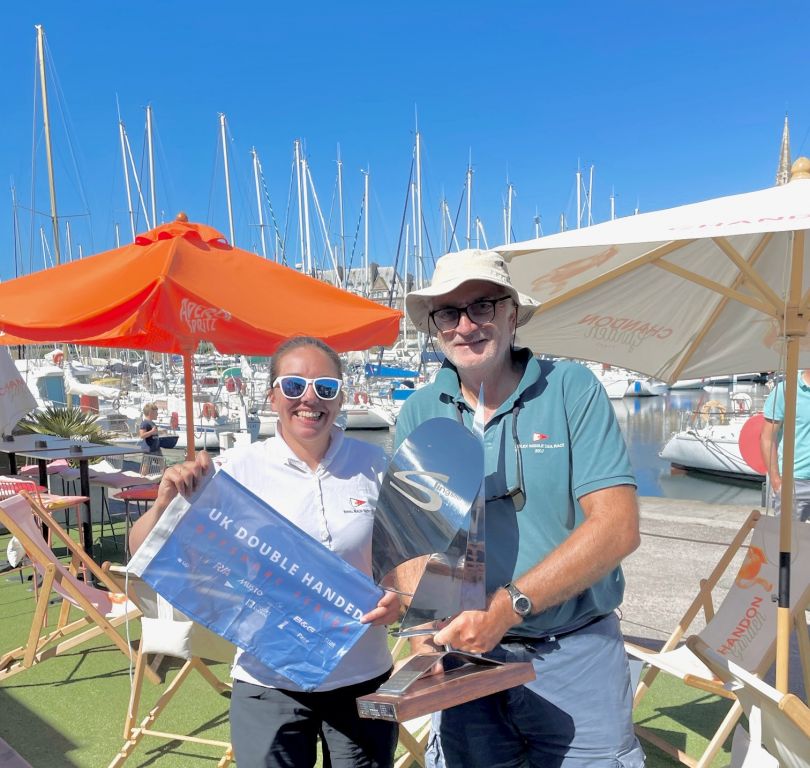
That is the case for taking this race seriously whatever you are sailing. A modestly rated cruiser-racer can win the oldest cup in the Channel, and a Volvo 70 can win it too, and the difference between them in any given year is the weather and who sailed closest to their rating through the soft spots. Not the fastest boat. The best-sailed one.
The welcome at St Malo
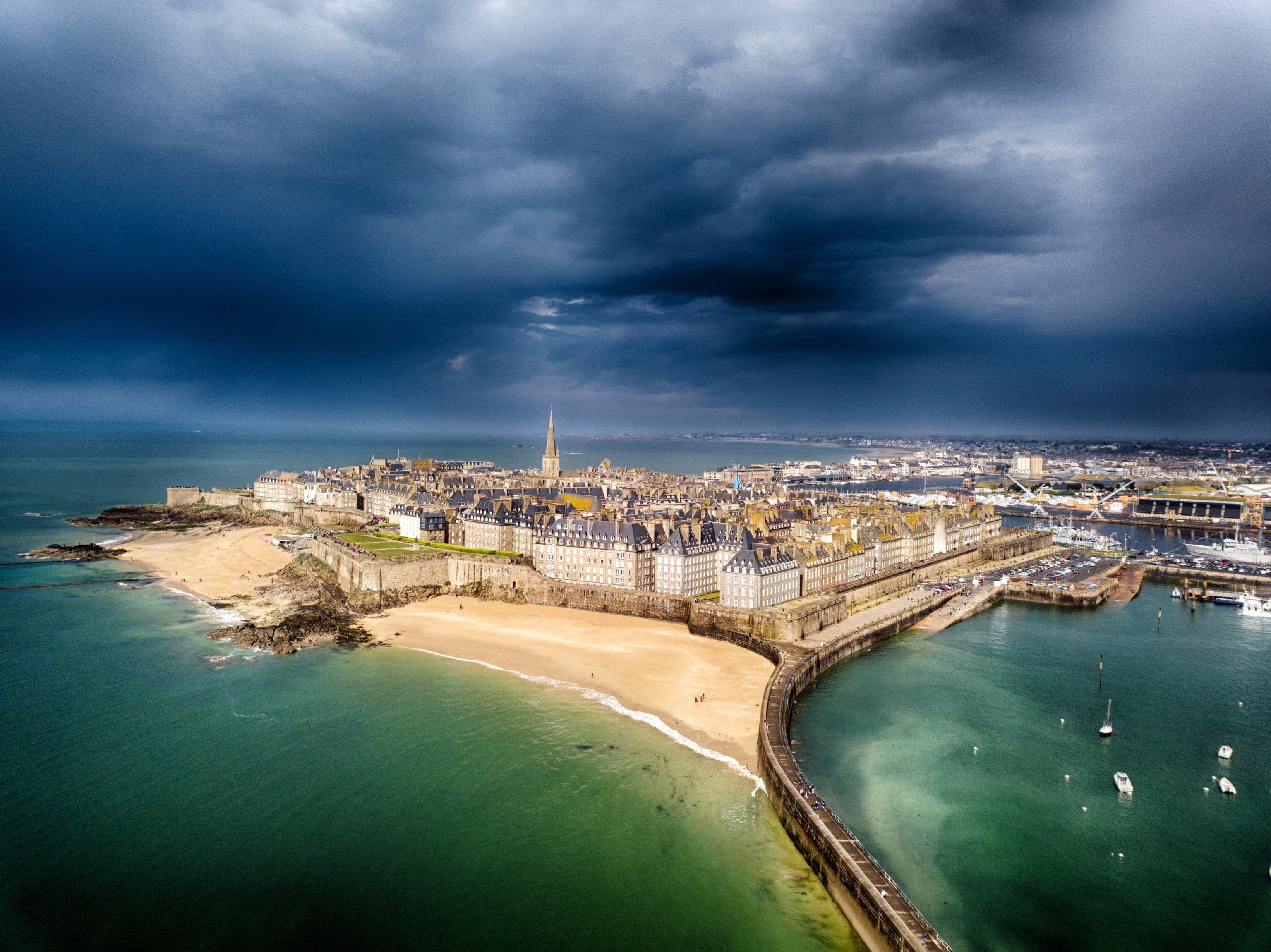
There is a reason crews keep coming back. The finish under the ramparts of St Malo is one of the great arrivals in the domestic RORC season: tide under you, lights ahead, old stone above you, and the feeling that the Channel has made you earn the beer. In the years when the race falls close to Bastille Day the whole thing takes on a festival edge, the Société Nautique de la Baie de St Malo laying on a band and the 14 July fireworks going up over the bay. Even when the calendar moves, as it has this year with a 3 July start, St Malo still pays you back for finishing.


Comments