
RORC Myth of Malham: The race was too light to be easy

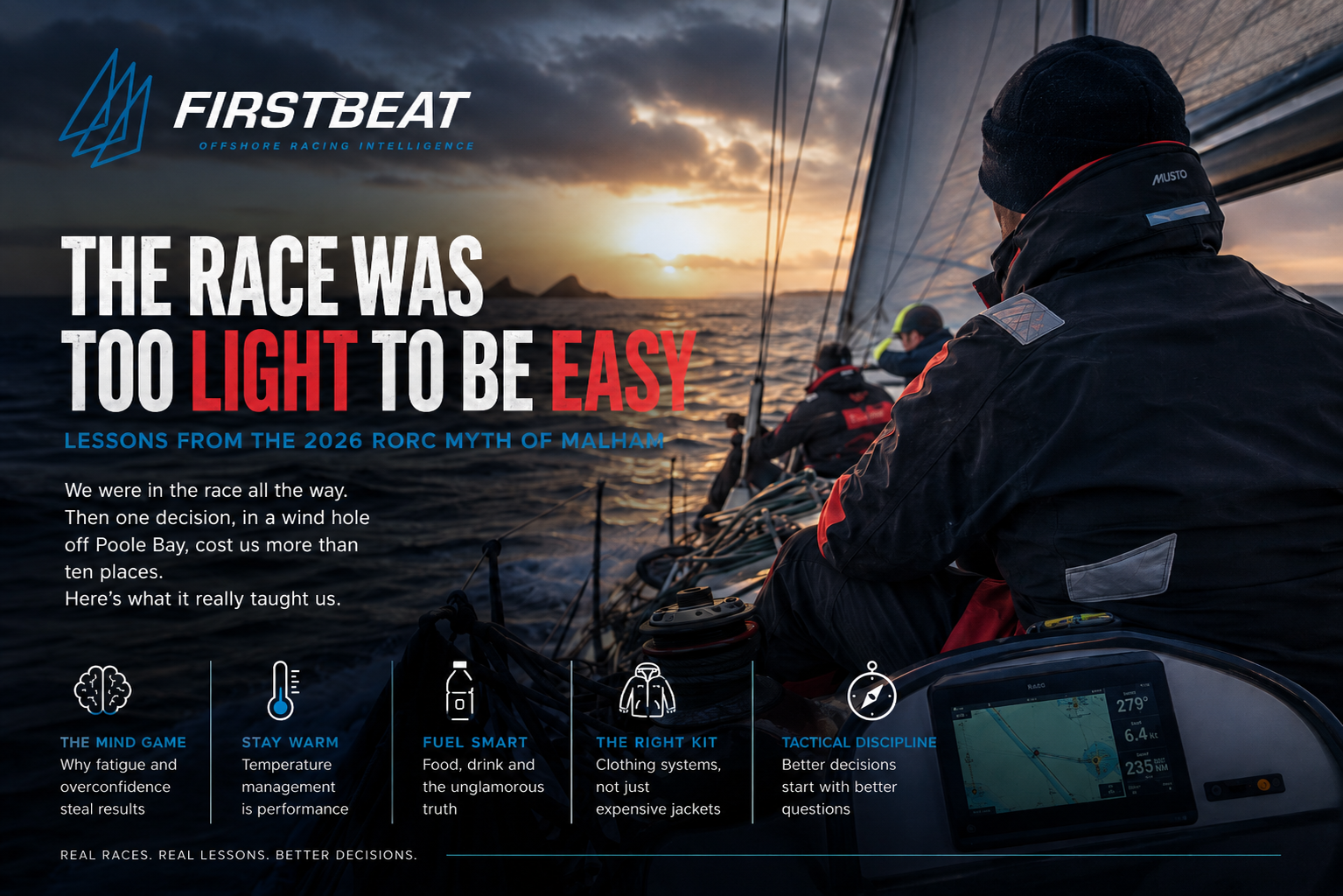
There is a particular kind of offshore race that looks gentle from the outside.
No breaking seas. No green water. No crew clawing along the foredeck at three in the morning. No rig damage. No heroic photographs. No story of survival sufficiently dramatic to earn the bar's full attention, or perhaps one involving an anchor and a knife!
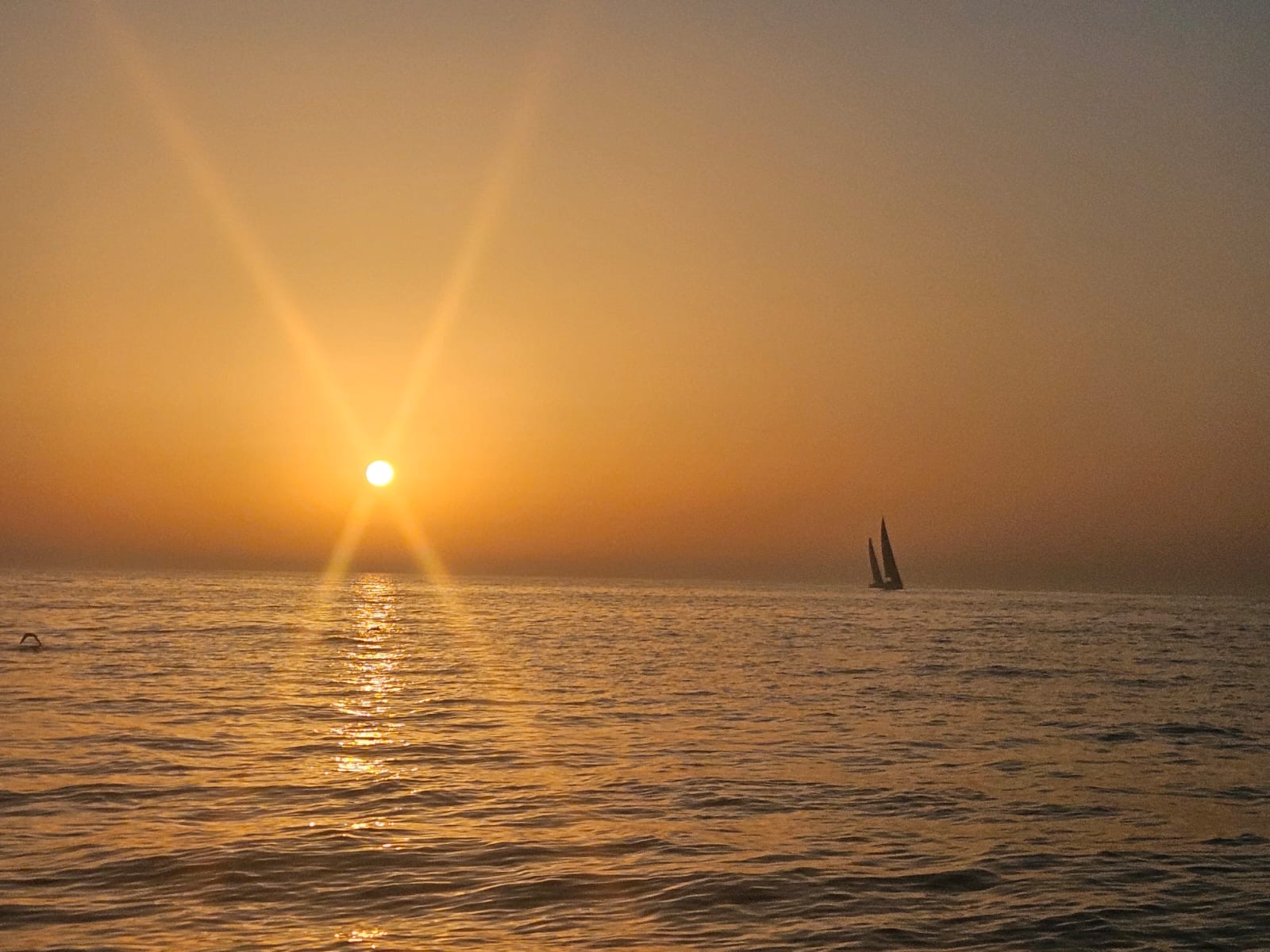
Just light wind, long hours, a soft sea, a clear sky and a race that quietly asks the same question again and again.
Are you still thinking properly?
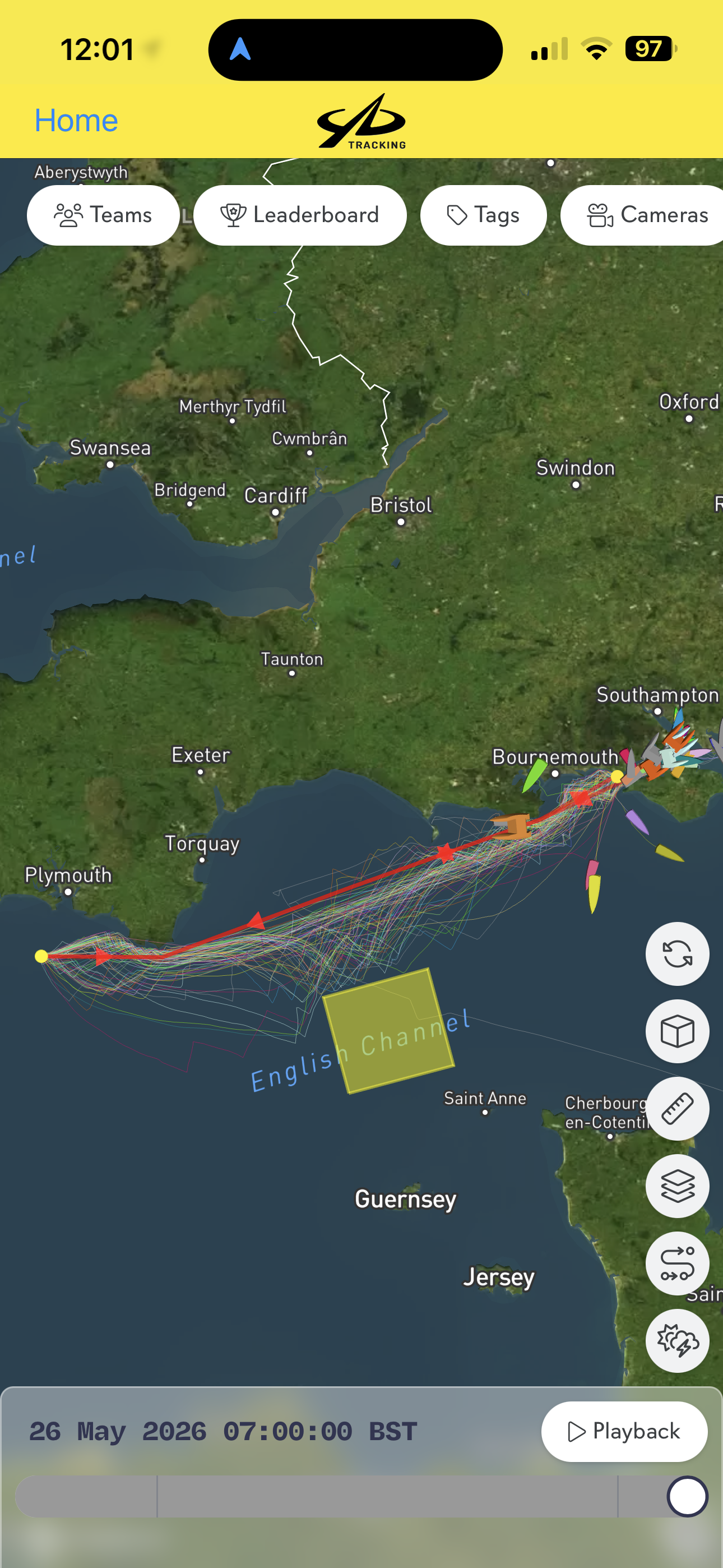
The 2026 RORC Myth of Malham asked it a lot.
The race itself is one of the classic RORC Channel races, from Cowes to the Eddystone Lighthouse and back to North Head, around 235 nautical miles. It is long enough to become a proper offshore test, but short enough that crews often try to race it flat out from start to finish.
In the run-up to this year’s race, a complicated high-pressure system had been moving very slowly over the UK. In fact the weekend became one of the hottest May’s on record with 30 degrees in many places. So the forecasts looked light, unstable and difficult and because the week before had been cold and wet probably a lack of any sea breezes in the afternoon to spice things up. The day before the original start time was changed, and Class 3, the class we were racing in, eventually went off at 1450. This was to enable the race to have a west going tide during the late afternoon and evening taking the fleet past Portland Bill which is notrious tidal gate.

Starting off the Royal Yacht Squadron line from Cowes we beat west down the Solent. Our first big tactical decision was to work the north shore of the Isle of Wight. Most of the fleet chose the mainland shore. In retrpspect maybe not the best decision. By Hurst, the fleet had compressed. We were not exactly where we wanted to be, but we were still very much in the race and opted for an exit down the Needles channel more than half the fleet went north of the Shingles bank and this led to many taken a more northerely route across Poole bay in, a now, postive tide before tacking for Anvil Point.

Having taken the Southern route out of the Solent I made my first slight error by tacking to cover the fleet to the North in anticipation of the fleet getting more wind inshore, in fact the opposite happened and my cover tack just lost us time. But we were in the top ten on the tracker even so.
From there, it became a close fetch down towards Start Point past Portland. We were 10 miles off the bill and reaching under our Code Zero headsail, this was replaced by a spinnaker as we past Start Point and then a run into the Eddystone. Conditions became light and sticky we went south with our symmetric spinnaker, our competing Sunfast 3600 all carried asymmetric spinnakers with bowsprits but as an older boat with a shorter sprit the boat was rated accorodingly. With a spinnaker pole we thought we might have been able to run deeper than other 3600’s but in reality the new asymetric spinnakes are so well cut our competitors were actually sailing just as low and perhaps faster than we were. We were overtaken by a some close competitors on this leg, however, we arrived at the Eddystone like house just after lunch on Sunday.

On the way back from Eddystone to Start Point we had a beautiful 10 to 12 knot breeze and a proper beat east. Most of the fleet, including us worked into Start Point and Salcombe before heading offshore again towards the traffic separation zone. The wind lifted us close to the cliffs and we could tell the moment it happened by the change in temperature of the wind over the deck as we sailed into the zones close to the cliffs. This we took advantage of and gained some time. Once past Start Point for the second time it was a long port leg, on the wind south east towards the Casquets TSS (Traffic seperation scheme).
That was where the race began to change.

It was night. The wind was light. We had half a moon until 2.30am then complete darkness. The fleet was making small tactical decisions, tacking North then tacking back as the heading went left and the wind went light, small differences in angle, height, pressure and timing. Nothing looked dramatic. But in light air, nothing has to look dramatic to be decisive.
In reality we were racing a fairly old, but well equipped, Sun Fast 3600, perhaps one of the first. The sails were not the newest and the boat is probably not quite as quick as some of the better optimised 3600s in the fleet as it has raced thousands of miles over many years. But we were doing well, still in the top fifteen in class and overall. For much of the race, we appeared to be holding somewhere around eighth to twelth overall and in a similar position in Class 3. Class 3 itself seemed to be having a strong race in the overall position tables.
With the final tack north by Portland Bill we were still in the game.

We were 10nm miles off, then worked in towards St Alban Head and along the cliffs, to stay out of the building west going tide, with a few other yachts in our class. We were still holding a decent position. The next question was how to get back towards the finish line at North Head, north of the Needles Channel, with the breeze becoming softer and the tide becoming increasingly important.
Some boats went further offshore. Some stayed closer to the rhumb line and tried to keep reaching or beating towards the finish. Off Durlston Head and Old Harry rocks the wind became very light and we made the decision that, in hindsight, cost us the race.

My instinct had been to go further East but it was slow going. We even rigged the code zero in anticipation of sailing low and fast towards the east, we had already born away to increase speed.
Instead, we tacked north, looking for pressure or some kind of thermal effect in Poole Bay. We were looking for an option to do something different that could really get us on the podium. We were over-thinking perhaps and maybe were not being logical. I discussed this later in the article.
Result, we sailed straight into a wind hole.
Then we started going backwards with the tide.
That is when you know the race has changed its opinion of you.

We put a kedge down to hold our position. To the south of us, other boats were still moving slowly east. Not fast, but moving. When a few knots of breeze eventually returned for us, we tried to recover the kedge and could not get it off the bottom. In the end, we had to abandon it. Lost another 15 minutes.
By then, the damage was done.
We had dropped more than ten places. What had looked like a good race, perhaps a very good race for the age and speed of the boat, had become a slow, painful lesson in light-air judgement. When the tide eventually turned and the wind filled again, we made our final approach and finished at around three o’clock in the afternoon.
But the race had been lost.
Not because anything broke. Not because the crew stopped trying. Because, near the end of a long, light, mentally demanding offshore race, we made one tactical decision that should have been questioned harder than it was.
THE UNCOMFORTABLE BIT
There is an uncomfortable point here, and it is worth saying plainly.
With my background, I probably should not have made that mistake.
I have done enough offshore racing to know better. I have seen enough tide, light air, routing traps, false confidence and end-of-race impatience to recognise the danger. I know that the last part of a race is often when the crew is most vulnerable. I know that a boat doing one knot in the right direction is often beating a boat doing more in the wrong direction.
And yet we still made the mistake.
That is not an excuse. It is the lesson.
Offshore racing is not just a physical sport. It is not just helming, trimming, sail changes, stacking, routing software, polars, GRIBs and tidal gates. It is also a mind game, and the mind game becomes harder when the body is tired, the finish line feels closer than it really is and the result looks better than expected at that moment.
Experience is not immunity.
Experience gives you pattern recognition. It gives you confidence. It gives you a catalogue of previous races, previous decisions, previous escapes and previous gains. But the same experience can also become a trap. When a few decisions have worked, the next decision can feel right before it has been properly tested.
I had probably started to believe my own pattern.
That is not quite the same as ordinary overconfidence. It is more subtle than that.
It was part success-conditioned confidence, part confirmation bias, part finish-line impatience. We had made some reasonable calls earlier in the race. We had stayed with faster or newer boats. We were holding a position that felt good for the boat. The temptation, late in the race, was to believe that another contrary call might preserve or improve that position.
The majority is not always right. Offshore racing is full of moments when you have to leave the fleet. But when the routing, the observed pressure and a large part of the fleet all point one way, the tactician choosing the other way needs evidence, not hope.
That is the hard line.
We did not need a cleverer idea. We needed a more sceptical one.
LIGHT WEATHER IS NOT SOFT WEATHER
There is a lazy assumption that heavy-weather races are the hard ones and light-weather races are the easy ones.
Sometimes that is true.
In a gale, the boat is loaded. The sails are heavy. The noise is constant. People get frightened, sick, wet and tired. Boat handling errors can have immediate consequences. A badly executed reef, a slow change, a missed wave or a poor gybe can become expensive very quickly.
But heavy weather also brings a kind of clarity.
Everybody knows the race is serious. Everybody dresses properly. People clip on. The watch system matters. Food matters. The skipper’s voice carries weight because the conditions demand it. The boat tells you, loudly, when you are getting things wrong.
Light weather is more deceitful.
People stay on deck too long. They delay eating. They drink less than they think. They get cold in small, unnoticed increments rather than all at once. They lose sleep in fragments. They stare at instruments without noticing that their own judgement is quietly degrading. They talk themselves into decisions because the boat is moving so slowly that any idea feels better than patience.
A heavy-weather race often tests courage and boat handling.
A light-air race tests patience, discipline and clarity of thought.
And clarity of thought is fragile.
Research on sleep deprivation is not sailing-specific, but the findings are highly relevant offshore. Sleep deprivation impairs attention and working memory, and can affect decision-making. Sleep restriction is also a particular concern in safety-critical occupations where people must allocate attention flexibly and use working memory under pressure. That sounds very like a navigator, skipper or watch leader trying to interpret routing, tide, pressure, instruments, fleet position and crew state at three in the morning.
The tired brain does not always feel stupid.
Sometimes it feels certain.
IN LIGHT AIR, ONE KNOT IS NOT JUST ONE KNOT
This is one of the reasons light-air offshore racing can be so brutal.
In 30 knots upwind, the difference between two well-sailed boats might be relatively small. If one boat is making 8.0 knots and another is making 8.3 knots, the faster boat is only 3.75 per cent quicker. That matters, of course. Over time it becomes distance. In a strong fleet, small differences still hurt.
But in light air, the maths changes.
A boat making one knot while another boat makes two is not slightly slower. It is half the speed.
A boat making one knot while another boat makes three is not having a marginally poor hour. It is being beaten three to one.
Over one nautical mile, the boat doing one knot takes an hour. The boat doing three knots takes twenty minutes.
That is why light-air races create such big gains and losses. In a blow, small differences in trim, target speed and steering may produce small percentage gains. In drifting conditions, keeping flow over the foils, keeping the boat moving, finding half a knot more pressure, or simply avoiding a windless hole can decide the race.
In heavy weather, you can sometimes survive being slightly inefficient.
In light air, inefficiency becomes visible on the tracker within minutes.

This is also why routing can be more valuable, and more dangerous, in light air.
In this race, the routing was broadly accurate. The direction was good. The pressure areas were not bad. The boats that trusted the route further east, or at least gave it proper respect, generally did better than those trying to invent a northern answer without enough evidence.
Routing software is not perfect as I’ve discussed in other articles. It is not seamanship. It does not see every local effect, every cloud line, every wind bend, every fleet movement or every tired conversation in the cockpit.
But nor should it be ignored because the skipper has a feeling.
The best navigators use routing as a disciplined argument. They do not worship it, and they do not casually dismiss it. They ask: what assumptions sit underneath this route, what happens if those assumptions are wrong, and what real-world evidence do we have on deck?
A route is not a command. A hunch is not a strategy. A wind hole is not impressed by previous victories. The body is part of the navigation system
This is where offshore racing is different from the clean version people imagine.
It is easy to talk about routing, polars, VMG, tidal gates and sail selection as if the decisions are made by a perfectly rested brain in a warm office with a coffee machine nearby.
They are not.
They are made by people who may have slept badly the night before the start. People who have been trimming for hours. People who have eaten badly and drunk too little water. People who are warm enough not to complain but cold enough to have lost sharpness. People who are nearly home and want the race finished.
That is why sleep, food, clothing and hydration are not soft subjects.
They are performance subjects.
A crew does not suddenly become poor because it is tired. It becomes slightly less curious. Slightly less sceptical. Slightly less willing to challenge the first answer. Slightly more attracted to the decision that promises to end the discomfort.
“It is the men that we have to think about,” wrote Ernest Shackleton in his journal on 21 November 1915, the day Endurance was lost in the Weddell Sea. The circumstances were rather more extreme than a light-air Channel race. The principle applies precisely.
The boat is rarely the limiting factor. The people are.
SLEEP: THE INVISIBLE SAIL CHANGE

There are races where the best sail change is not on the foredeck.
It is sending the right person below before they think they need it.
Offshore sailors often treat sleep as something that happens after the important work is done. That is backwards. Sleep is part of the important work. If the navigator, skipper, tactician or watch leader is going to be required to make decisions in the second half of the race, then protecting their sleep in the first half is not indulgence. It is preparation.
This is particularly true in a race like the Myth of Malham, where the finish can be decided by subtle changes in tide, pressure and routing confidence. The key calls may not come in the dramatic part of the race. They may come when everyone is bored, tired and nearly finished.
In heavy weather, fatigue is obvious. In light weather, fatigue hides behind conversation, humour, snacks and the illusion that because the boat is not being physically punished, the crew is fine.
The crew is not always fine.
A good offshore watch system is not just about fairness. It is about preserving decision quality. The navigator needs sleep. The helm needs rotation. The trimmers need enough rest to see shapes properly. The watch leader needs enough freshness to challenge the comfortable answer.
A simple rule would have helped us:
Before making a major tactical split late in the race, one rested person should argue the opposite case.
Not aggressively. Not theatrically. Just properly.
What do we actually know? What are we assuming? What does the routing say now? What are the boats around us doing? What happens if we are wrong?
If nobody has the energy to run that conversation, the crew is already degraded.
TEMPERATURE: WARM ENOUGH IS NOT ALWAYS SHARP ENOUGH
This year’s race was warm by offshore standards. It was not a cold, brutal, miserable race. It was pleasant at times. Beautiful at times. That can be another trap.
When the race is obviously cold, crews take it seriously. They put the right layers on. They protect hands and feet. They change before they become wet and chilled. They think about the next watch. In warmer offshore races, people get casual. They stay in the kit they started in. They delay adding a layer. They get damp from sweat, condensation, spray or night air. Then, sometime after midnight, they are not exactly cold, but they are not right either.
There is a difference between not being cold and being properly protected.
Acute cold exposure measurably impairs cognitive performance. At its most extreme, confusion and poor decision-making are among the first signs. But offshore racing rarely approaches those extremes — the problem is the earlier, subtler erosion of performance that occurs well before anyone is in danger. A cold crew trims worse. Moves less. Avoids the foredeck. Stops volunteering. Thinks narrowly. None of these failures announce themselves.
The practical rule: dress for the watch. Not for the sunny cockpit you are currently enjoying. Dress for the 0300 decision off a dark headland when the breeze has softened, the tide is running, the boat feels sticky and someone needs to go forward.

WHAT TO WEAR, NOT JUST WHAT TO BUY
The sailing industry is extremely good at selling jackets. Big collars, big hoods, large claims, significant prices. It is somewhat less interested in whether you are wearing the right one at three in the morning when the decision that changes the race still needs to be made.
The best offshore clothing is not simply the most expensive garment. It is the system that keeps you dry, mobile, warm and willing to keep working when the instruments show 1.2 knots boat speed and the finish is still four hours away.
That system: a base layer that manages moisture without holding it; a mid-layer that holds warmth without bulk; a shell that stops wind and water; gloves and a hat worn before they feel necessary rather than after; a spare pair of dry socks, which, if the race goes long, begin to feel genuinely tactical.
At the top end, Musto’s HPX GORE-TEX Pro Ocean and the Zhik OFS800 are built for serious ocean conditions — high-specification fabrics, sealed construction, proper hoods. Henri-Lloyd’s Elite Offshore and the Gill OS2 sit at a more accessible level without compromising meaningfully on the fundamentals. Helly Hansen’s Ægir range is worth consideration for its thermal performance in moderate conditions. These are all serious choices. The brand, however, is not the first question.
The first question is: what is this system being asked to do, across the whole race, and at what point in the race does it matter most?
Think in four states:
Start-state — light enough to work hard, warm enough not to burn energy keeping warm, with full protection immediately available.
Night-state — more insulation than most people carry, because the body slows faster than the crew notices.
Wet-state — shell, sealed cuffs, sealed neck, salopettes; the layer that prevents a damp crew becoming a useless one.
Sleep-state — a dry layer for going below. If you sleep damp, you wake up colder and less useful than when you went down. This is not optional.
Most sailors pack for weather. The more useful question is: am I packing for trimming, sleeping, helming, going forward, sitting still, getting wet, drying out, eating cold food and making decisions — all in the same race?
That is a different kit list.
FOOD, WATER AND THE UNGLAMOROUS TRUTH
Nobody particularly wants to read an offshore article about bowel management. That is partly why it should be written.
A significant amount of race performance is lost before the start. People arrive short on sleep, over-caffeinated, under-hydrated and finishing work jobs that should have been done the day before. Low carbohydrate intake in the days before produces early fatigue, loss of concentration and poor recovery. Even mild dehydration — one to two per cent of body-water loss — measurably degrades cognitive performance. An offshore sailor who has not eaten properly does not simply get hungry. He becomes short-tempered, passive or, more dangerously, overconfident. A dehydrated sailor does not merely get thirsty. He gets less sharp, without necessarily noticing.
A simple pre-race rhythm works better than any clever nutrition plan: sleep properly three days out; eat normally and hydrate steadily two days out; finish work early, if possible, enough to recover from it the day before; avoid the experimental meal and the extra drinks the night before; eat something that has worked before on race morning, and use the heads before leaving the dock.
Offshore food does not need to be sophisticated. It needs to be edible at 0300 in wet gloves, by someone who would rather be somewhere else.
If it requires a plate, it is not race food!
THE FINAL THIRD OF THE RACE IS A DIFFERENT RACE
One of the mistakes sailors make is thinking of an offshore race as one continuous event.
It is not.
The start is one race. The first six hours are another. The first night is another. The turn is another. The return leg is another. The final approach is another again.
The final third is especially dangerous because the race feels emotionally closer to finished than it really is. The crew starts to imagine the result. People begin calculating places. The boat feels as if it is on the way home. The pain feels temporary. The temptation is to make a decision that try to shortens the story.
That is exactly when the story can change.
In our case, the dangerous moment came when we felt we were doing well. That is why it matters.
There is a form of confidence that helps a crew. You need it. Offshore racing rewards conviction. If you hesitate over every routing option, every sail change and every tidal decision, the race will pass you by.
But confidence has to be interrogated.
The test is not, “Do we believe this?” The test is, “What would prove this wrong?”
That is the question we did not ask hard enough.
THE FIRSTBEAT LIGHT-AIR DECISION CHECK
This is the practical lesson I would take from the race.
Any significant tactical decision in light air, particularly late in the race, should pass a five-question check.
What does the routing say? What does the tide say? What does the sky say? What are the boats around us actually doing? Are we choosing this because the evidence supports it, or because we want it to be true?
That last question is the uncomfortable one.
In light air, hope often dresses itself up as tactics.
You see a dark patch. You imagine a thermal. You remember a race where the north paid. You think the fleet has overstood. You convince yourself that the clever move is available.
Sometimes it is.
That is why this sport is hard.
The majority can be wrong. Routing can be wrong. A lone boat can find the new breeze. A brave split can win a race. If offshore racing were only about following the computer and copying the fleet, it would not be worth doing.
But a split needs evidence.
Not just a feeling. Not just impatience. Not just a desire to preserve a good result. Not just the memory of earlier decisions that went well.
This is where experience must be used properly. Experience should not be a louder voice saying, “I have seen this before.” It should be a quieter voice asking, “Are we sure this is the same?”
WHY LIGHT-AIR RACING IS SUCH A GOOD TEST
A light-wind offshore race can expose a crew more completely than a heavy-weather race.
In a blow, the hierarchy is obvious. The strong drivers drive. The good trimmers trim. The bow team gets on with it. The navigator tries to keep the boat safe and fast. Everyone knows the boat is loaded.
In light air, the hierarchy becomes more subtle. The best helms are the ones who can keep flow alive without pinching or pressing too hard. The best trimmers can see shape when the sail is barely breathing. The best navigators can distinguish between a real trend and a ghost gust. The best watch leaders can keep the crew engaged when there is no drama to feed on.
The best crews keep racing when the race appears to have stopped.
That is the real skill.
Light-air racing rewards the crew that can stay alive mentally. The crew that keeps eating. Keeps drinking. Keeps changing layers. Keeps sleeping. Keeps trimming. Keeps asking awkward questions. Keeps the boat moving when the instruments are barely alive.
That is why these races matter.
They are not soft versions of offshore racing. They are a different examination.
WHAT I WOULD DO DIFFERENTLY
This is the point of writing about it.
Not to confess. Not to excuse it. Not to dress a poor decision as wisdom after the event.
Just to learn.
If I were sailing that final section again, I would make the decision slower. I would separate the desire from the evidence. I would ask whether our move north was supported by routing, observed pressure, the tide and the movement of the boats around us. I would give more weight to the fact that boats south of us were still moving east, however slowly.
A tired experienced sailor can be more dangerous than a fresh less-experienced one, because the tired experienced sailor can make a poor decision sound convincing.
That includes me.
THE REAL LESSON
We did a lot right in the Myth of Malham.
We kept the boat moving. We stayed in touch with faster boats. We made reasonable decisions for much of the race. We held a position that was probably better than the boat’s raw speed and sail age suggested. We were still in the race off Portland. We were still in the race near the finish.
Then, near the end, we made one poor decision and paid for it.
That is offshore racing.
It does not only reveal the quality of the boat. It reveals the condition of the people making the decisions.
Heavy-weather races test courage, preparation and boat handling. Light-wind races test something quieter and sometimes more dangerous: patience, discipline, energy management and the ability to keep questioning yourself when the race is nearly over.


Comments