
Two boats, one conversation: Morning Cloud, Morning After, and the races Illingworth invented
- Stuart Greenfield

- Jul 6
- 12 min read
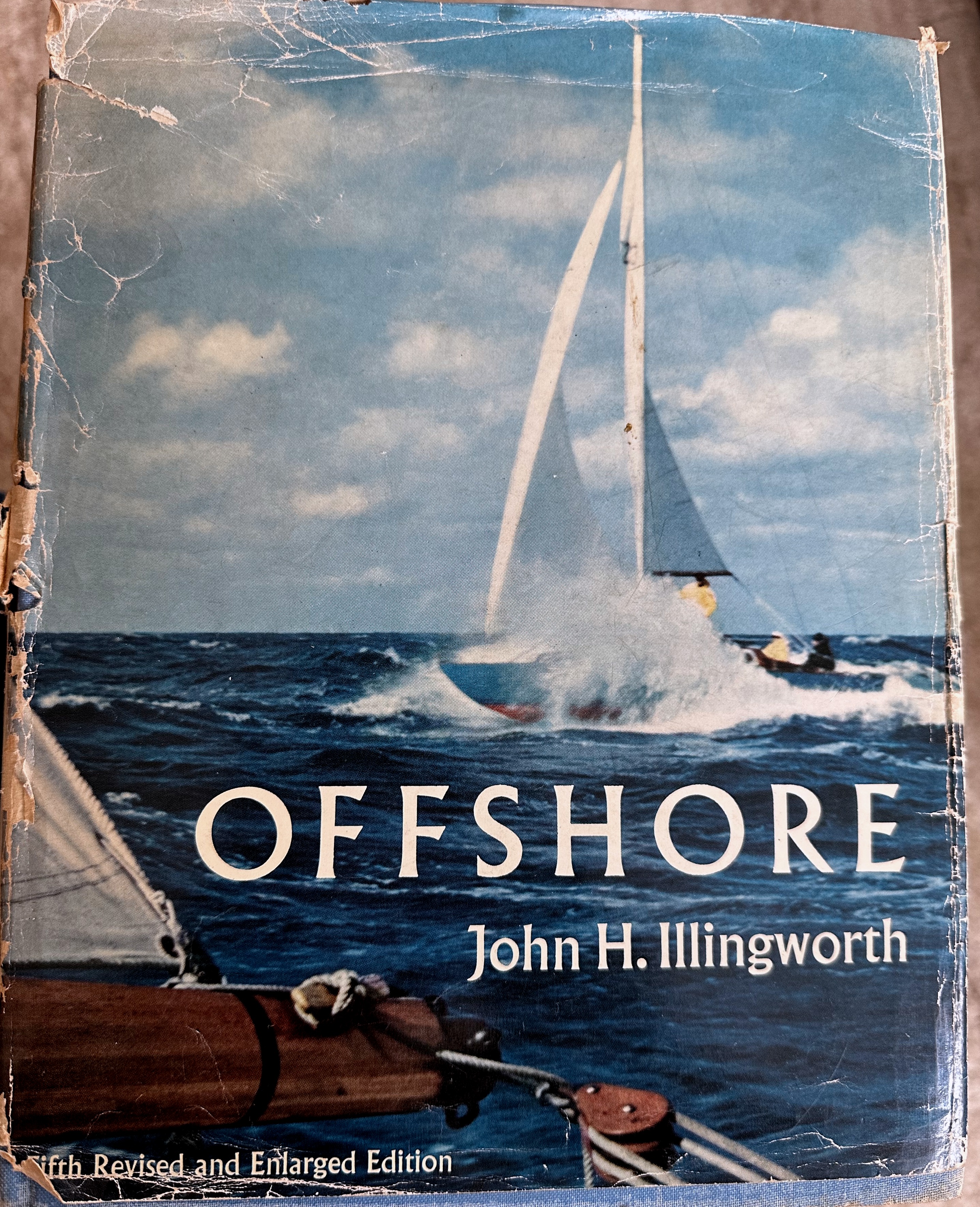
The fifth revised and enlarged edition. Fifty-seven years in service and still working.
Some time in the summer of 1969, aged nine, I went offshore for the first time. The boat was Volunteer, a Sparkman & Stephens 34 owned by the Royal Naval Volunteer Reserve Yacht Club. The race was the RORC Seine Bay Race, the fixture that became today’s Cervantes Trophy. My father was skipper.
I do not remember the tide gate at the start, the shipping in mid-Channel, or any piece of wisdom delivered at the chart table. What I remember is the boat, the adults moving with purpose, and the book my father gave me: Offshore, by Captain John H. Illingworth.
At nine I did not read it, whatever he intended. I looked at the pictures, all of them, over and over. The reading came later, and kept coming. The fifth revised and enlarged edition, blue cloth boards, a dust jacket with a yacht shouldering through a seaway on the front. I still have it. The jacket is chipped and creased and taped, and it sits on my shelf in Cowes looking exactly like what it is: a working document that got worked.
This is not really an essay about an old book. It is about how offshore racing actually travels through time. The sport is not a body of information. It is a body of judgement, and judgement moves from person to person, boat to boat, edition to edition. The tools have changed beyond recognition. The transmission has not, and the crews who understand that still beat the crews who think the sport can be downloaded.
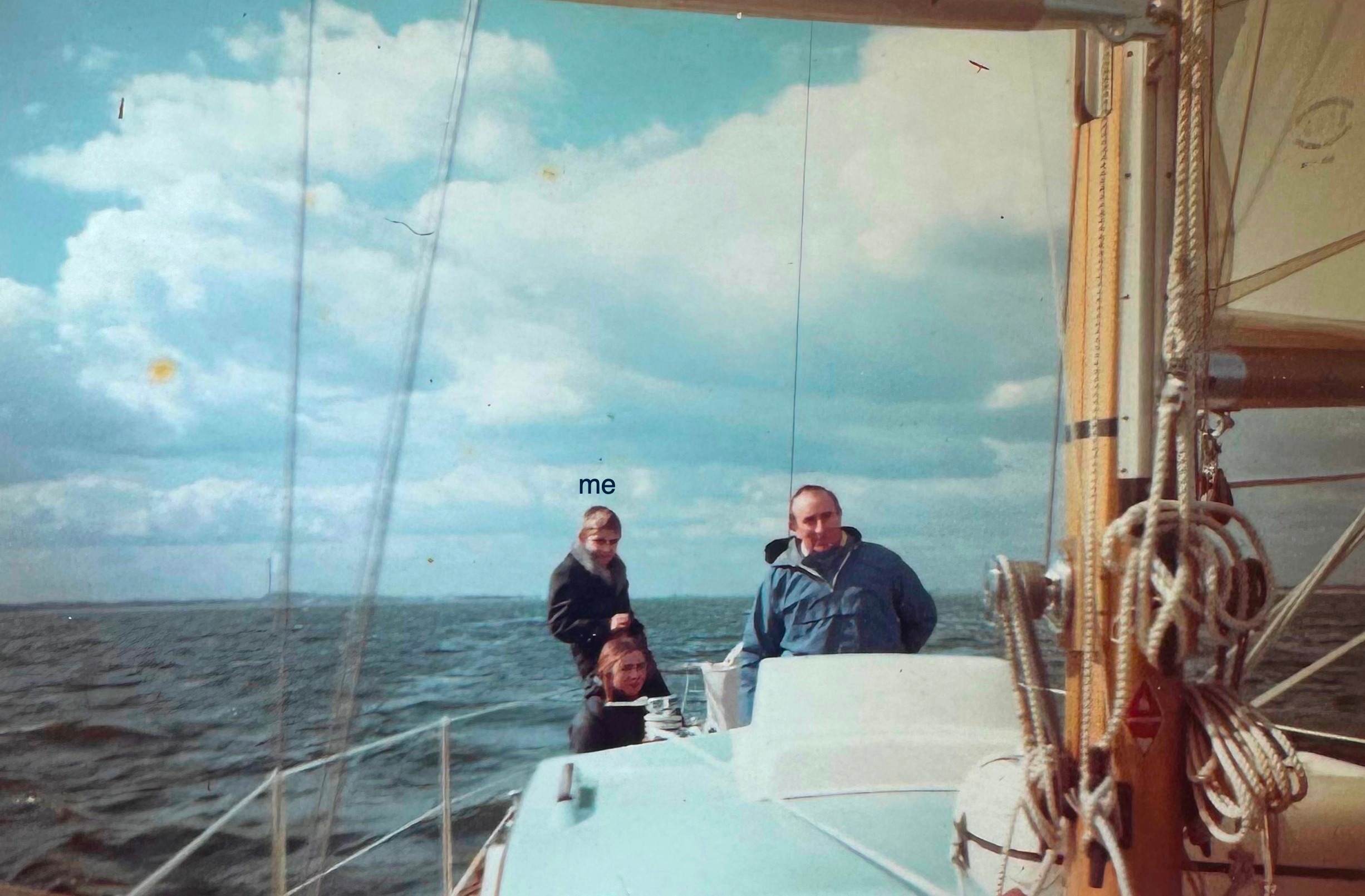
Volunteer, the RNVR Yacht Club’s S&S 34. My first offshore race, aged nine.
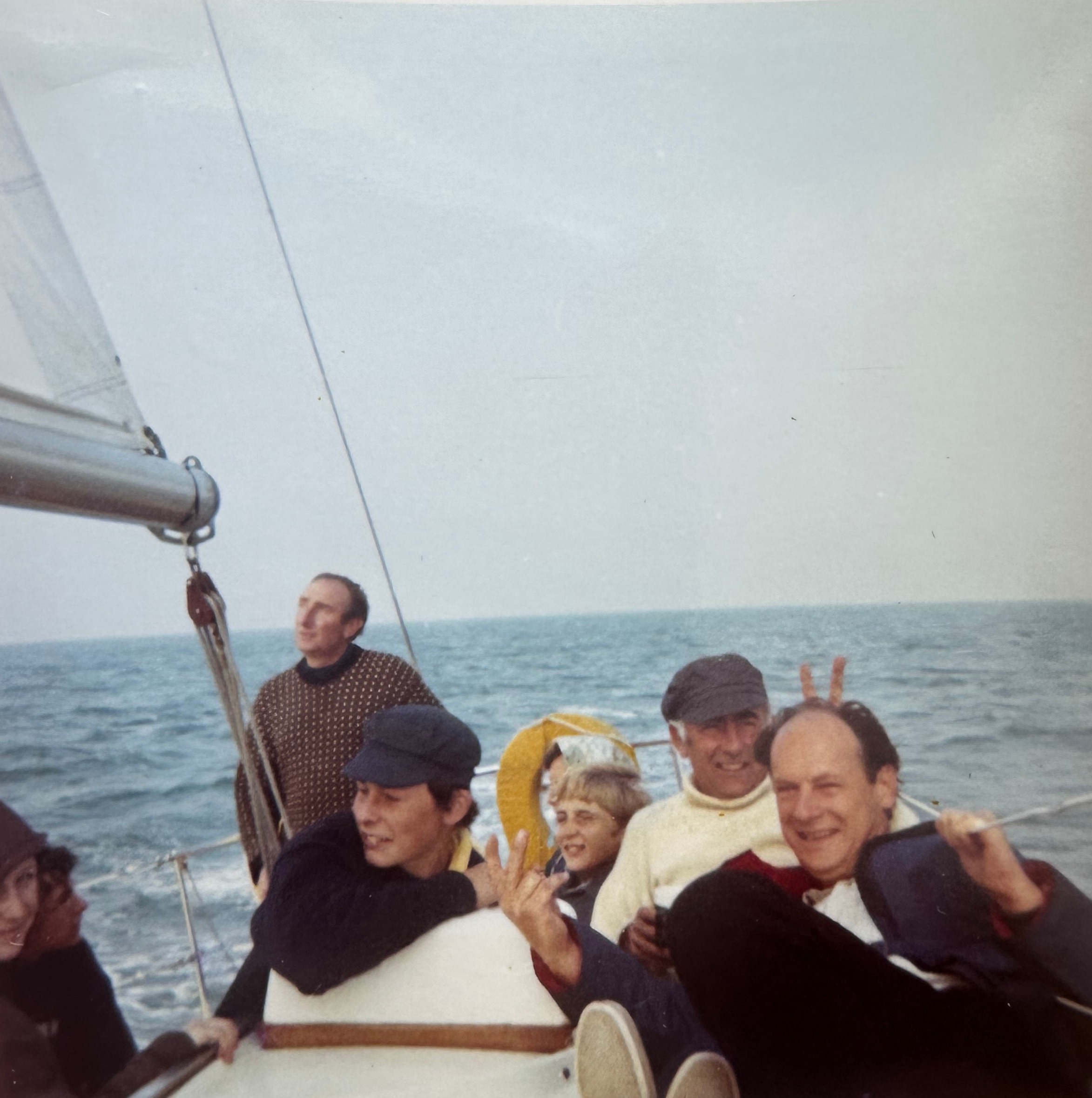
One the race with the full crew in 1969. Fun and games! Me again in the middle!
My father was not a weekend romantic about the sea. He came from the professional version of it. Commodore Gordon Greenfield, born 1926, trained for the sea aboard HMS Conway, went straight from conscription into the merchant service, then the Royal Naval Volunteer Reserve, then the Royal Naval Reserve, rising across four decades to become Commander in Chief of the Royal Naval Reserve in the 1980s. He held a Trinity House pilot’s licence for the North Sea and the Medway, some of the busiest and most tidally awkward water in Europe. He was a founder and flag officer of the RNVR Yacht Club, whose boat carried me on that first race. He won the RORC Morgan Cup in 1971 as skipper of the C&C 39 Thumper. And in 1982 he helped secure merchant ships for the Falklands task force, the operation that sent Atlantic Conveyor south with Harriers lashed to her deck.
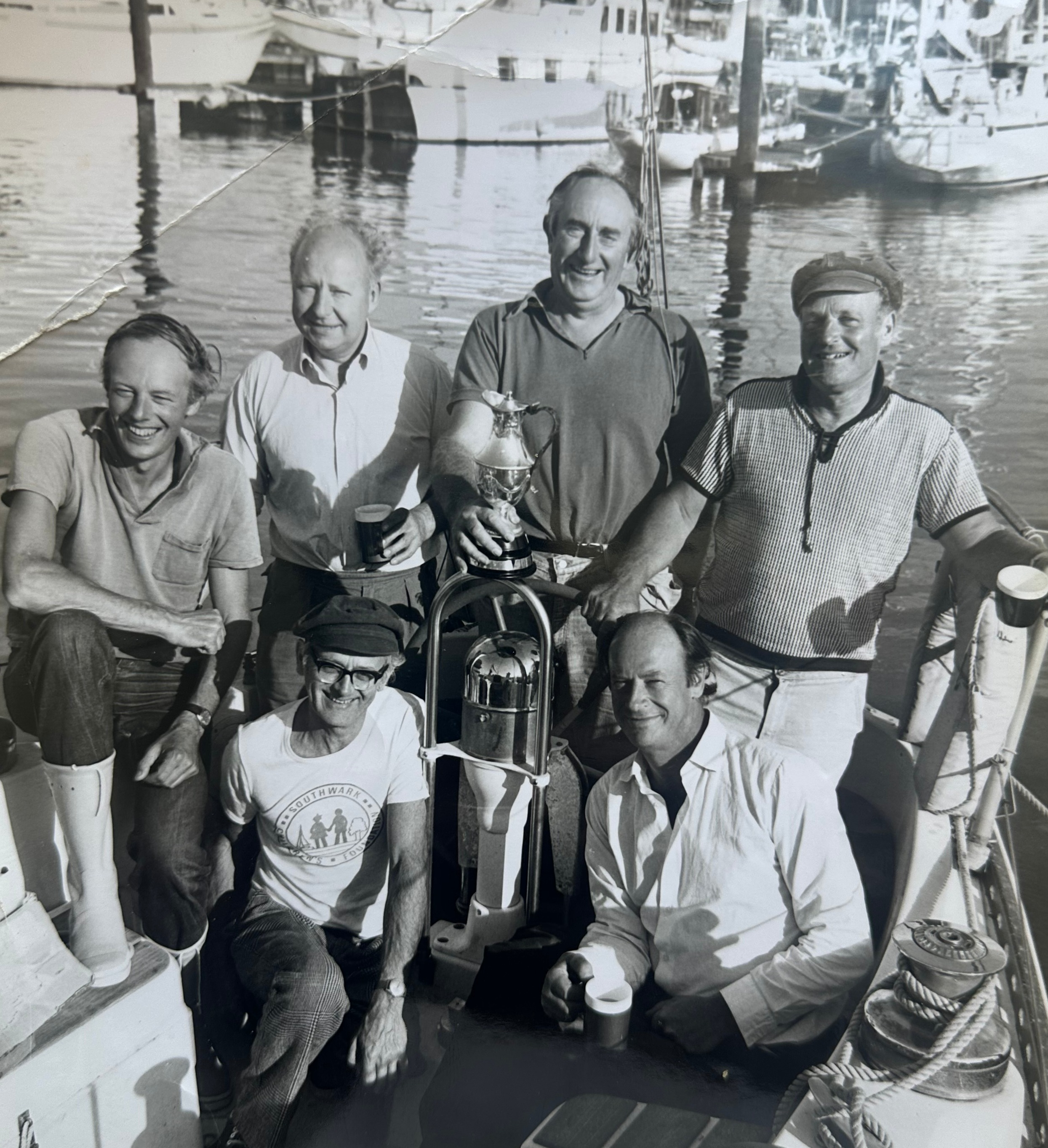
The crew of ‘Thumper’ a C&C 39, winner of the Morgan Cup in 1971, My Father centre
He taught me to sail. More precisely, he handed me a craft that had itself been handed to him, and the man who was so important to offshore racing was Illingworth.
The engineer who wrote the job
John Holden Illingworth, 1903 to 1980, was a Royal Navy engineer officer who served in submarines between the wars and finished the war a captain. He was never a gentleman amateur. He was a professional engineer who happened to apply the discipline to yachts, and it showed in everything he touched.
Offshore racing is not a body of information. It is a body of judgement.
In 1945 he was in Sydney, organising repairs for the British Pacific Fleet, when a group of local cruising men invited him to join a passage to Hobart. His response created a sport on the other side of the world: he would come if they made a race of it. Nine boats started on Boxing Day 1945. A southerly gale scattered the fleet, an aircraft sent to find them could not locate his 35-footer Rani because she was too far ahead, and the press had her lost at sea until she appeared off Tasman Island, first home and first on handicap in the race she had effectively invented. The Sydney Hobart has run every year since, a tidal, tactical, brutal examination that rewards preparation over theatre. That was the first thing he handed on.
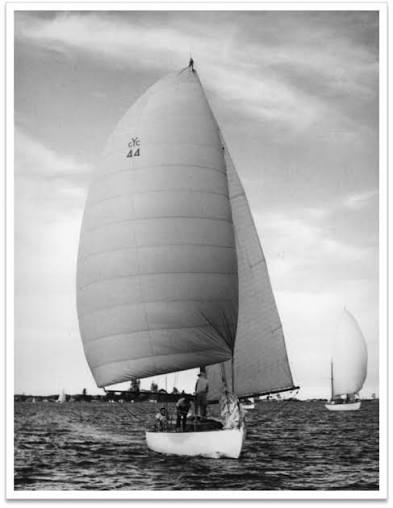
Rani off Tasman Island, 1946. She won the Sydney Hobart race — created by Illingworth.
Back in Britain he became Commodore of the RORC, and in 1947 launched Myth of Malham, the Laurent Giles design built to his brief that won the Fastnet in 1947 and 1949 and rewrote what an offshore racing yacht was allowed to look like. I have covered Myth and her rating logic at length in earlier essays. What she handed on was an idea crews still resist: the rule is part of the race. Read the rule, read the course, build for the job.
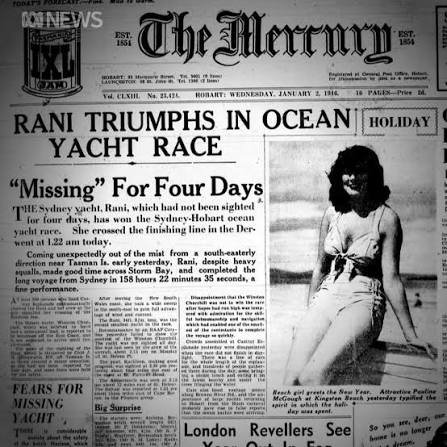
They all thought she was lost at sea — but in fact just miles ahead — the story repeats with Morning After later in the article.
But the boats were only half of it, and arguably the less important half. Ask instead what else he handed on.
The method. Offshore appeared under the Adlard Coles imprint in July 1949 and was reprinted within a year. It went through edition after edition for two decades, growing each time, because Illingworth treated it the way an engineer treats documentation: revise to match reality. Design, rig, sails, crewing, provisioning, watchkeeping and navigation, as a single connected system. There was nothing else like it. For a generation of British offshore sailors it was not a book about the sport. It was the sport, in printed form.
The ladder. In 1950 he became founding president of the Junior Offshore Group, created so that sailors in smaller and cheaper boats than the RORC then allowed could race offshore properly. He believed, against the weight of contemporary opinion, that small, light, simple boats could be raced offshore safely, and he proved it. Every sailor who has come up through JOG racing, and I have coached plenty, is standing on that decision.
The races themselves. The Myth of Malham Cup went to the RORC in 1958, in his lifetime, for a race he wanted sailed. The Sydney Hobart he simply left to Australia, where the Cruising Yacht Club of Australia made it one of the great races of the world. He gave the sport away as fast as he built it.
A warning. With Angus Primrose he drew boats by the hundred, including, in 1964, a 54-foot ketch for a single-handed circumnavigation by a man named Francis Chichester. Gipsy Moth IV was a terrible design for the job: tender, short on righting moment, dangerously keen to broach, and modified halfway round the world in Sydney, where the America’s Cup designer Warwick Hood added a piece to her keel to little effect. Chichester wrote that the boat “has no sentimental value for me at all” and called her cantankerous and difficult, reckoning she needed a crew of three: a navigator, an elephant for the tiller and a long-armed chimpanzee to work the gear below. She still went round the world with one stop, because the man sailing her had spent a lifetime accumulating exactly the kind of judgement this essay is about. Great designers can produce bad boats, and great seamen get bad boats home. Judgement covers the difference.
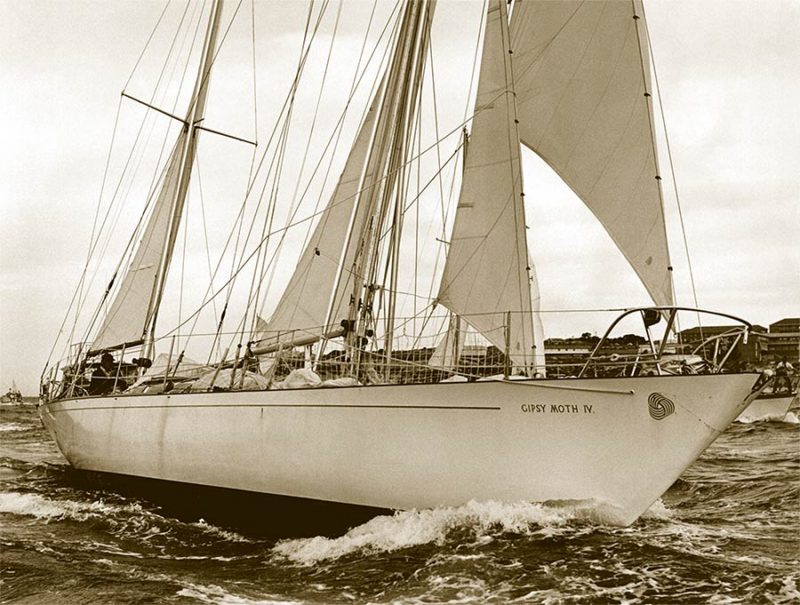
Gipsy Moth IV was designed later in Illingworth’s career and was in fact a ‘dog’ of a boat — designed to be easily managed by Sir Francis Chichester on his own it was so tender and uncontrollable even Sir Francis found it hard to manage.
When Illingworth died in March 1980, The Times called him “the father of post-war offshore sailing racing” (obituary, The Times, 13 March 1980). For once an obituary undersold its subject. Fathers pass on more than existence. They pass on method, which brings me back to mine.
The generation that ran on the book
My father’s seamanship was professional before it was recreational, and the pilotage is the part to understand. A Trinity House pilot held a licence for a named district and was examined on it from memory: depths, marks, transits, and the tidal streams hour by hour either side of high water. On the Medway and in the Thames Estuary approaches that meant taking deep-draught ships between shifting sandbanks on a calculated under-keel clearance, in fog, at night, on a falling tide. A yacht navigator who gets it wrong loses places. A pilot who gets it wrong puts a ship on the Nore. Precision was not a virtue in that trade. It was the trade.
That was the culture that picked up Illingworth’s book and raced with it. The RNVR Yacht Club was formed in 1947 by reserve officers and ran a succession of club yachts named Volunteer, the S&S 34 the second of them, crewed by men whose day jobs were navigation, pilotage and command. When my father skippered Thumper to the Morgan Cup in 1971, the navigation kit was a sextant, a trailing log, an echo sounder, a radio direction finder on a good day, and the Admiralty tide tables, worked in pencil on paper charts. Decca existed by then, and ships and pilots used it daily. A racing yacht carried a man instead as a Decca was 100kg and bigger than the cockpit and needed a generator to power it.
Five habits that I was taught - and still relevant today
A position is an argument, not a fact. A three-bearing fix came with a cocked hat whose size told you its quality. A dead reckoning position carried an error circle the navigator grew honestly with the distance run, a mile or more for every ten sailed in open water, more in a cross tide. You always knew which kind of position you held and how far to trust it. Compare that with a crew nine miles offshore believing a GPS position to a boat length while the antenna might feed them data but maybe minutes out of date. I wrote recently about GPS spoofing and the return of real navigation; the pre-electronic navigator’s core skill was knowing how wrong he might be. It is the single most transferable habit on this list.
Tide is strategy, not correction. My father’s generation did not choose a course and then correct it for stream. The stream dictated the course. A Channel race was planned backwards from its tidal gates, and the boat was positioned to take each gate at the right hour or to anchor and hold ground until it opened. Kedging out of a foul tide was standard practice, not a curiosity, and it still wins races; I wrote in May about winning the Myth of Malham by stopping. The software now does the arithmetic in milliseconds, and mid-fleet crews still lose because they treat the output as an answer rather than an argument about tide.
The log is the record. Log reading, course steered, wind, barometer, sea state, sail carried, every hour, in ink, whatever the weather. The entries fed the dead reckoning, and they kept the navigator honest against hindsight. My debriefs start from recorded data rather than anyone’s memory of the race for the same reason.
Navigate ahead of the boat. A professional pilot has to board with the whole passage already planned with the tide. So racing offshore the question is never where you are; it is where you will be in one hour and in three, and what needs to be set, trimmed and rested when you get there. Illingworth’s watchkeeping and crewing chapters are built on the same premise. It is the discipline that separates a navigator from a person who reads a plotter.
The navigator serves the race, not the plot. A chart solved nothing unless it produced a decision: tack now, hold on, change down, take the inshore gate. A course alteration that arrived after the moment it was needed was worthless, however tidy, and my father said so without softening it. Every good tactician holds the same rule — plan ahead.
What remains once the romance is stripped away is a working method: honest uncertainty, tide-first planning, disciplined records, thinking ahead of the boat, decisions over good ideas. There is not one item on that list that a modern IRC crew even with a full B&G set up, and a routing subscription can afford to skip. The instruments have improved out of all recognition. The habits have not changed, because the sea has not.
The pre-electronic navigator’s core skill was knowing how wrong he might be.
The conversation at Earls Court in 1967
One more story, because it gathers every thread of this article into a single hull.
At the London Boat Show at Earls Court, at the end of the sixties, Edward Heath wanted a new boat and fell for the S&S 34. The first British boat was already spoken for, ordered by a man named Rodney Hill. Heath wanted an early delivery to get south for that December’s Sydney Hobart, Illingworth’s race, and the builder Michael Winfield brokered a swap. Hill agreed to take the later boat, and on hearing that Heath’s would be called Morning Cloud, named his own Morning After. Peter Goldthorp, who sailed with Hill, records a detail I refuse to leave out: the name was chosen partly because it “allowed them just to change 5 letters” on the transom. Exactly which physical hull each man ended up with is still argued inside the class association, which strikes me as the right amount of mystery for a good story. What is not argued is the result. Morning Cloud went to Australia and won the 1969 Sydney Hobart outright, the race Illingworth had conjured out of a cruise twenty-four years earlier. Morning After went south too, and finished the race soundly, though without Morning Cloud‘s silverware.
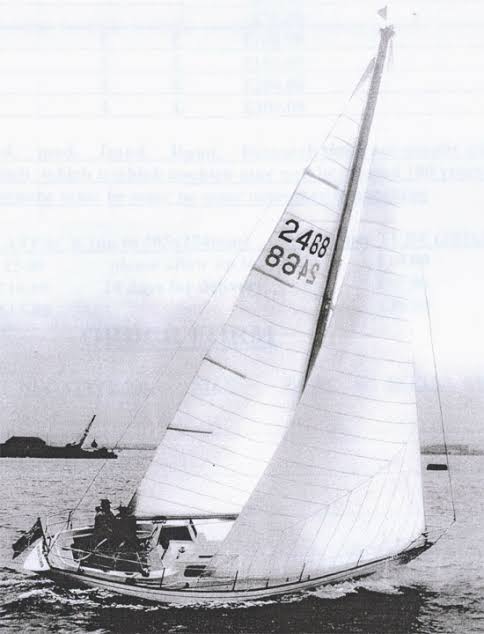
The 2486 sail number that signalled the S&S Morning After — the sister ship to my Morning After rebuilt from the hull up in 2021/2.
Morning Cloud broke her mooring off Jersey in September 1974 and was lost. The other half of that Earls Court conversation survived. Fifty years after I stood on Volunteer‘s deck as a nine-year-old, I found Morning After wrecked on the Isle of Wight, bought her from an owner who had always meant to rebuild her, and moved her to a barn in the middle of the Island. Then Covid arrived, the team I had assembled evaporated, and I learned, at speed and alone, how to rebuild a boat: new cabin, new engine, new mast, everything.
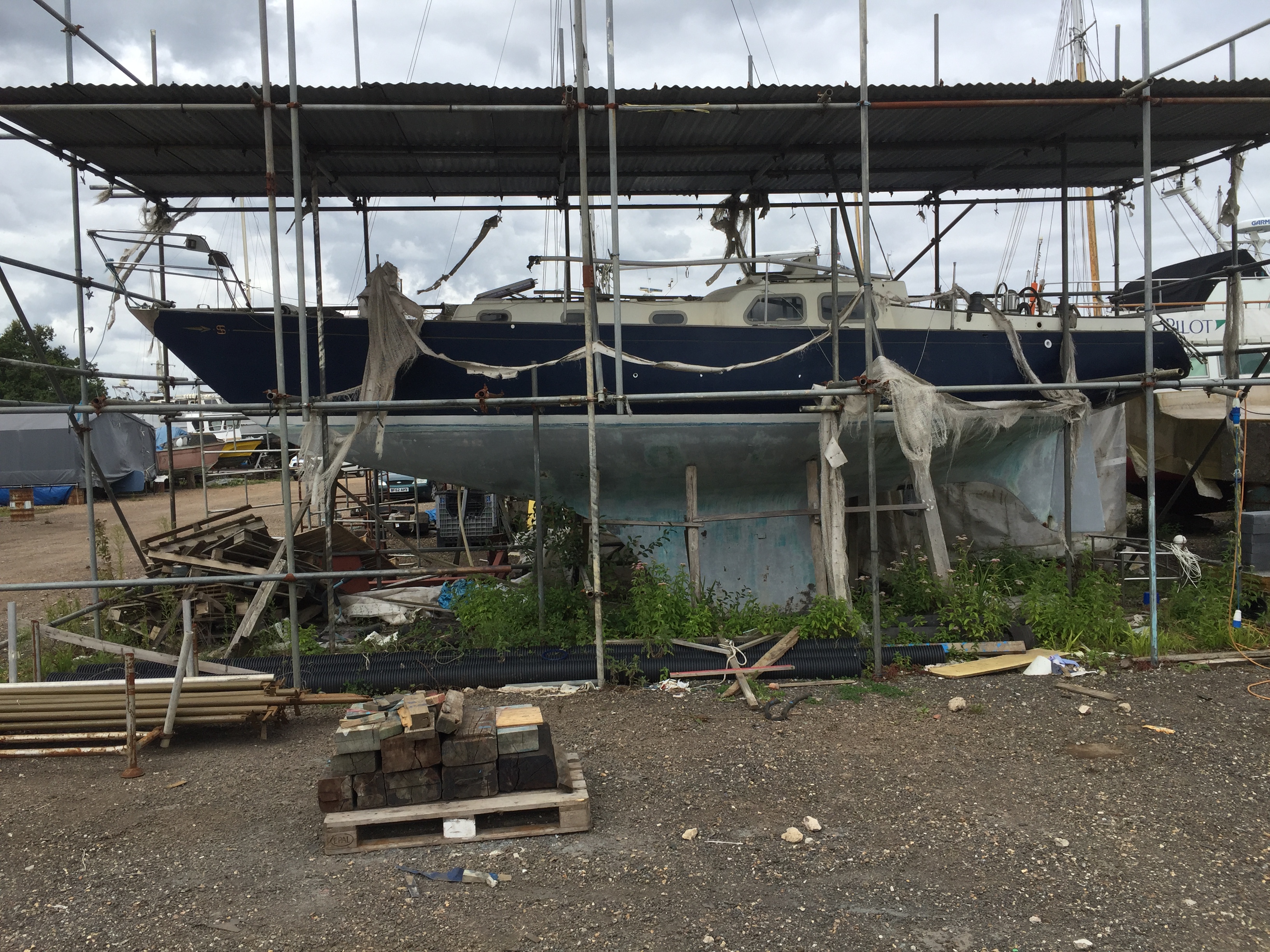
Morning After a sorry state — the team left with Covid. The boat did not care who did the work...
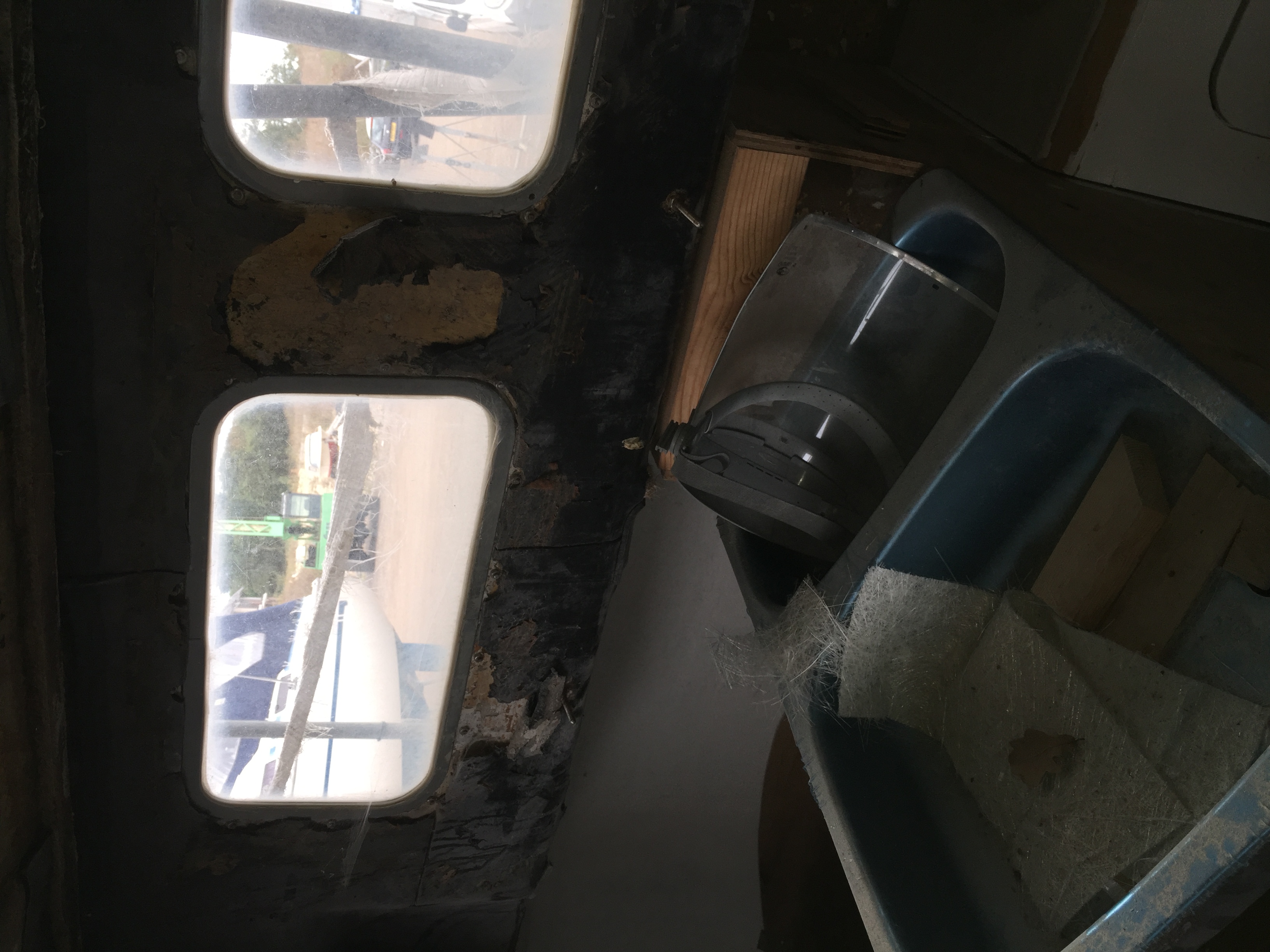
Start again below deck
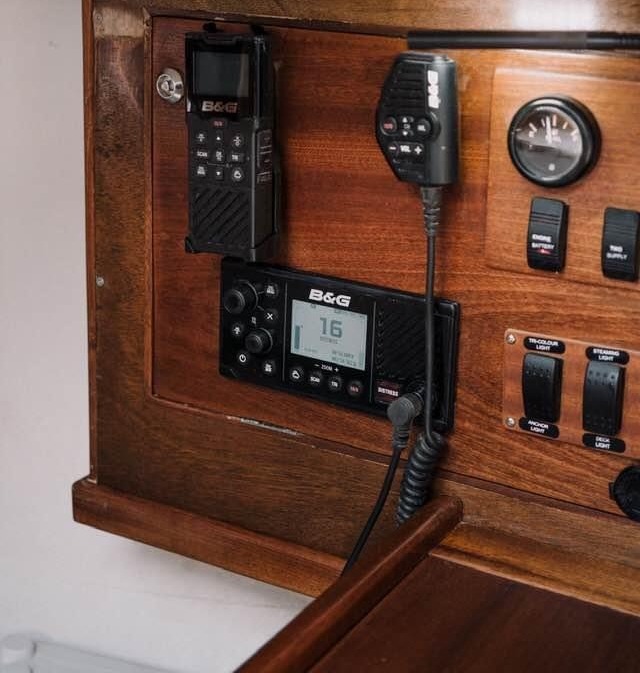
It all came together in the end
And here is the detail Illingworth would have enjoyed. His masthead rig made the vast overlapping genoa the defining sail of the post-war offshore yacht, because the RORC rule of his day measured headsail area cheaply and he was never a man to leave free sail area on the table. Rebuilding Morning After for IRC, I took the overlap off her: non-overlapping headsails, taller rig, lower boom, new rating. The same class of hull, optimised twice, sixty years apart, each time by reading the rating rule of the day and building for the job.
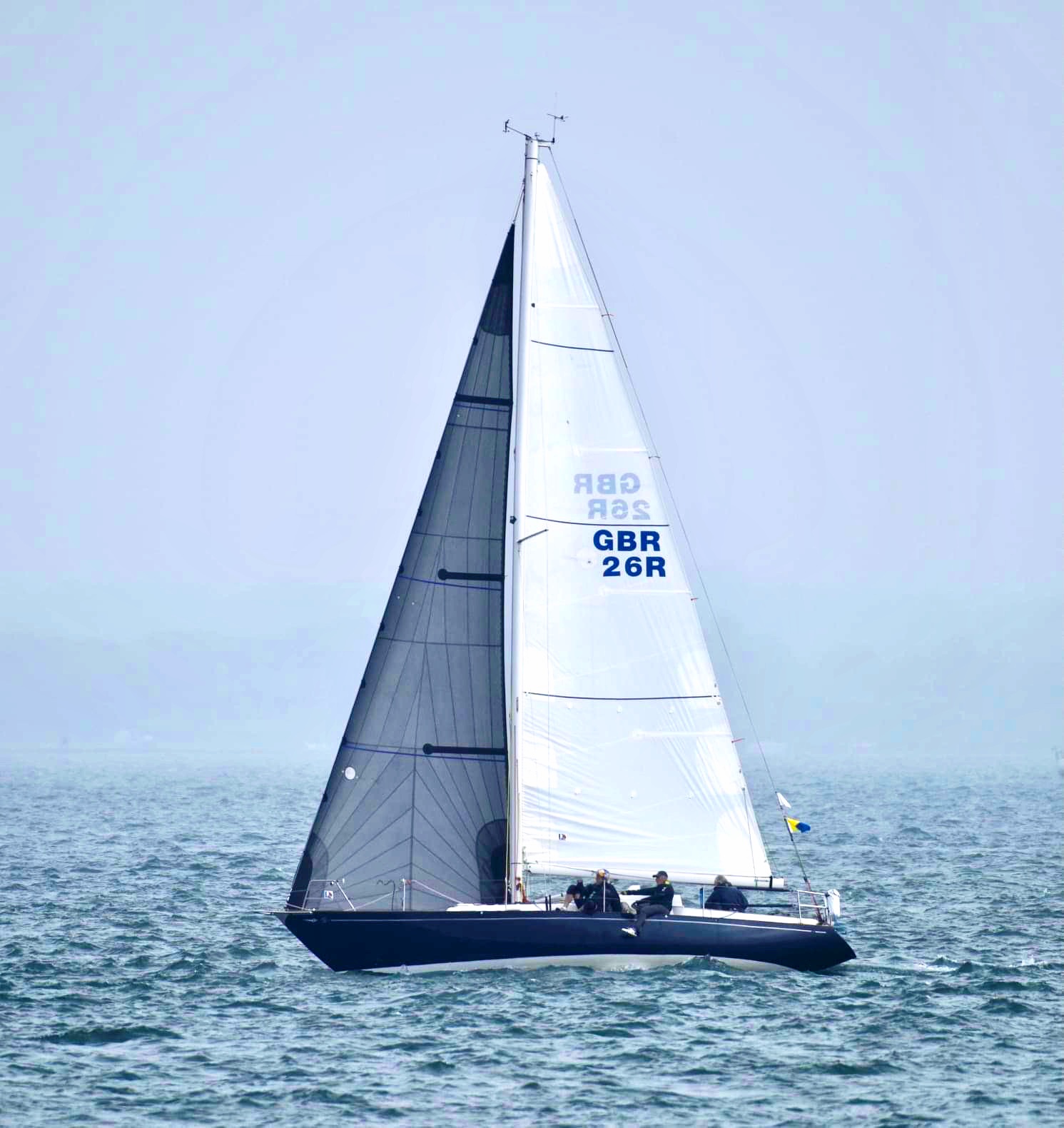
Reborn — Morning After GBR26R — non-overlapping carbon headsail, taller mast, longer boom — same sail area, better planned for short-handed sailing.
She repaid it. RORC Classic Yacht of the Year in 2021 and 2022, tenth in class in the 2021 Fastnet, and in 2022 the Class 4 win overall in the RORC seasons championship. In that year’s Round Britain and Ireland Race she won her class, and the bare result undersells it: she held the overall lead of the entire race for twelve days, a fifty-year-old boat ahead of the modern fleet on corrected time, until the wind shut down off Muckle Flugga at the most northerly point of the United Kingdom and the calm handed the race back. Tide-first strategy and honest numbers took her that far. Nothing in the toolkit has an answer to no wind, which is itself a lesson Illingworth’s generation would have recognised without complaint. She races out of Cork now, with a friend, which is how it should be. Boats, like the craft itself, are only ever held in trust.
The methods remain the same, only the rules change.
Still on the shelf in Cowes
Illingworth’s genius was not just the Myth of Malham, or the Hobart, or even the other hundreds of boats he designed. It was that he treated offshore racing as a craft that could be written down, revised and handed on, and then spent thirty years doing exactly that: the book, JOG, the trophies given away, the designs. My father’s generation received it, added a professional navigator’s discipline, and handed it on again, sometimes as instruction, sometimes as a club boat with room for a nine-year-old, sometimes as a battered blue book.
That transmission is still the sport. When I coach a crew today, the polars, the GRIBs and the routing are all present and all useful, but not one of them contains the thing that wins races: the judgement to know what the numbers are worth, learned from people who learned it from people. The fifth revised and enlarged edition of Illingworth’s book on my shelf is holding together with tape and stubbornness, which after fifty-seven years of service seems fitting. I am not sure the craft it contains has aged a day.
So yes, teach them Expedition. Teach them polars. Teach them to read a GRIB, question a forecast, check the tide file and distrust a perfect-looking track. Then teach them what your own mistakes cost, when the number is useful, and when the boat is telling you something better. That is the part no subscription can supply.
Find the young sailor in your crew. Hand something on.
Preparation. Decisions. Execution. From first beat to first place.
Quote of the day: “The father of post-war offshore sailing racing.” The Times on Captain John H. Illingworth, obituary, 13 March 1980.


Comments