
The new offshore racing world, Part 3, After IOR

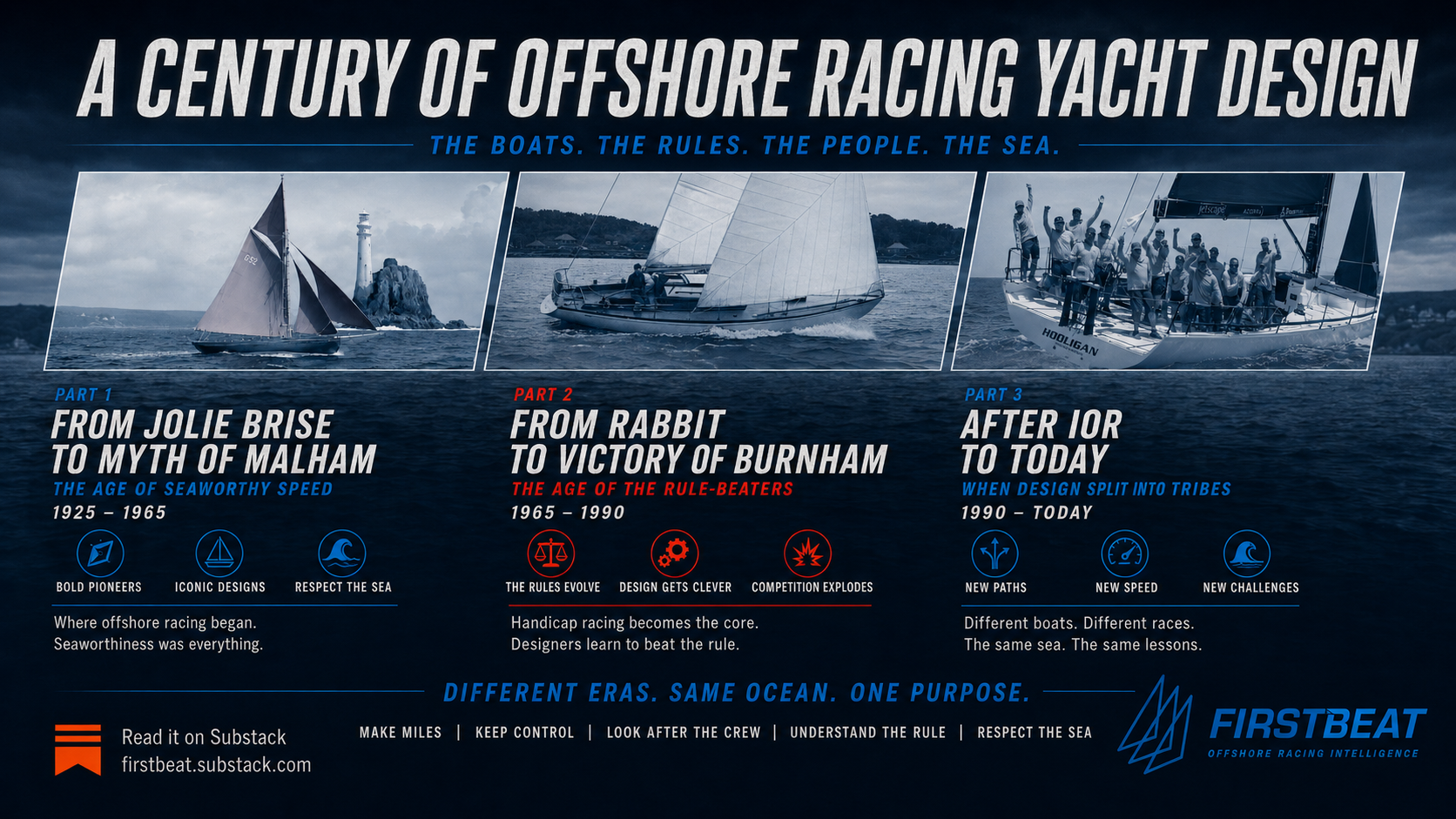
At the end of Part 2, racing certificates had begun to rule everthing.
IOR had given offshore racing a golden age. It had produced the Admiral’s Cup at its height, Ton Cup battles that felt like design warfare, and a generation of naval architects who had to think harder than almost anyone before them. Carter, Peterson, Holland, Farr, Frers, Dubois, Jones, Humphreys and others had learned to draw in two languages at once. One language belonged to the sea. The other belonged to the rule.
The problem was that, by the end, the rule was speaking too loudly.
Part 3 begins when that single argument starts to break apart.
After IOR, offshore design did not move into one clean new future. It split. Designers were no longer all chasing the same dominant certificate. Some went towards practical handicap racing under Channel Handicap, then IRC and ORC. Some went into grand prix box-rule boats. Some pushed fully crewed ocean racers through the Whitbread, Volvo and Ocean Race. Some built the French short-handed pathway through Mini, Figaro, Class40, IMOCA and Ultim. Some worked on the production offshore racers that gave serious amateurs a route back into winning proper races.
The naval architect did not become less important after IOR. He became more specialised.
THE RULE THAT SAVED ORDINARY SAILORS — AND WHEN IT STARTED
The story usually told is that IRC arrived after IOR collapsed. That is not quite right.
Channel Handicap was created in 1983 — while IOR was still running — by RORC Commodore Robin Aisher and UNCL Commodore Jean Louis Fabry, specifically because ordinary sailors were already abandoning IOR. It was a deliberate alternative: a closed, unpublished rule that could rate any shape of boat without rewarding extreme measurement games. The key people in its development were Keith Ludlow, Jonathan Hudson and Jean Sans on the French side, and Tim Thornton on the RORC side.
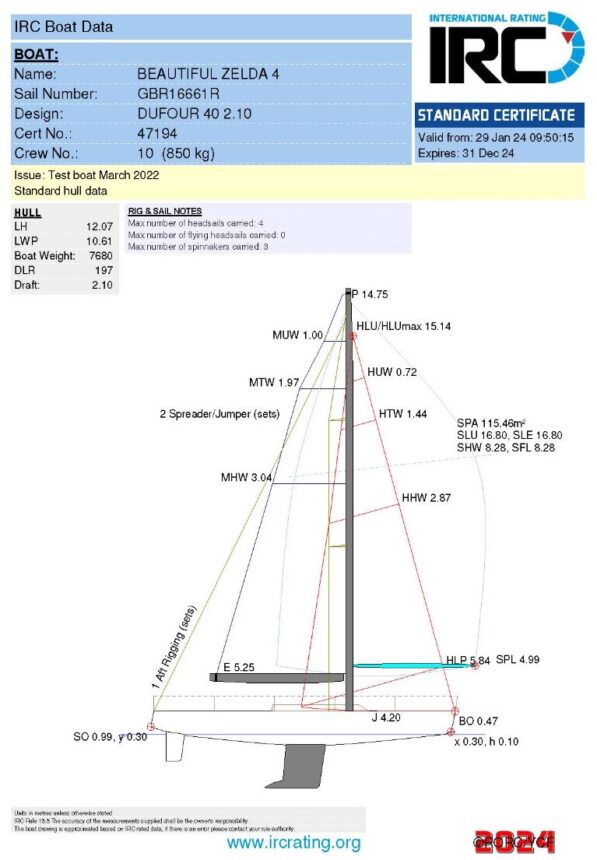
It ran quietly alongside IOR throughout the 1980s, growing steadily as IOR began to lose credibility. In 2000 it was renamed IRC. In 2003 it was recognised internationally by ISAF.
This matters because it tells a different story from “IOR died and IRC replaced it.” The more accurate story is: while the IOR establishment was fighting the rating wars of the Admiral’s Cup arms race, a quieter and more practical rule was already building a parallel offshore world for sailors who wanted to race real boats rather than measurement machines. By the time IOR finally exhausted itself, IRC was already there, already working and already trusted.
That is how healthy transitions actually happen. Not by replacement, but by parallel growth.
ORC went the other direction, a more transparent, technically complex system using velocity prediction programming and found its own audience among owners who wanted a measurable, challengeable number. The two rules serve different constituencies and both remain alive today.
BRUCE FARR, PETER BLAKE AND THE FULLY CREWED OCEAN MACHINE
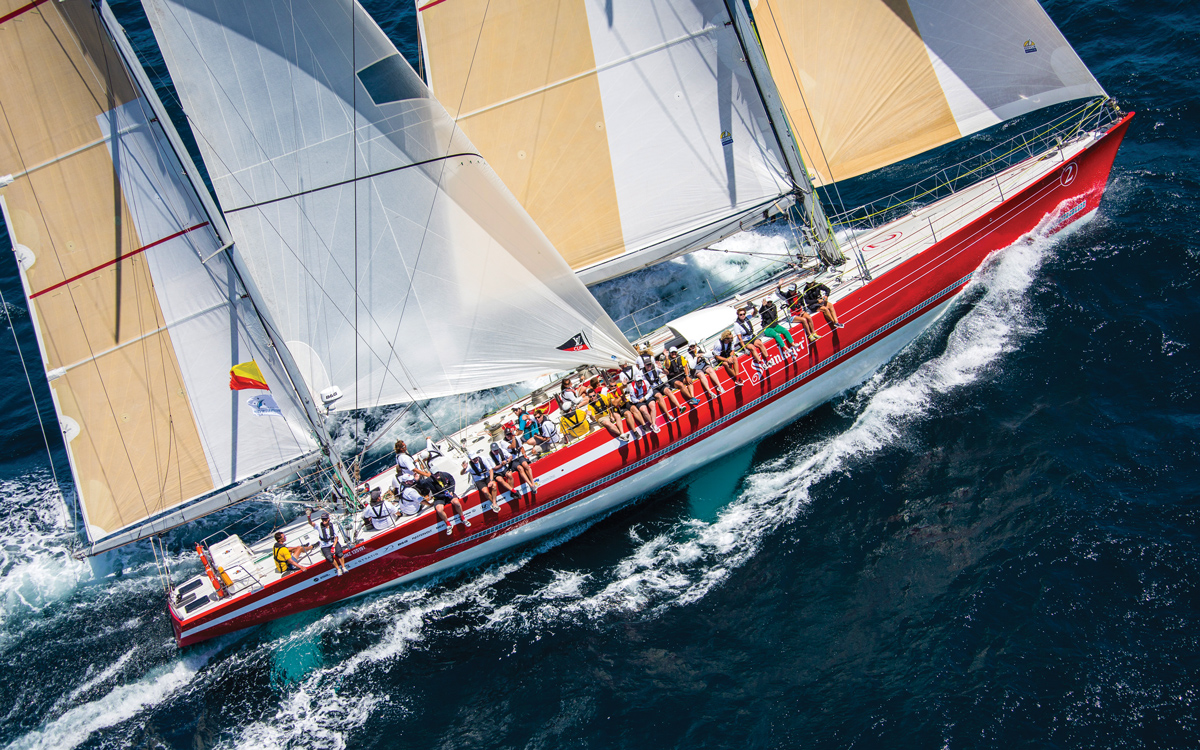
As covered in Part 2, Ceramco New Zealand (1981-82) and the subsequent Blake-Farr campaigns showed what offshore boats could become when the brief was no longer about appeasing the certificate. The argument reached its fullest expression in Steinlager 2.
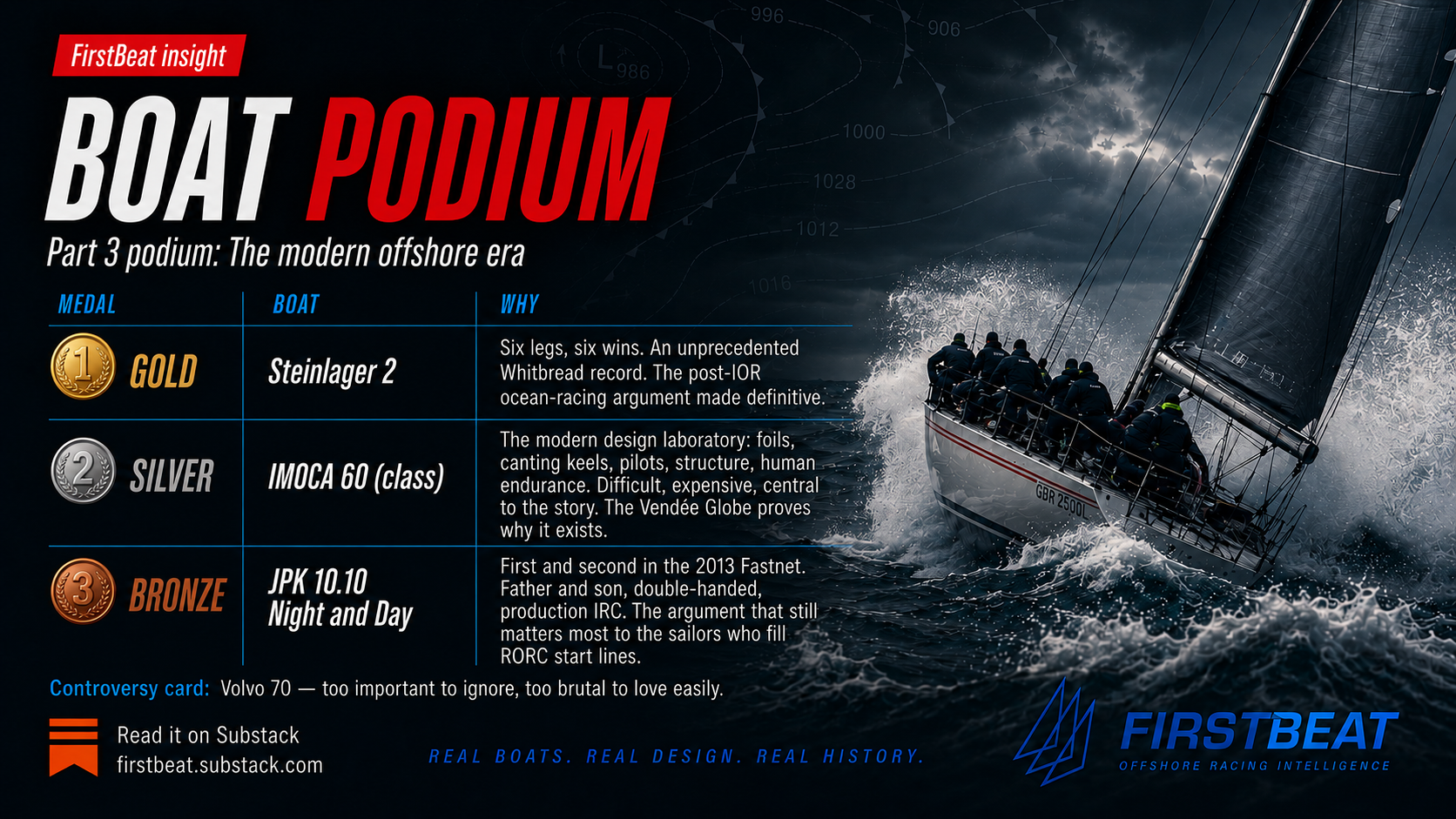
Steinlager 2 was a Farr design, skippered by Blake in the 1989-90 Whitbread. She won all six legs on both elapsed time and corrected time — the only boat in the race’s history ever to do so. Her margin over the second-placed Fisher & Paykel was a day and a half overall after more than four months at sea.
That is not a race result. It is a statement.
The boat was not trying to perform a rating trick. She was designed to go around the world quickly, to be driven hard, and to keep producing miles when everyone else was trying to survive the same weather with less speed and less confidence. That is a very different design brief from the Admiral’s Cup IOR boat.
After the Maxi era, the Whitbread and Volvo race moved through a one-design phase — the Whitbread 60, then the Volvo 60 — before the open-design Volvo 70 arrived and changed the scale again. The one-design phase mattered because it professionalised the race while controlling cost; the open-design return mattered because it gave designers their head again, and the results were dramatic.
JUAN KOUYOUMDJIAN AND THE VOLVO 70 POWER ERA
The Volvo 70 era took fully crewed ocean racing into a harder, more openly professional world. These were not boats designed to be forgiving. They were designed to be driven at high average speeds by skilled crews who had the physical and mental capacity to manage them. Canting keels, enormous sail plans, wide powerful hulls, twin rudders, huge loads and professional shore support all became part of the offshore equation.
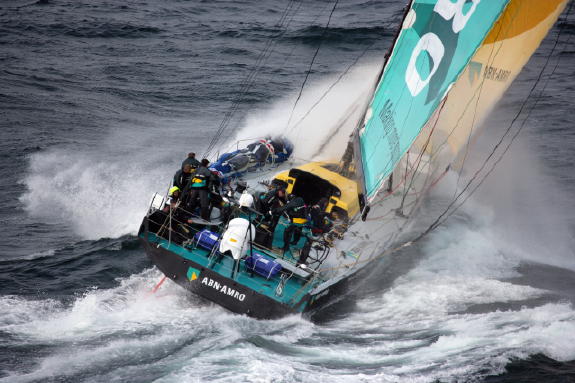
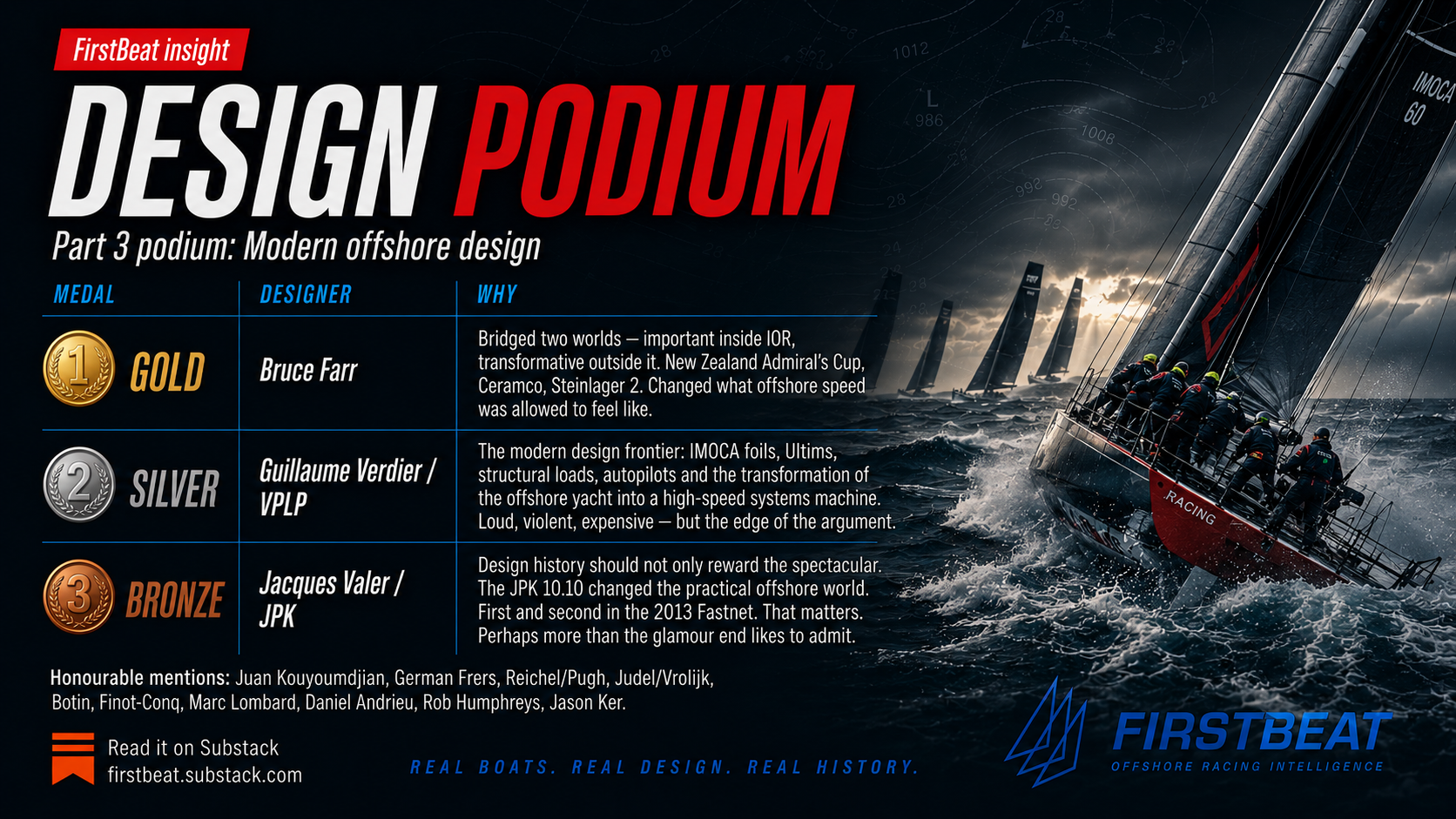
Juan Kouyoumdjian — Juan K — became one of the defining designers of that period. ABN AMRO ONE, designed by Juan K, won the 2005-06 Volvo Ocean Race by a wide margin, winning six of the nine offshore legs and setting a new 24-hour monohull distance record in the process. The boat was radical structurally, prioritising stability, with very wide powerful stern sections, a hard chine aft and twin rudders — an approach that proved devastatingly effective.
The Volvo 70 was not about measured elegance. It was about force.
This is where the naval architect’s role widened again. Designing a boat like that required structure, systems, ergonomics, crew protection, canting-keel engineering, reliability, repairability and the brutal reality of keeping a professional crew able to operate a very loaded boat for weeks. Hull shape was only part of the problem.
The design thinking does trickle down. Wide sterns, twin rudders, reaching power, cockpit protection, auto pilot use and the idea of the boat as an integrated performance system all arrive eventually in the boats amateurs race. The mad end of the sport does the testing. The rest of us inherit the useful bits once the shouting has stopped.
GERMAN FRERS AND THE HIGH-END OWNER’S YACHT
German Frers had already made his mark in the IOR era — his boats had a composure that set them apart from the strained expressions of measurement optimisation. After IOR, the top end of offshore racing continued to need designers who understood that owners buy belief as much as performance: a shape they can stand beside, confidence, proportion and the feeling that the boat has authority before the start gun has gone.
Frers provided that. His post-IOR work in large custom racers and offshore maxis carried the same lesson his earlier boats had demonstrated: rating intelligence and elegance do not have to be enemies, and a boat that looks composed can still be a weapon.
The broader lesson from this corner of the design world is useful even for sailors who will never commission a Frers Maxi. Purpose and dignity can belong together. The best offshore designs have always known this, from Jolie Brise through Dorade, Myth of Malham, Imp and into the modern custom and production worlds.
REICHEL/PUGH, JUDEL/VROLIJK, BOTIN AND THE GRAND PRIX BOX-RULE ANSWER
One reaction against IOR’s complexity was the desire for a cleaner contest. If the handicap rule had become too much of the game, one answer was to reduce the game: define the box and let the sailors fight inside it.
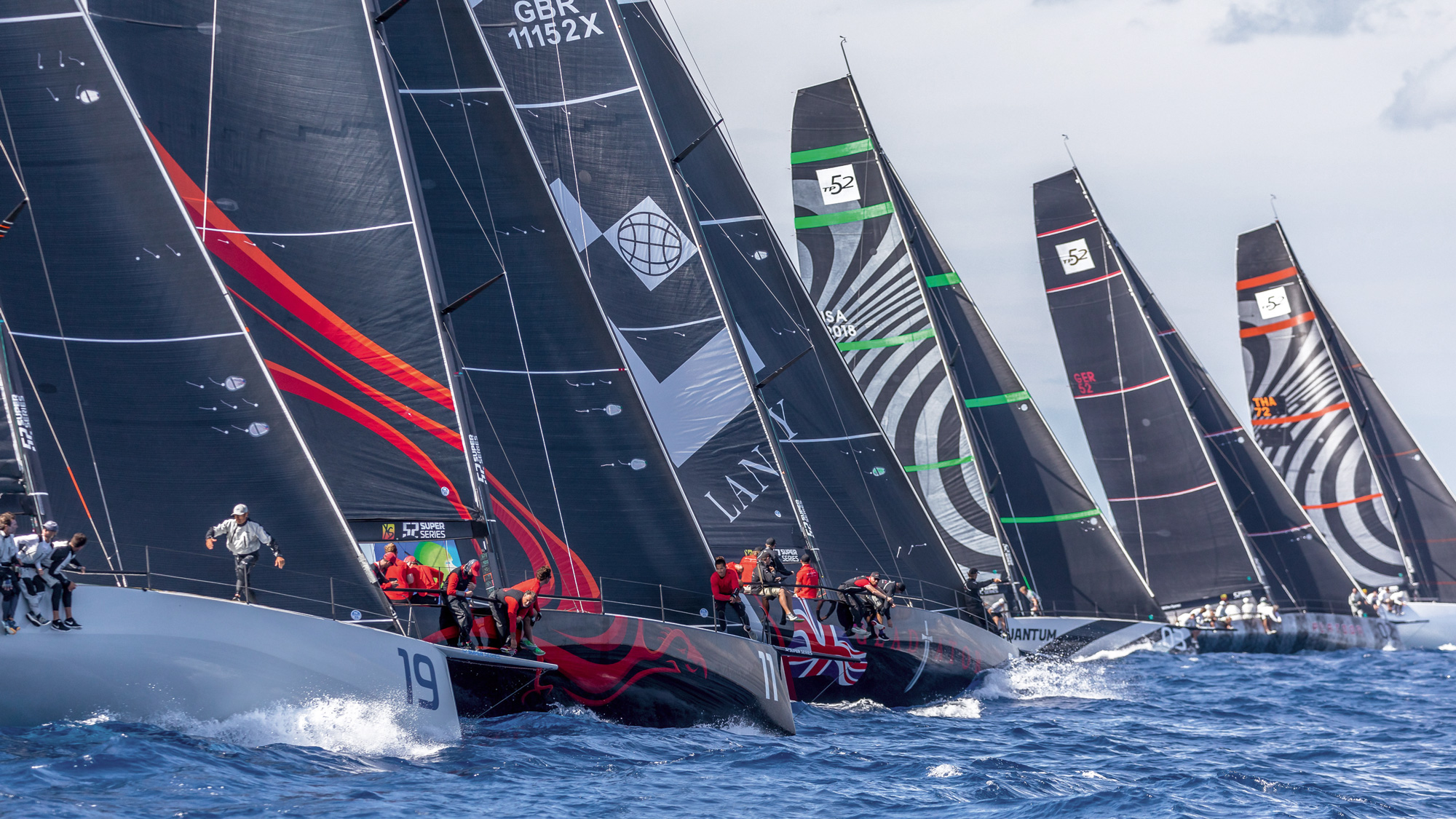
The TP52 became the clearest expression of this. Instead of pretending unlike boats can be made equal through complex correction, the TP52 says something simpler: here is the box, now race inside it. Reichel/Pugh, Judel/Vrolijk, Botin and others have produced sharp, refined, powerful boats in this class — boats that are not pretending to be cruisers and not trying to hide behind a certificate. There is an honesty in that.
The class attracted serious owner-drivers, professional crews and some of the most technically refined one-design racing in the world. The optimisation is real and intense, but it is open: the boat is not pretending to be something else.
The warning is real too. Box rules can separate themselves from the ordinary offshore sailor as technical standards rise and professional budgets push the dock culture further from the average RORC crew. The TP52 world and the club offshore world share water but have become, in practice, quite different sports.
Still: the TP52 is one of the post-IOR choices that worked. If the handicap world becomes too tangled, build a better-defined arena and fight there instead.
FINOT-CONQ, MARC LOMBARD AND THE FRENCH SHORT-HANDED REVOLUTION
While much of the Anglo-American offshore world was working through IOR, IRC, IMS, Admiral’s Cup decline and grand prix boxe rules, France was building something different and, in the long run, perhaps more important.
France built a pathway.
Mini. Figaro. Class40. IMOCA. Ultim.
That is the thing British sailors sometimes understate. The French did not simply produce a few brave solo sailors and some fast-looking boats. They built an offshore culture, a design ladder, a racing structure and an industry around short-handed sailing. Designers, builders, skippers, sponsors, media and training centres began feeding one another. The result was not a series of isolated successes. It was a system.
The Mini scene compressed offshore design into 6.50 metres of experimentation, nerve and occasional madness. The boats were small, the ocean was not, and the sailor had nowhere to hide. The Mini allowed designers to try shapes that would have seemed too extreme elsewhere. It also forced sailors to become self-reliant in a way that is hard to fake.
The Figaro then became the finishing school. One-design, brutal, tactical and exhausting. If you were slow, you could not blame the designer, the certificate or the owner’s refusal to buy a better keel. The problem was usually you. Your sleep, your trim, your tide work, your ability to make decisions alone when the easy part had ended.
Designers such as Jean-Marie Finot, later Finot-Conq, and Marc Lombard were central to this French short-handed world. They helped produce boats that were fast for one or two people to operate. That is a different problem from a fully crewed boat: ergonomics becomes speed, cockpit layout becomes speed, pilot balance becomes speed. A reefing system, decent visibility, control lines led for one pair of hands — these are not comfort extras. They are performance.
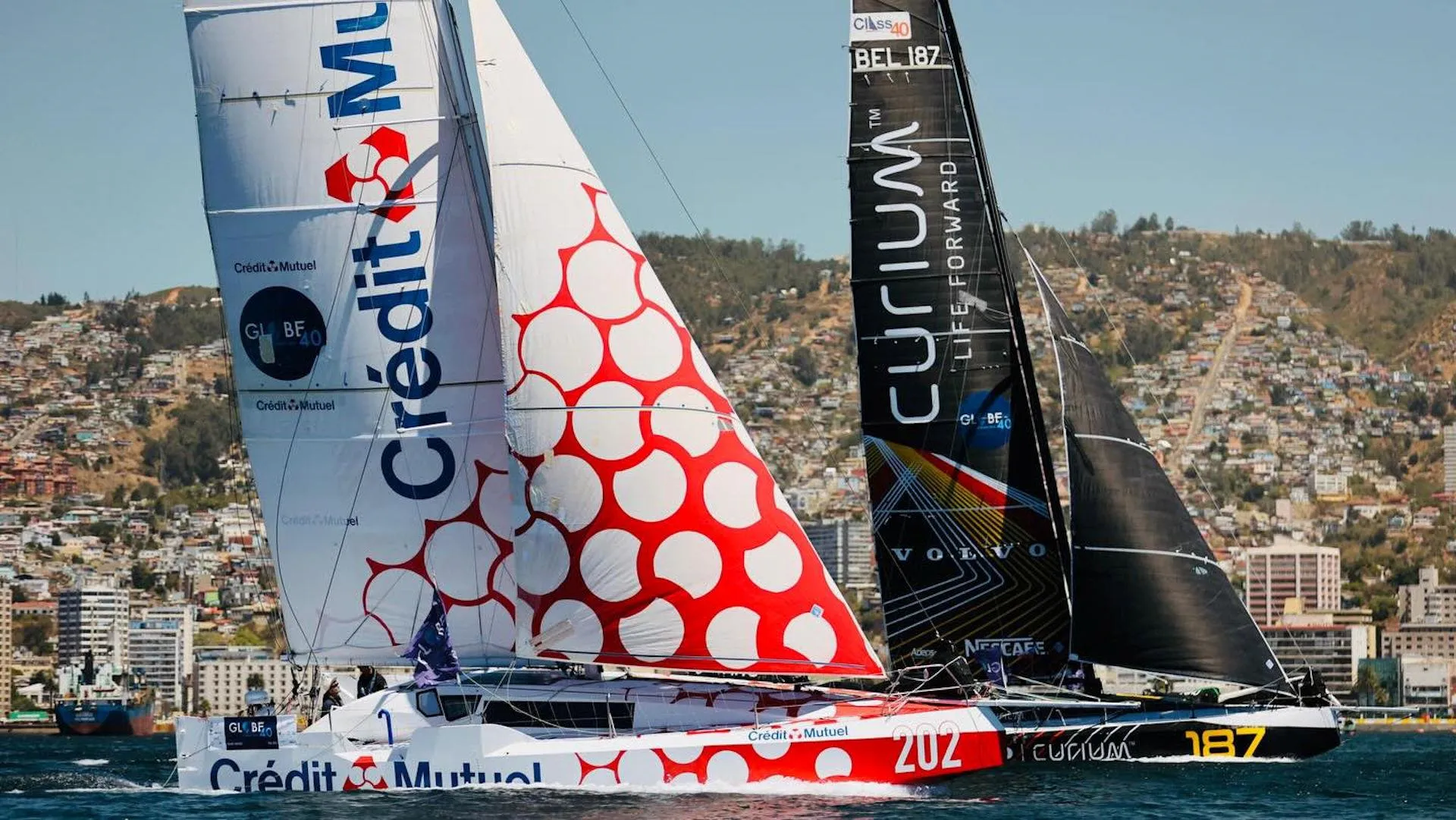
Class40 then gave the pathway a larger, more accessible platform. Launched in 2004, the class sat between the Figaro apprenticeship and the cost and intensity of IMOCA: big enough to cross oceans properly, powerful enough to matter, controlled enough not to become an arms race only the wealthiest could survive.
For many sailors, Class40 is one of the best post-IOR ideas. It is its own answer: not a miniature IMOCA, but a proper ocean racer without an IMOCA budget. It also carries the French lesson clearly: a good offshore design is not only something that moves fast through water. It is something a tired human being can keep racing.
THE VENDÉE GLOBE AND THE MAKING OF THE IMOCA WORLD
No section on IMOCA can ignore the race that made the class.
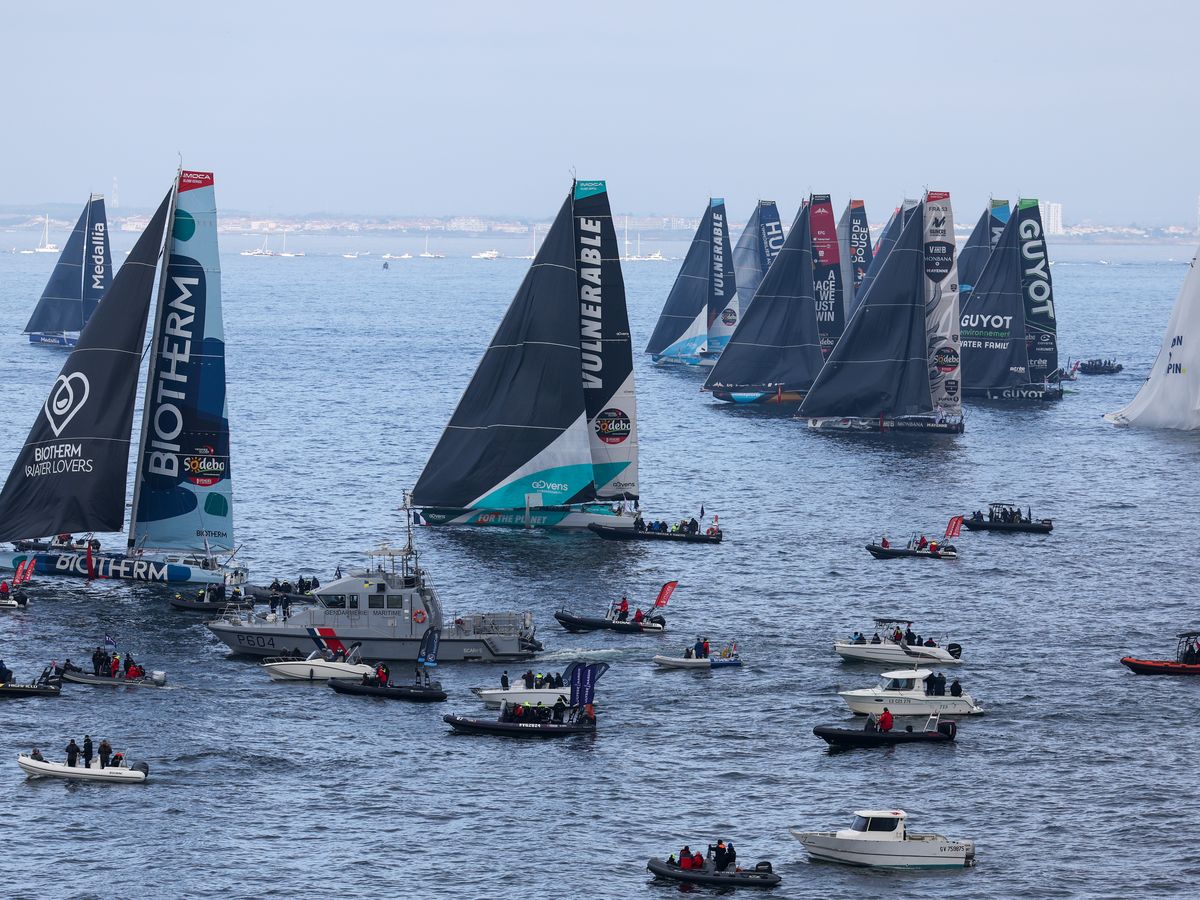
The Vendée Globe is a non-stop, unassisted, solo round-the-world race of approximately 24,000 miles, starting and finishing at Les Sables-d’Olonne in the French Vendée. It was founded by Philippe Jeantot — himself a BOC Challenge winner — in 1989, with the race concept originally inspired by Titouan Lamazou. Thirteen boats started the first edition in November 1989. Lamazou won it after 109 days at sea. Jeantot himself finished fourth.
The Vendée Globe is the race that defines IMOCA. Everything about the modern 60-foot class — the foils, the canting keels, the enclosed cockpits, the structural engineering, the autopilot systems, the routing, the weather strategy, the human endurance — flows from the specific demands of that course. One sailor, one machine, one planet, approximately 24,000 miles of Southern Ocean, Atlantic and Pacific, no stops, no help.
Without the Vendée Globe, the IMOCA is a formula without a Grand Prix. The race is why the class exists, why designers push it as hard as they do, and why the public attention has grown with each successive edition as the speeds have become something that would have looked fictional twenty years ago.
GUILLAUME VERDIER, VPLP AND THE MODERN FOILING OCEAN MACHINE
If Farr helped free offshore design from old displacement assumptions, and Finot-Conq and Lombard built the French short-handed pathway, Guillaume Verdier and VPLP belong to the period when offshore design began to look as if it had escaped the surface of the water.
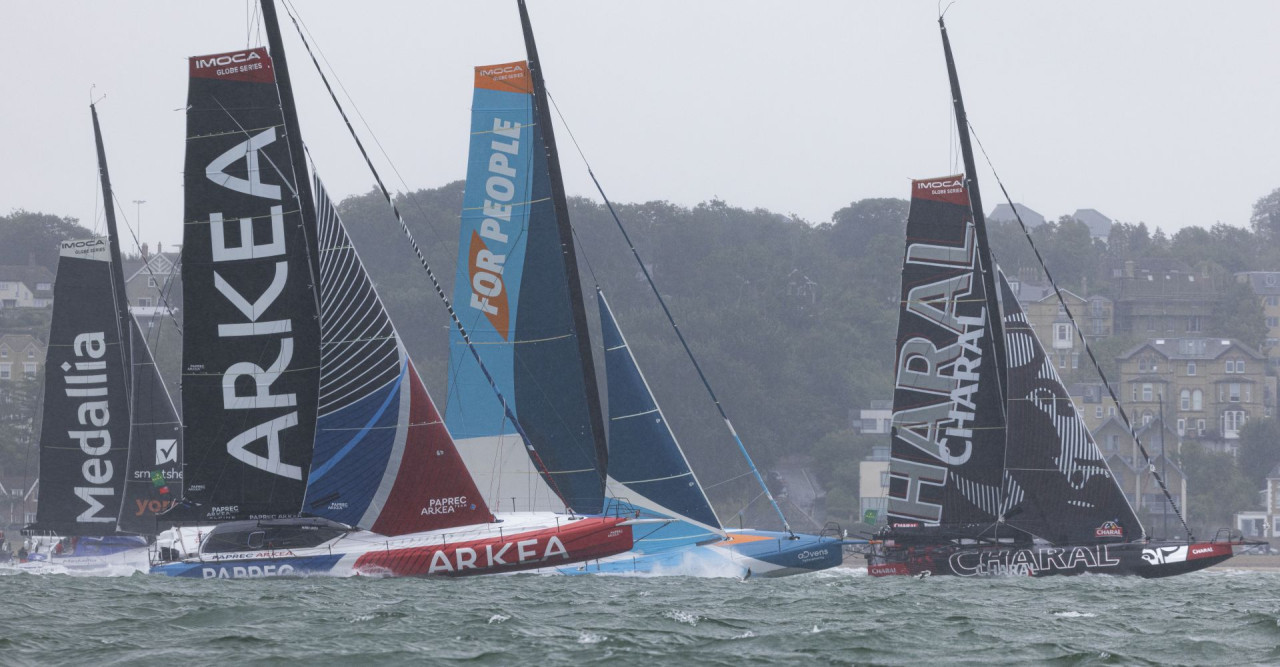
The modern IMOCA is one of the most important offshore design platforms ever created. Canting keels, foils, wide hulls, enclosed cockpits, autopilots, data systems, structural engineering and human endurance all meet in one machine. Early Open 60s were already extreme. Then came wider hulls and more form stability. Then came foils, which changed not only the speed but the violence: a foiling IMOCA is being lifted, slammed, accelerated and loaded in ways that older offshore sailors would recognise as both thrilling and slightly unhinged.
Verdier and VPLP were central to this transformation, particularly through the development of modern foiling IMOCAs and giant multihulls. Their work sits at the point where naval architecture becomes structural engineering, aerodynamics, systems design and risk management all at once. The old title “naval architect” starts to feel too small: the modern ocean-racing designer is drawing a machine that has to survive repeated high-speed impact, huge righting moments, autopilot steering, foil loads and structural fatigue.
The Ultims take that argument to another scale entirely: massive, fast and beautiful in the slightly worrying way that only extreme sailing machines manage. They are the current outer edge of offshore speed.
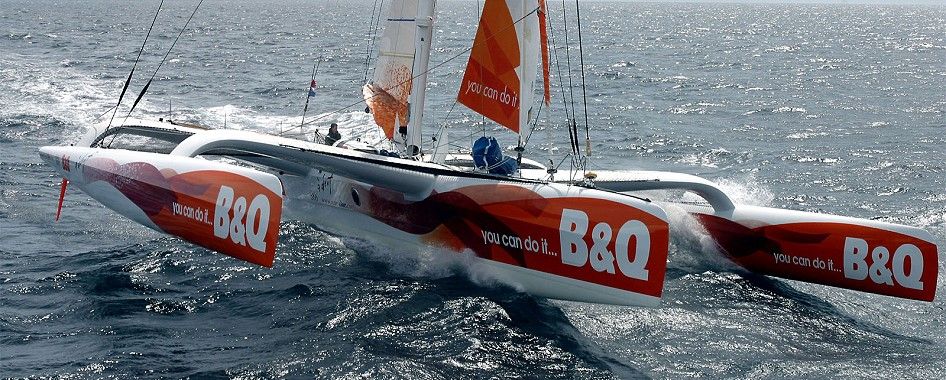
In 2005, Ellen MacArthur broke the non-stop solo circumnavigation record in 71 days, 14 hours — sailing a 75-foot trimaran (B&Q/Castorama), not a monohull, but in the same multihull design tradition that the Ultim class later developed. Her record caught the public imagination in Britain more completely than any offshore performance since Knox-Johnston’s. That it was a trimaran matters for the history. That it was an offshore sailor from Derbyshire beating a French record by sailing alone around the world in under 72 days matters for the sport.
JACQUES VALER, JPK AND THE QUIET VIOLENCE OF THE PRODUCTION WINNER
Not all important offshore design looks spectacular. Some of the most consequential modern boats sit in ordinary marinas, get measured under IRC, go out in RORC races with damp crews and plastic food boxes, and then quietly ruin the corrected-time results of much larger yachts.
This is where JPK matters.
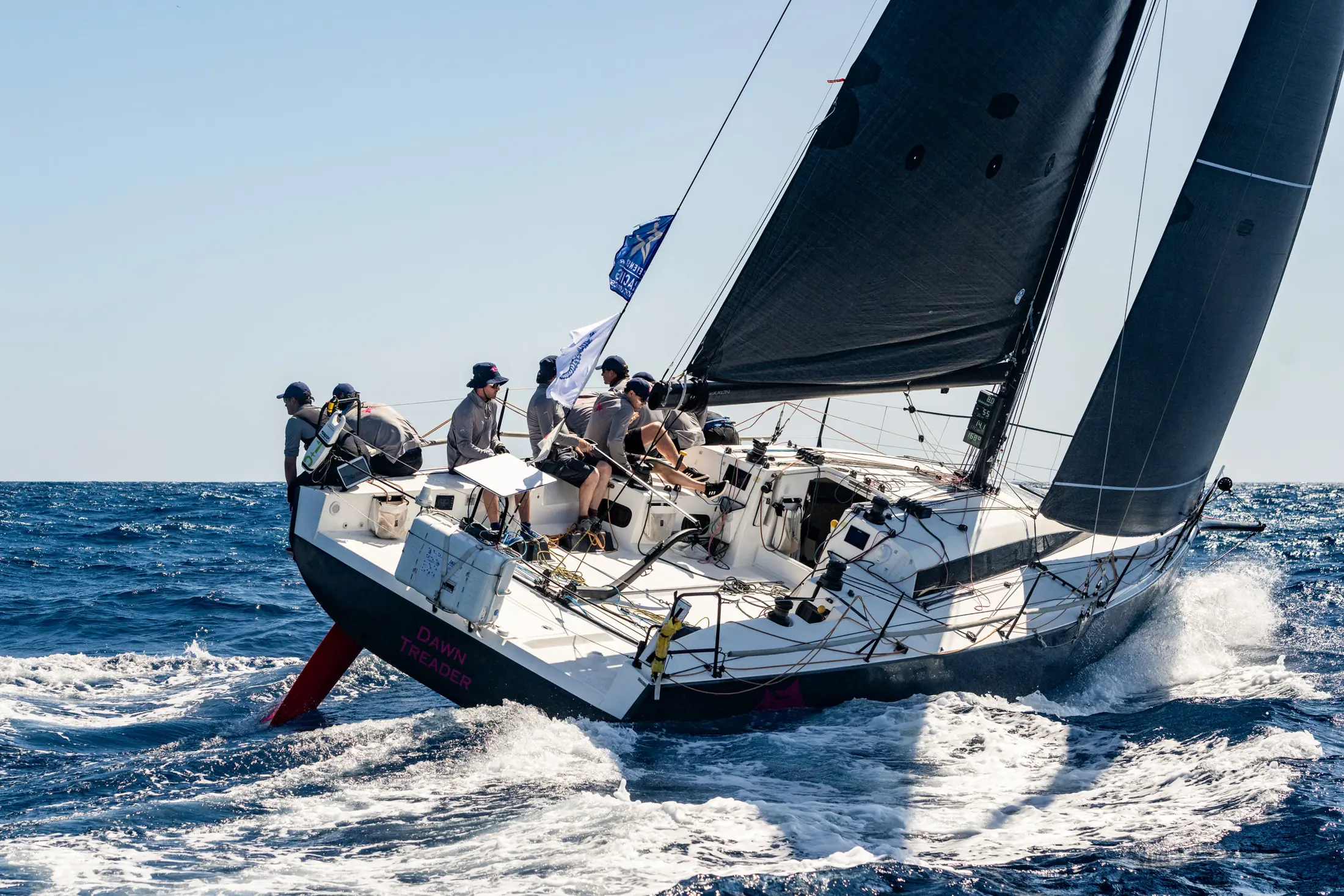
Jacques Valer’s JPK 10.10, 10.80 and 1180 became defining IRC production offshore racers of the modern era. Not trying to be miniature IMOCAs. Not trying to win a beauty contest against a Frers Maxi. Designed around a practical question: what sort of boat can a good crew, or a good double-handed pair, actually sail close to its rating offshore?
The 2013 Fastnet made the point as clearly as any race result has. Pascal and Alexis Loison — father and son from Cherbourg — won overall under IRC in Night and Day, a JPK 10.10, sailing double-handed. The first ever double-handed crew to win the Fastnet Challenge Cup overall in the race’s 88-year history. Second place? Noel Racine’s Foggy Dew — also a JPK 10.10.
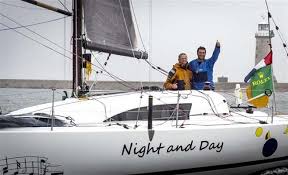
First and second overall in the Rolex Fastnet Race. Both JPK 10.10s. Both double-handed.
DANIEL ANDRIEU, SUN FAST AND THE SERIOUS AMATEUR’S WEAPON
The Jeanneau Sun Fast line belongs here for similar reasons. Daniel Andrieu’s Sun Fast 3200 and later the Sun Fast 3600 gave amateur and semi-professional crews a practical offshore platform that could race seriously under IRC double-handed. Production boats that could be bought, prepared, campaigned, repaired and raced hard. Not precious custom machines.
That matters because offshore racing cannot survive on grand prix programmes alone. It needs boats that serious amateurs can actually own. It needs a route into the sport for crews who are not being sponsored by a bank.
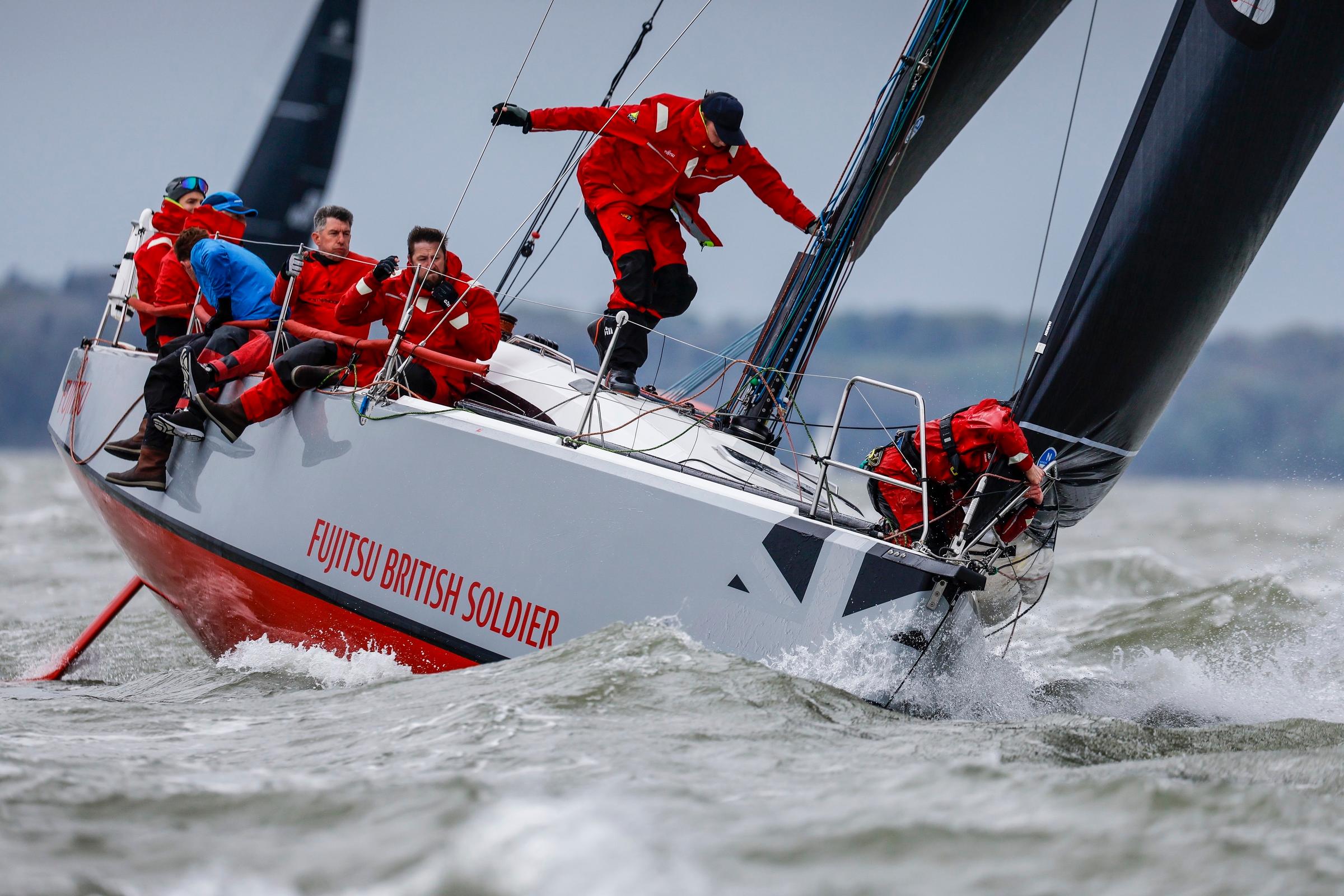
A good production offshore boat does not remove the difficulty. It organises it. The better Sun Fasts gave sailors a platform where preparation mattered. They rewarded crews who understood the boat, kept the systems clean, managed weight, chose sails sensibly and did not turn every manoeuvre into theatre. In double-handed mode, there is nowhere to hide: two sailors, one system, and the sea making the same assessment it always has.
THE AUTOPILOT BECOMES A DESIGN PROBLEM
One of the quieter revolutions after IOR is the autopilot.
For fully crewed racing, the pilot is useful. For double-handed and solo racing, it is crew.
Not romantically. Practically. If the pilot cannot steer properly, the boat cannot be raced properly for long. That has changed design. A good modern short-handed boat must be able to sail fast under pilot without trying to throw itself into the scenery. That means the designer has to think about balance, rudder authority, load, helm feel and whether the boat will remain controllable when the human has gone below to eat something.
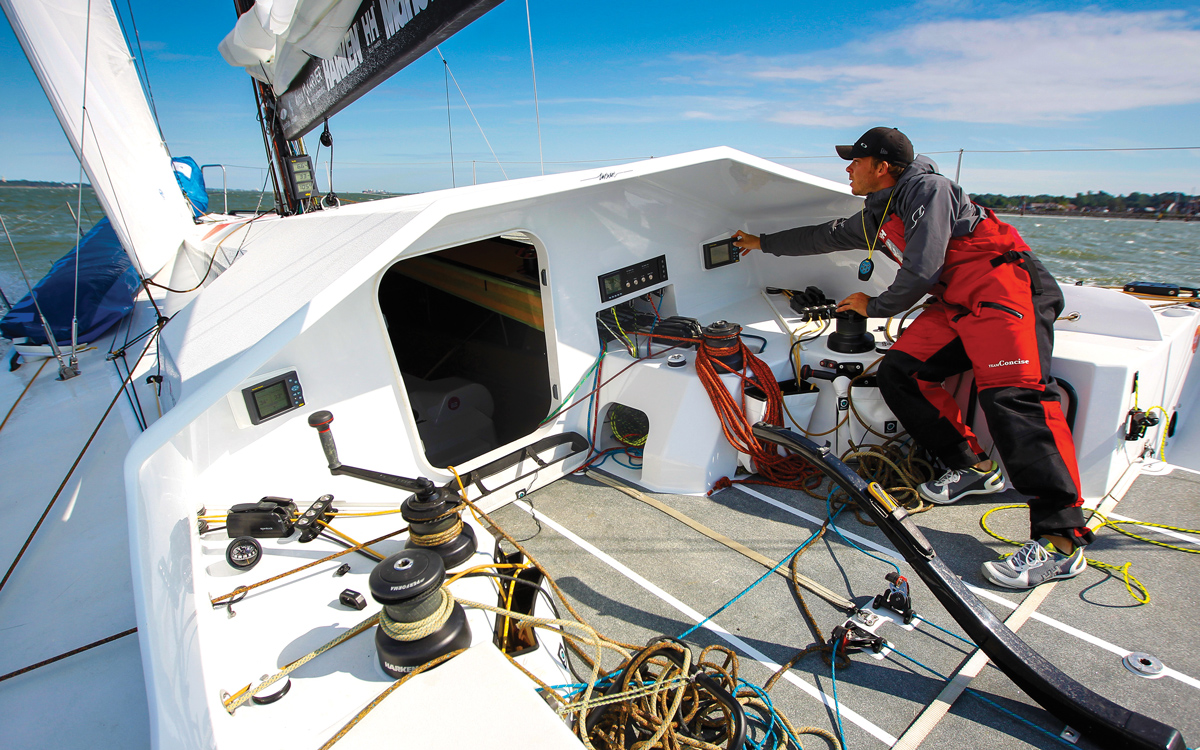
This is one of the areas where modern seamanship is often misunderstood. Technology has not replaced seamanship. It has changed its form. The modern short-handed sailor must understand calibration, data, pilot response, power management, routing assumptions and when the clever box is beginning to believe nonsense.
The danger is thinking that technology removes judgement. It does not. It increases the number of ways judgement can fail.
HUMPHREYS, KER AND THE CONTINUING IRC DESIGN OFFICE
British designers have remained deeply involved in the practical handicap world. Rob Humphreys and Jason Ker belong to the continuing IRC design office tradition — working in the difficult space between rule, owner, builder, crew and racecourse.
The IRC designer has a hard job. The rule is not public in the same way as a box rule. The best boats are not simply the most extreme. The designer must produce something that can sail to its number across real conditions: rate sensibly, accelerate, handle a seaway, remain manageable, carry useful sails, and not become obsolete the moment the rule adjusts.
The best IRC boats are rarely one-trick ponies. They have to be good enough in light air, tough enough in breeze, efficient upwind, quick reaching, and not hopeless when the course or weather refuses to match the brochure. That rewards a more subtle quality than outright speed: usable speed relative to rating.
For an offshore sailor, usable speed is the thing that matters. Not theoretical speed in flat water. Not a peak number on a marketing sheet. Usable speed is the speed you can hold after the watch has gone quiet, the helmsman is tired, the sail is slightly wrong, the tide is cross, the sea is awkward and the navigator is trying to decide whether the grib file is wrong.
That is the modern descendant of the old seaworthiness argument. The shape has changed, the tools have changed, the rule has changed. The real question is the same.
Can the boat keep making miles when the easy part is over?
WHAT REALLY CHANGED AFTER IOR
Under IOR, the best designers were often solving one central problem: how do we beat this rule without losing the boat? After IOR, that problem split apart.
Farr was solving the problem of fully crewed ocean speed. The high-end design offices were solving the owner’s performance yacht. Reichel/Pugh, Judel/Vrolijk and Botin were solving the grand prix box-rule problem. Juan K was solving brutal Volvo power. Finot-Conq, Lombard, Verdier and VPLP were solving the French short-handed and foiling ocean problem. Valer, Andrieu, Humphreys and Ker were solving the production and IRC problem for sailors who still wanted to win real races in real fleets.
Those are not the same question. That is the point.
After IOR, offshore design split into different worlds because offshore racing itself split into different worlds.
The split has been good for the sport. It allowed different forms of offshore racing to develop properly. It allowed the grand prix world to go grand prix. It allowed the French short-handed system to become one of the great offshore design cultures. It allowed production offshore racers to become serious weapons. It allowed double-handed sailing to explode.
But the split has also created confusion, because people now use the same words for very different sports. “Offshore racing” might mean a crewed IRC Channel race. It might mean a solo IMOCA in the Southern Ocean. It might mean an Ultim doing speeds that would have sounded impossible not long ago. Same sea, very different game.
Modern offshore intelligence starts with knowing which world you are actually in.
THE MODERN DESIGN ARGUMENT
What is the boat for? That is the question every owner should ask before falling in love with a hull shape, a rating number or a dramatic video clip. A boat that is brilliant for one purpose can be a nuisance for another. Offshore design is not about finding the universally best boat. There is no such thing.
It is about matching the boat, rule, racecourse, crew, budget and ambition.
That was true in 1925. It was true under IOR. It is still true now.
WHAT THE MODERN ERA TEACHES
The first era taught offshore racing that seaworthiness and speed had to live together. The second era taught designers how powerful and dangerous rating-rule thinking could become. The third era teaches something different.
It teaches us that offshore racing no longer has one centre.
There are several centres now. The RORC and IRC world still matter. The French short-handed world matters enormously. The grand prix box-rule world matters. The professional ocean-racing world matters. The production double-handed world matters. The foiling ocean world matters.
Each has its own design language. The mistake is to pretend they are all the same. The opportunity is to learn carefully from each without swallowing the whole thing blindly.
The serious offshore sailor needs both: old judgement and modern tools, clear purpose and enough humility to know that the sea still gets the final vote.
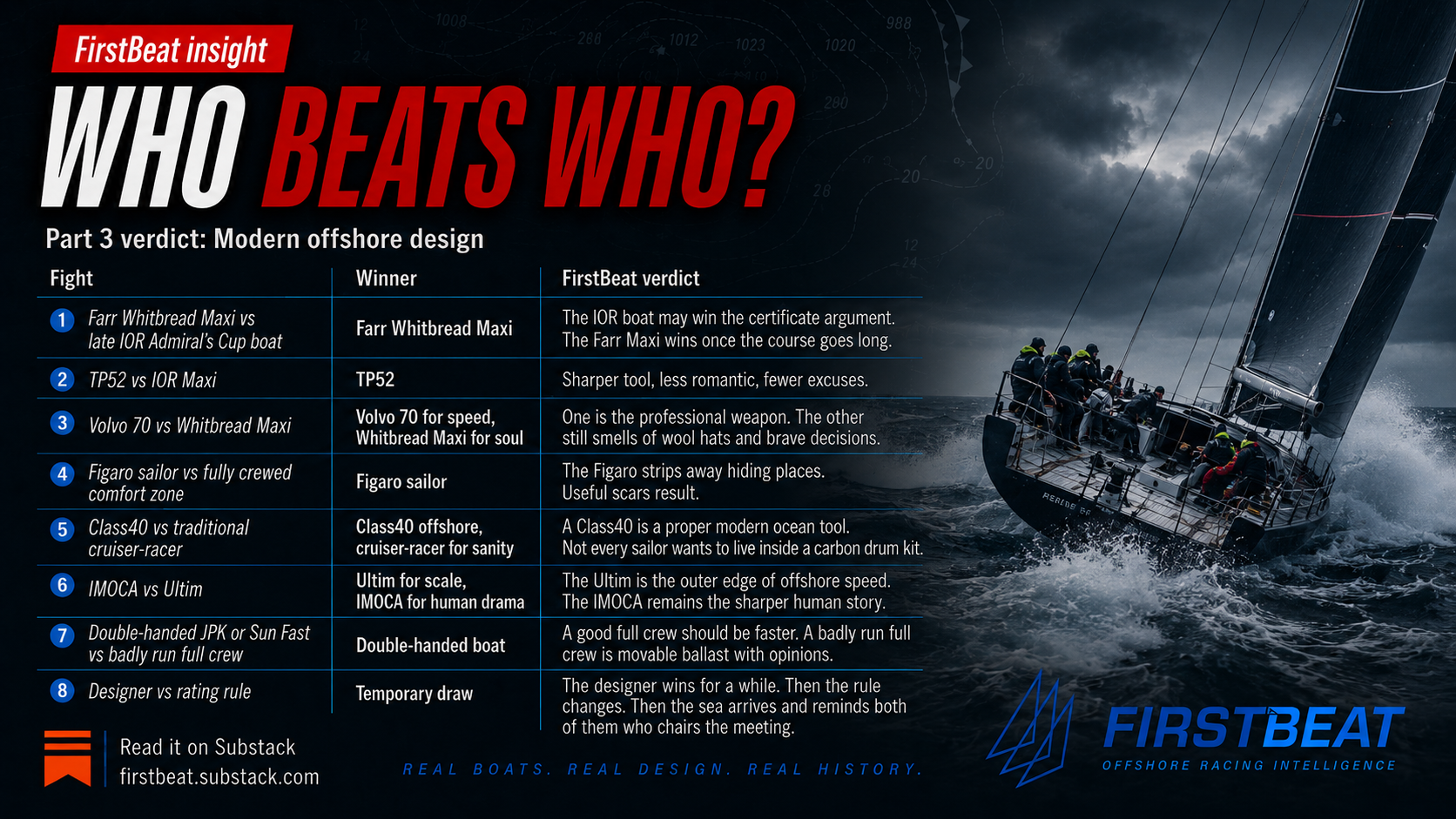
FIRSTBEAT: WHO BEATS WHO?
FIRSTBEAT DESIGN PODIUM
FIRSTBEAT BOAT PODIUM
FINAL FIRSTBEAT VERDICT
After IOR, offshore design found several answers. That is the most important point.
CHS, then IRC and ORC kept handicap offshore racing alive. TP52s and box-rule boats gave the grand prix world a cleaner arena. The Whitbread, Volvo and Ocean Race boats turned crewed ocean racing into a professional machine. France built a complete short-handed pathway from Mini to Figaro, Class40, IMOCA and Ultim. Production racers brought serious offshore performance back within reach of good amateur and semi-professional crews. Double-handed sailing forced everyone to think harder about systems, weight, fatigue and preparation.
The result is not tidy. But offshore racing has never really been tidy.
The boats have changed beyond recognition since Jolie Brise won the first Fastnet. But the serious question remains almost exactly the same.
How do you build a yacht that is fast enough to matter, strong enough to trust, fair enough to race, and manageable enough for human beings to keep driving when the easy part is over?
That question ran through Dorade. It ran through Myth of Malham, Rabbit, Imp, the Admiral’s Cup boats and the strange genius of IOR. It now runs through Steinlager 2, TP52s, Volvo 70s, Class40s, IMOCAs, Ultims, JPKs and Sun Fasts.
The shape changes. The argument survives.
And the sea still gets the final vote.


Comments