
Offshore racing is now two sports. The results prove it.

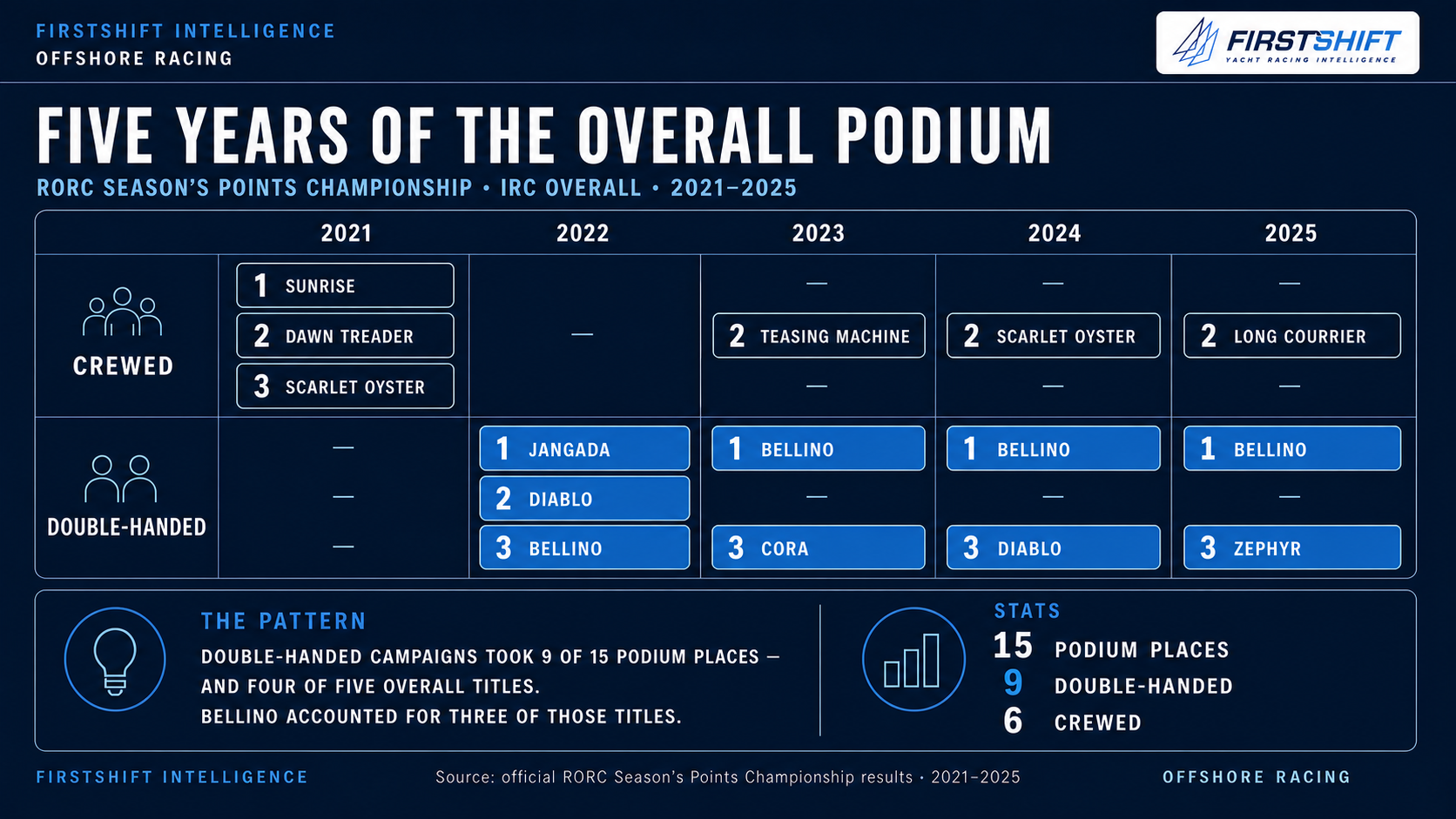
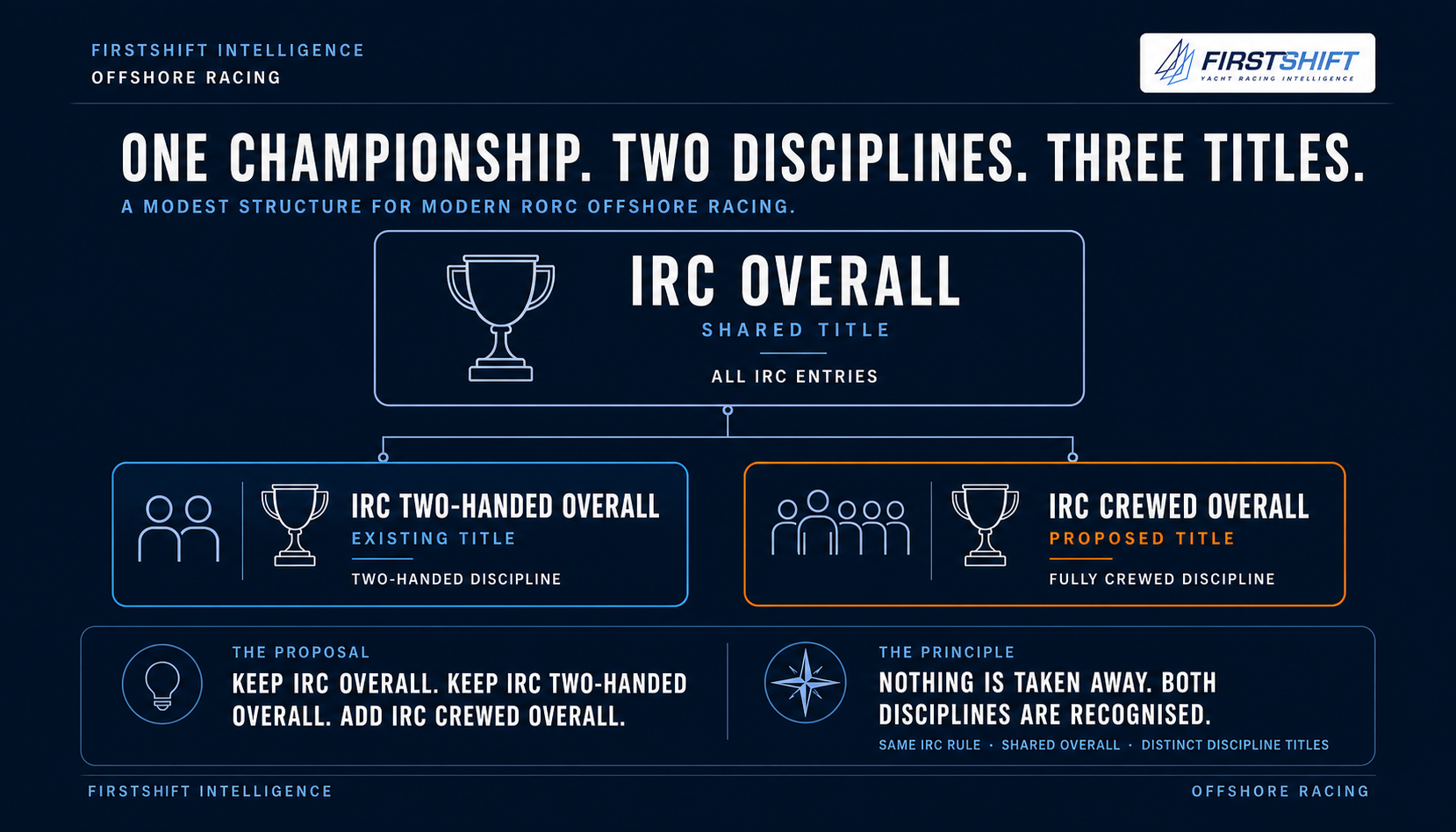
This article continues the conversation started by The Hardest Thing in Offshore Racing Is Other People. Since publishing it, I have heard from many of the sailors actually racing offshore. Their experience has added evidence, nuance and a few unexpected questions. For anyone who missed the first article, this brings the original argument together with what has emerged since. I would particularly like to hear from those racing double-handed. North Sails Cowes Week closes its bicentenary regatta tonight. Two hundred years after the first race in 1826, around 600 boats across more than 30 classes have filled the Solent for seven days: family crews, club teams, children racing with their parents, the Parade of Sail, the Bicentenary Gold Cup, and the fireworks over the Solent to finish. Nobody who watched this week could doubt what crewed racing does for the sport. It is where young sailors come aboard. Where they learn to trust and be trusted, to take responsibility for other people in bad weather, to lose on Tuesday and turn up on Wednesday. No aim matters more to the sport’s future than bringing those people in. That is why RORC should recognise the sailors who choose to race crewed yachts. The bicentenary made the case ashore. The offshore results sheet makes it afloat. When I wrote The Hardest Thing in Offshore Racing Is Other People , I was not sure what reaction it would get. The response was bigger than I expected: comments, emails and a good many conversations on the pontoon. One view keeps coming back. Offshore racing has become two disciplines rather than one. Not because one is better than the other. Because they are different. Looking at the results Last time I made that case from experience. The record makes it harder to dismiss. Take the Jazz Trophy, awarded to the overall winner of the RORC Season’s Points Championship, the world’s largest offshore racing series. From 2016 to 2021, every winner was fully crewed: Nick and Suzi Jones’ First 44.7 Lisa in 2016 and 2017, the Army Sailing Association’s British Soldier in 2018, Trevor Middleton’s Sun Fast 3600 Black Sheep in 2019, and Tom Kneen’s JPK 1180 Sunrise in 2021. The 2020 season was lost to the pandemic. Since then, no fully crewed boat has won it. Richard Palmer’s JPK 1010 Jangada took the championship two-handed in 2022, winning IRC Overall, IRC Three and the Two-Handed class in the same season. Rob Craigie’s Sun Fast 3600 Bellino , racing two-handed with Deb Fish, won it in 2023, 2024 and 2025. Three consecutive overall championships. No boat had done that before. The milestones stack up across the decade. Alexis and Pascal Loison became the first two-handed overall winners of the Fastnet in 2013. Jangada became the first two-handed overall winner of the RORC Transatlantic Race in 2020, then won the Sevenstar Round Britain and Ireland Race outright in 2022. In the 2025 centenary Rolex Fastnet Race, two-handed boats filled the entire IRC Overall podium. Jean-Pierre Kelbert and Alexis Loison won on the JPK 1050 Léon by almost two hours. Didier Gaudoux and Erwan Tabarly were second on Lann Ael 3 . Tanguy Bouroullec and Achille Nebout were third on the Pogo RC Amarris . Winning margins over 695 miles are normally counted in minutes. Two hours is not noise. Nor is a four-year run on the season championship. This is a trend, and it is accelerating. The results do not prove that IRC is unfair. They prove that two-handed racing has become a mature discipline with its own boats, methods and technology. Crewed racing deserves equivalent recognition. In RORC’s report on the 2025 centenary race , Ross Applebey, whose Lightwave 48 has taken a podium in its division in every Fastnet for the past twenty years, paid proper credit to the winners: “They’re obviously very clever designs, but we all have to acknowledge they’re very well sailed.” He went on to credit their preparation and their ability to sail the boats better than the opposition. That is the right response. Nobody is suggesting the two-handers got lucky. The proposal is still modest Keep the IRC Overall title. Keep the IRC Two-Handed Overall title. Add an IRC Crewed Overall title. Let me be precise about the mechanics, because this is where the objection lands. Under clause 5.5 of the 2025 Rolex Fastnet Race Notice of Race , two-handed boats are eligible for their own class, their IRC rating band and the overall trophies. That should not change. Nothing is removed. A crewed boat that beats the whole fleet still wins the whole fleet. The new title simply recognises the leading fully crewed boat, which currently receives no separate overall title. Fully crewed Corinthian racing introduces, trains and retains many offshore sailors. It is where people learn the job. It deserves a line on the results sheet. The question I did not see coming That debate produced a second question. Twenty years ago, a decent pilot could already hold a wind angle. That part is not new. What has changed is everything happening between the sensors and the ram. Traditional systems generally reacted after a deviation occurred. Modern systems respond to far more information: gyro-corrected wind data, heel, gust response, sea state and out-of-pattern waves. Some can alter the requested heading before passing it to the pilot controller. Writing in Yachting World in September 2025 , Rupert Holmes described traditional pilots as “only reactive”. They must wait for something to change before responding. The latest systems are getting closer to anticipating what the boat is about to do. Here is the part most people have not registered. The autopilot is not a two-handed concession. Clause 2.12 of the 2025 Rolex Fastnet Race Notice of Race states: “Automatic and wind-vane devices for steering are permitted (this changes RRS 52 and amends IRC Rule 15).” Permitted for everyone. A fully crewed 45-footer with eight people aboard may spend the entire race under pilot. That does not remove the obligations of watchkeeping or seamanship. It does mean that no rule requires a human hand on the wheel. So the question is fair. If a crew has eight people aboard, should one of them be steering? I do not think the answer is obvious. I would be wary of anyone who says it is. The case for leaving the rule alone is strong. Holmes wrote that “no pilot is yet as good as a skilled and focused human driver”. That matters in crewed offshore racing. There is also a safety argument that deserves more weight than it usually gets. A pilot capable of holding a stable course in a quartering sea may reduce the risk of an accidental gybe. Two crew died in the 2024 Sydney Hobart during gybes in heavy weather. The independent review found that one was struck by the boom. The other was caught in the mainsheet and crushed against a winch. That does not mean a pilot would have prevented either accident. It does mean steering stability belongs in the safety argument. There are practical questions too. Would a prohibition apply during sail changes, emergencies or a crew-overboard recovery? How would it be monitored? What happens when fatigue becomes the greater risk? None of that settles the sporting question. If two-handed racing is a discipline in its own right partly because two people cannot steer continuously for 695 miles, then the technology that solves that problem is not incidental. It is part of what makes the discipline possible. The line between two-handed and fully crewed racing may eventually have very little to do with the number of people aboard. It may become a question of who is actually sailing the boat. Or what.


Comments